
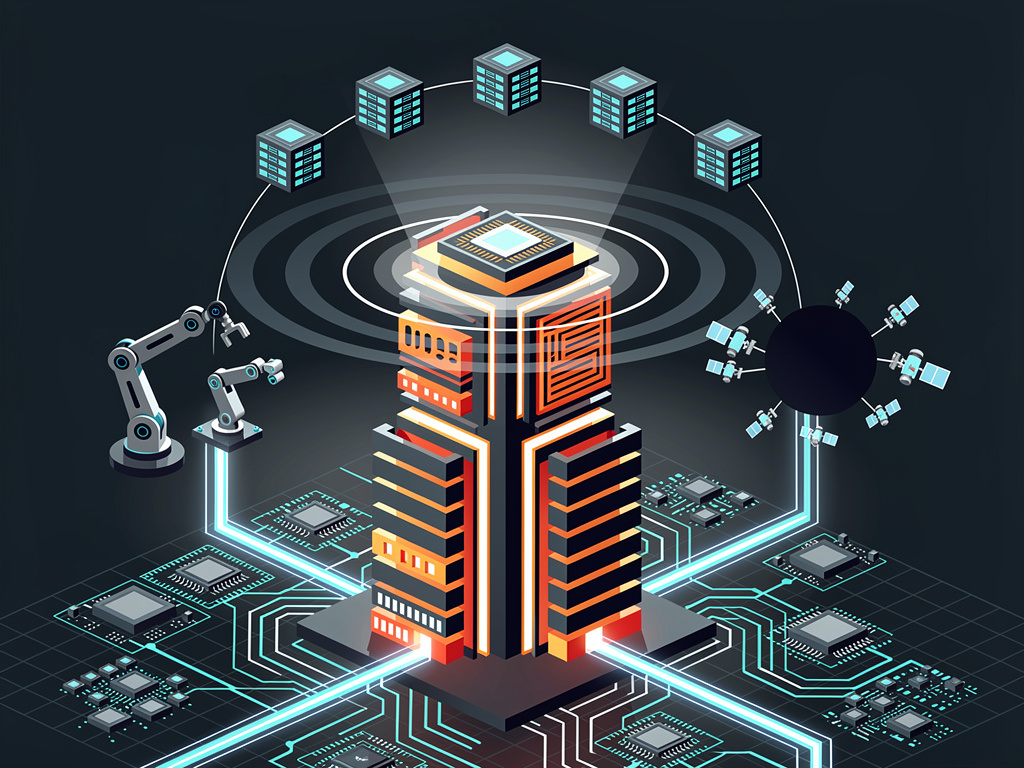
Elon Musk doesn’t wait for suppliers. When chip production falls short of his vision, he builds his own factory. SpaceX now plans a semiconductor plant in Texas with an initial price tag of $55 billion. Total costs could climb to $119 billion across multiple phases. The project, known as Terafab, aims to feed AI systems across Tesla, SpaceX and the merged xAI unit.
Details surfaced this week in a public filing for tax abatements in Grimes County. The notice describes a “multi-phase, next-generation, vertically integrated semiconductor manufacturing and advanced computing fabrication facility.” The New York Times first highlighted the stunning scale. SpaceX seeks local incentives ahead of a potential IPO as soon as June.
The Scale of Ambition
Musk announced Terafab in March. He framed it as essential. Current global chip output meets only a fraction of future demand from his companies. “We either build the Terafab or we don’t have the chips, and we need the chips, so we build the Terafab,” he wrote on X. The facility targets production of enough silicon to deliver one terawatt of compute capacity per year. That’s a leap from today’s data centers.
One part focuses on chips for Tesla vehicles, Optimus robots and Full Self-Driving systems. Another targets radiation-hardened processors for satellites and orbital data centers. Solar power in space promises constant operation without earthly grid limits. Starship launches would deploy these AI clusters. The concept ties rockets to intelligence in orbit. But, first comes the factory on the ground.
Intel joined the effort in April. The chipmaker contributes design, fabrication and packaging expertise. It will use its upcoming 14A process node. “Our ability to design, fabricate, and package ultra-high-performance chips at scale will help accelerate Terafab’s aim to produce 1 TW/year of compute to power future advances in AI and robotics,” Intel stated. TechCrunch detailed the partnership. Tesla supplies research capabilities. SpaceX leads the large-scale build. Vertical integration spans design, memory, logic and advanced packaging under one roof.
The numbers dwarf typical semiconductor projects. TSMC’s newest fabs run in the $20 billion to $30 billion range. Terafab’s ambition reaches four or five times that. And the risks match. Musk has never built a wafer fab. Tesla’s prior Dojo efforts showed the difficulty of custom AI silicon at volume. Yet the filing signals serious intent. Construction could reshape semiconductor geography. It also underscores how compute hunger now drives even rocket companies.
Recent moves add context. SpaceX acquired xAI earlier this year. The deal valued the combined entity at $1.25 trillion. xAI’s Grok models now sit alongside Starlink and Starship priorities. Colossus 1, the Memphis supercomputer with over 220,000 Nvidia GPUs, just struck a deal to supply all its capacity to Anthropic. The Wall Street Journal reported the arrangement. It boosts Claude AI while highlighting near-term reliance on Nvidia. Terafab represents the long play for self-sufficiency.
Power demands alone raise questions. One terawatt of annual compute output requires enormous electricity, water and infrastructure. Grimes County hearings will test local support. Tax breaks could ease the burden. Still, execution challenges loom. Process technology at 14A remains unfinished. Yield ramps take years. Supply chains for rare materials and equipment face global constraints.
But Musk’s track record mixes bold promises with delivered results. Starship development faced repeated explosions before orbital success. Tesla scaled EV production against doubters. Terafab follows the pattern. Short-term, his companies buy Nvidia chips and partner where needed. Long-term, control over silicon could unlock advantages in autonomy, satellite intelligence and space-based training clusters.
Industry watchers note the timing. AI model sizes continue to grow. Training runs consume ever more flops. Hyperscalers and startups alike scramble for GPUs. A new domestic source at this scale would ease pressure on TSMC and broaden U.S. manufacturing capacity. Success might pressure other tech giants to pursue similar vertical moves. Failure would burn capital at epic scale.
So far the project stays on paper. No groundbreaking date appears in filings. Production timelines remain vague, with small-batch AI chips possibly arriving in 2026 or later. Yet the $55 billion commitment already shifts conversations. It positions SpaceX not just as a launch provider but as an AI infrastructure heavyweight. Orbital data centers sound like science fiction today. With Terafab, Musk bets they become inevitable.
Recent coverage reinforces the momentum. Reuters emphasized the boost to domestic semiconductor output and reduced reliance on foreign foundries. The Verge connected it to Musk’s earlier statements on compute shortages. The Verge noted ambitions for 200 gigawatts of terrestrial compute alongside the terawatt space goal. Intel’s involvement adds technical credibility that pure in-house efforts might lack.
Critics point to overreach. SpaceX’s core business demands focus on reusable rockets and constellation growth. Diverting executive attention and capital to fabs carries opportunity costs. The merged xAI entity faces scrutiny ahead of IPO. Investors will weigh these hardware bets against proven revenue streams from launches and Starlink subscriptions.
Still, the logic holds for Musk. Chips power every major initiative. Autonomy needs inference at the edge. Satellites require onboard intelligence. Future AI training in space could exploit unlimited solar energy and radiative cooling. Terafab becomes the enabler. Without it, ambitions stall at the silicon bottleneck.
The coming months will clarify next steps. Public hearings, detailed blueprints and supplier contracts will follow. For now, the filing alone signals a new chapter. Musk isn’t asking for faster chips from existing makers. He’s preparing to make them himself. At a cost that matches the scale of his dreams.


 WebProNews is an iEntry Publication