
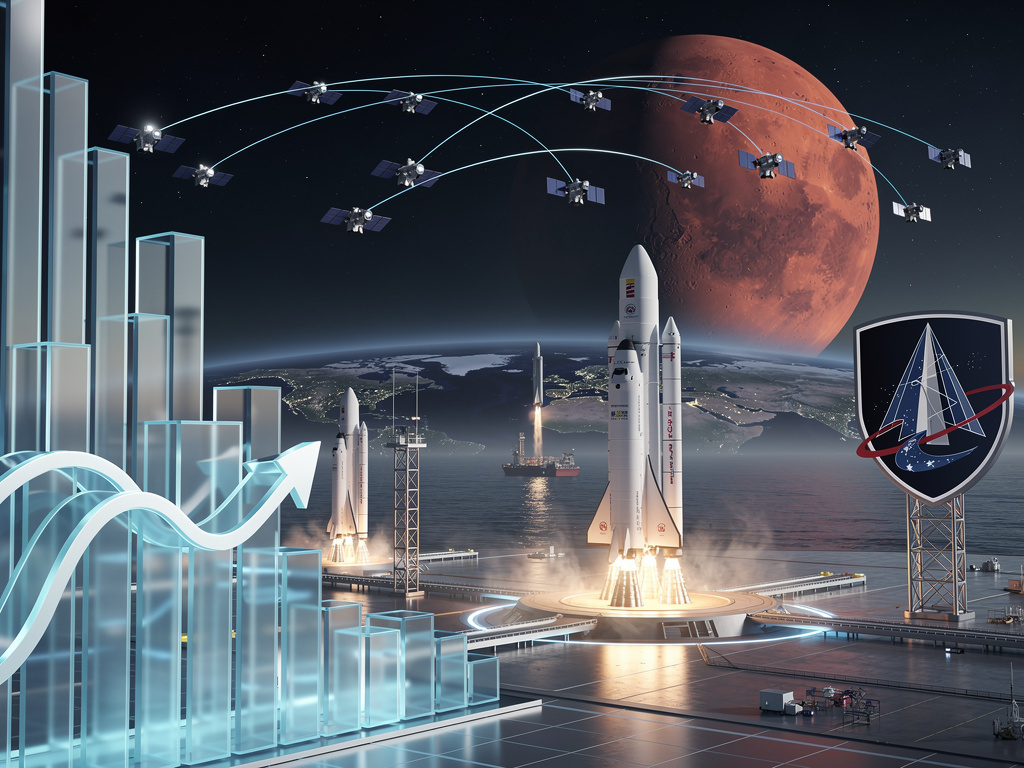
Rocket to Riches: Decoding SpaceX’s Trillion-Dollar Leap Toward Public Markets
In the high-stakes world of aerospace and private equity, few companies have captured imaginations like SpaceX. Founded by Elon Musk in 2002, the Hawthorne, California-based firm has revolutionized space travel with reusable rockets and ambitious satellite networks. Now, as whispers of an initial public offering grow louder, industry watchers are buzzing about what could be the most monumental stock market debut in history. Recent reports indicate SpaceX is gearing up for a 2026 IPO, potentially valuing the company at over $1 trillion, dwarfing previous records and funding Musk’s vision of interplanetary colonization.
Details emerged this week when SpaceX informed its employees about preparations for going public, a move that underscores the company’s maturation from a scrappy startup to a behemoth in the space sector. According to a briefing from The Information, executives shared internal plans, emphasizing the need for financial discipline and regulatory compliance ahead of the listing. This communication marks a pivotal shift, as SpaceX has long operated under the veil of private ownership, allowing Musk to steer the company with minimal external scrutiny.
The timing aligns with a surge in investor interest, fueled by SpaceX’s operational successes. The company has launched over 100 missions this year alone, deploying thousands of Starlink satellites to expand global internet access. Such achievements have not only bolstered revenue streams but also positioned SpaceX as a key player in national security and commercial space ventures, attracting contracts from NASA and the Department of Defense.
Valuation Vortex: From Private Giant to Public Titan
Analysts project the IPO could raise more than $30 billion, shattering the record set by Saudi Aramco in 2019. A recent insider share sale pegged SpaceX’s valuation at $800 billion, as reported by The New York Times, with shares trading at $421 each. This figure eclipses that of tech titans like Meta and Tesla, reflecting the premium investors place on SpaceX’s technological edge and growth potential.
Musk himself has fueled speculation, confirming the accuracy of reports about a 2026 timeline in a post on X, formerly Twitter. While not directly quoting his statements, sentiment on the platform from users close to the company suggests enthusiasm among employees and investors alike, with discussions highlighting the challenges of scaling rocket production amid IPO preparations. These online conversations underscore a broader excitement, though they also reveal uncertainties about market volatility.
Beyond the numbers, the IPO represents a strategic pivot for funding Musk’s Mars ambitions. SpaceX’s Starship program, aimed at human missions to the red planet, requires billions in capital. Going public could provide the influx needed to accelerate development, but it also introduces new pressures, including quarterly earnings reports and shareholder demands that might clash with Musk’s long-term, risk-tolerant approach.
Investor Frenzy and Market Implications
Investors are already positioning themselves for what some describe as the “craziest IPO ever,” per insights from Reuters. Long-time backers, frustrated by limited liquidity in the private market, see the public offering as a golden opportunity to cash in or expand holdings. The company’s valuation has skyrocketed from $100 billion just a few years ago, driven by Starlink’s subscriber growth and reusable rocket efficiencies.
Recent web searches reveal a flurry of updates, including Bloomberg’s report that SpaceX aims to raise significantly above $30 billion, potentially pushing its post-IPO valuation to $1.5 trillion, as noted in Bloomberg. This ambition is backed by strong fundamentals: SpaceX’s revenue topped $8 billion last year, with projections for exponential growth as Starlink expands into underserved regions and new markets like in-flight connectivity.
However, not all views are unanimously optimistic. Industry insiders point to regulatory hurdles, including antitrust scrutiny given Musk’s overlapping roles at Tesla, X, and now potentially influencing NASA through allies. A recent confirmation from SpaceX’s CFO about IPO interest, covered by SpaceNews, highlights internal preparations, but also the need to navigate complex filings with the Securities and Exchange Commission.
Operational Backbone: Rockets, Satellites, and Beyond
At the core of SpaceX’s appeal is its Falcon 9 rocket, which has achieved an unprecedented cadence of launches. Posts on X from SpaceX’s official account detail recent missions, such as the NROL-77 launch for the U.S. Space Force and National Reconnaissance Office, showcasing reliability that underpins investor confidence. These operations, conducted from facilities in Florida and Texas, demonstrate a robust infrastructure ready for public market scrutiny.
Starlink, SpaceX’s satellite constellation, is another linchpin. With over 1,700 satellites deployed this year, it provides high-speed internet to remote areas, generating recurring revenue that could stabilize the company’s financials post-IPO. Analysts from Space.com estimate this segment alone could contribute billions annually, making it a crown jewel in the IPO narrative.
Yet, challenges loom in scaling production. Musk has historically noted the difficulties in engine manufacturing, with X posts from years past emphasizing that designing production systems is exponentially harder than the engines themselves. As SpaceX ramps up for Starship’s full deployment, these insights reveal the engineering feats required to maintain momentum amid public expectations.
Strategic Shifts and Employee Dynamics
The internal briefing to staff, as detailed in The Information, included discussions on stock options and the implications of going public. Employees, many of whom hold equity, stand to benefit immensely, but the transition could alter company culture. SpaceX’s workforce of over 8,000 has operated in a high-intensity environment, with Musk’s leadership style fostering innovation but also drawing criticism for demanding schedules.
Recent X activity reflects employee pride in milestones like crewed missions, with posts highlighting 50 astronauts launched and counting. This morale boost is crucial as the company prepares for the transparency demanded by public markets, where labor practices and executive decisions will face greater scrutiny.
Moreover, the IPO could influence partnerships. SpaceX’s collaborations with government agencies, such as the upcoming Crew-1 mission references in older posts, position it as indispensable to U.S. space policy. However, a public listing might complicate these ties, especially with Musk’s political engagements under the incoming administration.
Risks on the Horizon: Volatility and Competition
No deep dive would be complete without addressing risks. Market volatility, exacerbated by economic uncertainties, could dampen enthusiasm. Reuters reported on an insider share sale valuing SpaceX at $800 billion, but fluctuations in tech stocks might pressure the offering, as seen in another Reuters piece from today.
Competition from players like Blue Origin and emerging Chinese firms adds pressure. SpaceX’s edge in reusable technology gives it a lead, but sustaining innovation post-IPO will be key. Bloomberg’s coverage notes the company’s plans to use proceeds for Mars colonization, a goal that, while visionary, carries high financial and technical risks.
Internally, the shift to public status may strain resources. Musk’s X comments on AI integration in satellites suggest future revenue streams, but diverting focus from core rocketry could dilute efforts. Industry experts warn that balancing short-term shareholder returns with long-term ambitions will test leadership.
Broader Industry Ripples and Future Trajectories
The potential IPO isn’t just about SpaceX; it could reshape the entire space economy. Valued at trillions potentially, it might inspire a wave of listings from other private space firms, democratizing investment in what was once a government-dominated field. Insights from EBC Financial Group outline how retail investors might gain exposure through funds or pre-IPO shares.
Musk’s confirmation via CNBC, as in CNBC, ties into broader narratives, including his ally’s nomination to NASA, potentially smoothing regulatory paths. This interplay of business and policy highlights SpaceX’s unique position.
Looking ahead, the company’s trajectory hinges on executing its vision. With Starship tests progressing and Starlink expanding, the foundation is solid. Yet, as X posts from Musk ponder radical improvements in rocket tech, the path to multiplanetary life remains fraught with unknowns.
Investor Strategies and Final Considerations
For industry insiders eyeing participation, strategies include monitoring secondary markets or preparing for allocation in the offering. The frenzy, echoed in investor sentiments from Reuters, suggests oversubscription is likely, making early positioning essential.
SpaceX’s journey from a fledgling venture to IPO contender exemplifies disruptive innovation. As details unfold, the company’s ability to harness public capital while preserving its pioneering spirit will determine its legacy in the annals of space exploration.
Ultimately, this IPO could mark a new era, blending commercial ambition with cosmic dreams, and setting benchmarks for future tech giants aspiring to reach beyond Earth.


 WebProNews is an iEntry Publication