
Orbital Close Calls: The Growing Peril of Satellite Congestion in Earth’s Skies
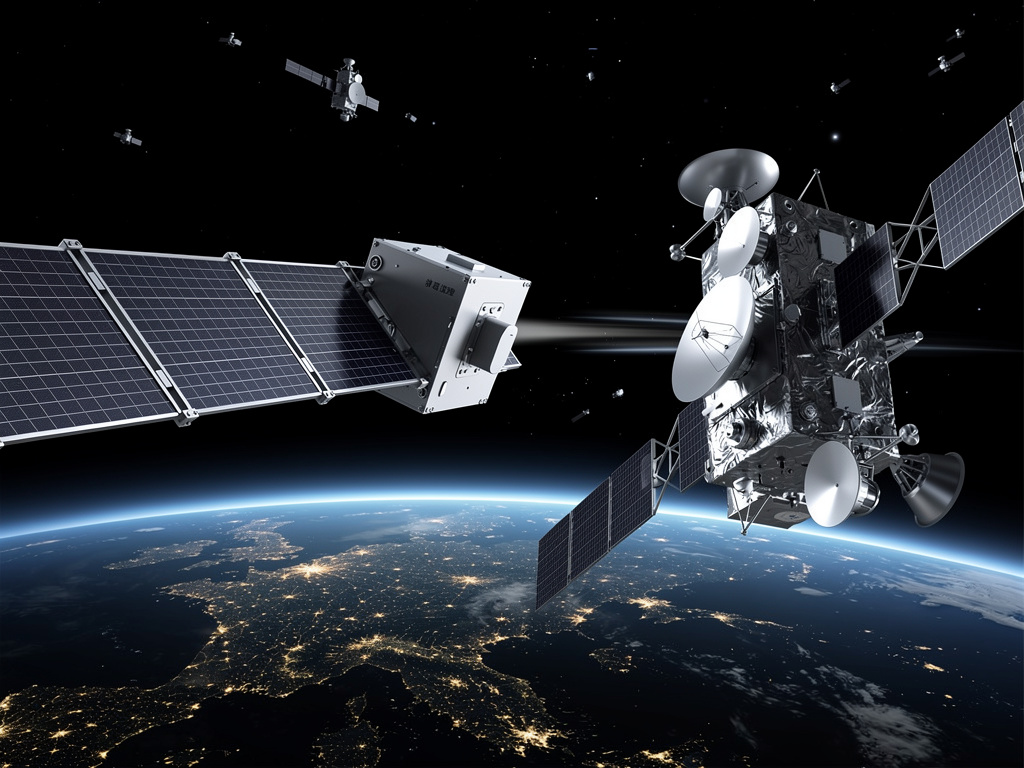
In the increasingly crowded realm of low Earth orbit, a recent incident has underscored the mounting risks of satellite operations. SpaceX, the aerospace giant led by Elon Musk, has publicly alleged that a satellite deployed by a Chinese launch came perilously close to colliding with one of its Starlink spacecraft. According to reports, the event unfolded shortly after a December 9 launch from China’s Jiuquan spaceport, where a Kinetica 1 rocket carried multiple payloads into orbit. SpaceX claims the Chinese satellite passed within a mere 200 meters of its Starlink-6079 unit, a distance alarmingly tight in the vastness of space where even minor miscalculations can lead to catastrophic debris fields.
This near-miss isn’t an isolated occurrence but part of a broader pattern of orbital hazards as more nations and companies vie for space in the skies above. SpaceX detailed the incident in a statement, emphasizing the need for better coordination among satellite operators worldwide. The company’s executive highlighted the episode during discussions aimed at fostering international dialogue on space traffic management. Sources indicate that the Chinese launch provider, CAS Space, is actively seeking more details about the event, suggesting an openness to investigate but also revealing potential gaps in real-time communication between rival space programs.
Drawing from web-based reports, the incident has sparked debates on the adequacy of current protocols for avoiding collisions. For instance, a piece from PCMag notes that SpaceX is pushing for enhanced collaboration to mitigate such risks, pointing out that the Chinese satellite’s trajectory brought it uncomfortably close to Starlink operations. This comes amid SpaceX’s rapid expansion of its Starlink constellation, which now numbers in the thousands and provides global broadband internet.
The Mechanics of Orbital Encounters
To understand the gravity of this close call, it’s essential to delve into how satellites navigate the orbital environment. Low Earth orbit, typically ranging from 160 to 2,000 kilometers above the planet, is a bustling highway of human-made objects. Satellites here must contend with high speeds—around 28,000 kilometers per hour—meaning even small objects can cause devastating impacts. In this case, SpaceX’s automated systems detected the approaching Chinese satellite and initiated a minor maneuver to increase separation, averting a potential disaster.
Industry experts point out that collision risks are exacerbated by the sheer volume of satellites. SpaceX alone has launched over 6,000 Starlink units, with plans for tens of thousands more. A report from Space.com describes how the Chinese payload, part of a batch deployed by the Kinetica 1, entered an orbit that intersected with Starlink’s network almost immediately after separation. This rapid convergence highlights the challenges of predicting post-launch trajectories, especially when launches occur without prior coordination.
Posts on X, formerly Twitter, reflect public sentiment and expert commentary on the matter. Users have shared concerns about escalating tensions in space, with some drawing parallels to past incidents where Starlink satellites have been accused of endangering other spacecraft. For example, historical posts recall a 2021 event where China’s foreign ministry criticized SpaceX for close approaches to its space station, underscoring longstanding frictions between U.S. and Chinese space activities.
Historical Context and Precedents
Looking back, orbital near-misses have been a recurring theme in space exploration. In 2019, the European Space Agency had to maneuver its Aeolus satellite to avoid a Starlink unit after SpaceX declined to adjust its path, as noted in various accounts. More recently, in 2021, China formally complained to the United Nations about two instances where Starlink satellites approached its Tiangong space station too closely, prompting evasive actions. These episodes illustrate a pattern where the proliferation of mega-constellations like Starlink amplifies collision probabilities.
A study referenced in news from Daily Galaxy highlights the growing risks, estimating that without improved management, the likelihood of collisions could rise exponentially. The recent incident with the Chinese satellite adds to this narrative, as SpaceX reported the event to emphasize the urgency of global standards. CAS Space’s response, seeking further information, could signal a step toward dialogue, but experts warn that geopolitical tensions may hinder progress.
Furthermore, the involvement of military and strategic interests complicates matters. Posts on X from defense analysts suggest China views Starlink as a potential threat, with discussions around countermeasures like laser systems to disrupt satellite networks. This backdrop of strategic rivalry adds layers to what might otherwise be seen as a technical mishap, turning orbital incidents into potential flashpoints in U.S.-China relations.
Technological Solutions on the Horizon
Addressing these challenges requires innovative technologies and international agreements. SpaceX has invested heavily in autonomous collision avoidance systems for its Starlink fleet, which use onboard propulsion to make real-time adjustments. According to details in a YouTube video analysis from space enthusiasts, such systems detected the Chinese satellite’s approach and executed a burn to widen the gap, preventing contact. However, reliance on automation alone isn’t foolproof, especially when other operators lack similar capabilities.
Proposals for better space traffic management include shared databases for orbital data and standardized communication protocols. A paper discussed in The Register suggests creating a “CRASH Clock” to quantify collision risks, akin to the Doomsday Clock for nuclear threats. This tool could help operators assess and mitigate dangers proactively. SpaceX’s call for coordination echoes these ideas, urging bodies like the United Nations to facilitate information exchange.
Yet, implementation faces hurdles. Differing national interests and proprietary data concerns slow progress. For instance, while the U.S. Space Force tracks objects, sharing sensitive information with foreign entities remains limited. The recent near-miss has reignited calls for multilateral forums to establish rules of the road in space, potentially preventing escalations.
Geopolitical Implications and Future Risks
The incident also carries significant geopolitical weight. As space becomes a domain of competition, incidents like this could strain diplomatic relations. China, rapidly expanding its satellite capabilities, has launched numerous missions in recent years, including those for Earth observation and navigation. SpaceX’s allegations, as covered in RussPain, prompt questions about intentional versus accidental maneuvers, though no evidence suggests malice.
Industry insiders note that without robust agreements, the risk of Kessler Syndrome—a cascade of collisions creating impenetrable debris fields—looms larger. A report from Gagadget details how the December 9 launch’s payloads entered orbits overlapping with Starlink’s, underscoring the need for pre-launch notifications. Posts on X amplify these concerns, with users speculating on whether such events could lead to broader conflicts.
Moreover, economic stakes are high. Starlink’s role in providing internet to remote areas and supporting military communications, as seen in Ukraine, makes it a strategic asset. Disruptions from collisions could have ripple effects on global connectivity and defense.
Economic and Regulatory Perspectives
From an economic viewpoint, the costs of orbital mishaps are staggering. A single collision could generate thousands of debris fragments, endangering billions in satellite investments. SpaceX, valued at over $200 billion, has much to lose, which explains its proactive stance. Regulatory bodies like the FCC in the U.S. have mandated that Starlink satellites include maneuverability features, as referenced in earlier reports to the commission.
Internationally, efforts like the Artemis Accords aim to set norms for space activities, but China is not a signatory, creating divides. The recent event, detailed in Primetimer, has prompted SpaceX to advocate for inclusive frameworks that bridge these gaps.
Looking ahead, advancements in AI-driven prediction models could enhance safety. Companies are developing software to forecast conjunctions more accurately, reducing false alarms and optimizing maneuvers.
Toward Safer Skies
As the number of satellites surges—projected to reach 100,000 by 2030—the imperative for cooperation grows. The Chinese satellite incident serves as a wake-up call, prompting stakeholders to prioritize decongestion strategies like end-of-life deorbiting.
Collaborative initiatives, such as those proposed by the International Telecommunication Union, could standardize data sharing. SpaceX’s experience, shared publicly, might catalyze these efforts, fostering a safer orbital environment.
Ultimately, balancing innovation with responsibility will define the future of space utilization. By learning from near-misses, the industry can avert disasters and ensure sustainable access to the final frontier. This event, while averted, reminds us of the fragile equilibrium in our increasingly populated skies.


 WebProNews is an iEntry Publication