
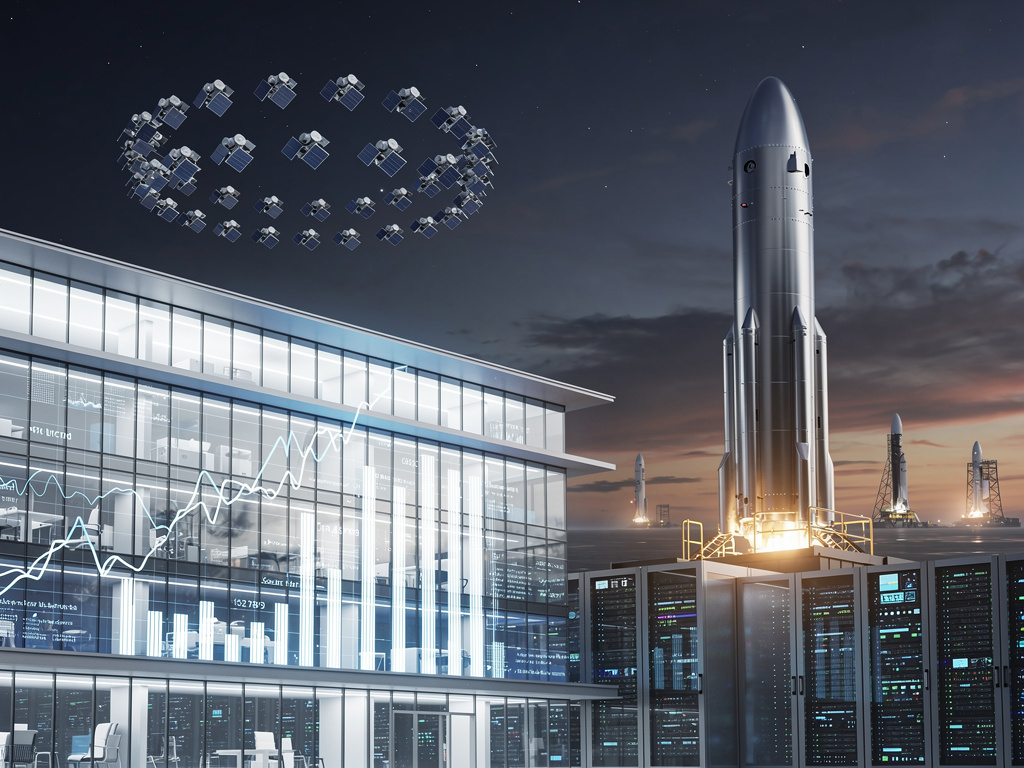
Elon Musk’s Rocket to Riches: Decoding SpaceX’s Pivot to Public Markets
For over two decades, Elon Musk has steered SpaceX as a private powerhouse, revolutionizing space travel with reusable rockets and ambitious Mars colonization dreams. But recent reports indicate a seismic shift: the company is gearing up for an initial public offering (IPO) potentially in late 2026, marking a departure from Musk’s long-standing aversion to public scrutiny. This move, if realized, could value SpaceX at over $1 trillion, eclipsing previous records and injecting billions into Musk’s empire. Drawing from insights across industry analyses, the decision appears rooted in the escalating demands of artificial intelligence development and expansive space infrastructure projects.
Musk, known for his vocal resistance to taking companies public—evident in his management of Tesla and past comments on SpaceX—has historically prized the agility of private ownership. Yet, as detailed in a recent piece by Ars Technica, the impetus now stems from the “AI race,” where amassing vast resources is paramount. SpaceX’s integration with Musk’s broader ventures, including xAI and Neuralink, underscores a strategy to leverage public capital for compute-heavy AI advancements. Sources familiar with the discussions, as reported by Reuters, suggest the IPO could raise more than $25 billion, propelling the company’s valuation skyward.
Beyond AI, SpaceX’s core operations demand unprecedented funding. The Starship program, aimed at enabling human settlements on Mars, requires billions for iterative testing and production scaling. Recent X posts from Musk highlight the company’s cash flow positivity and periodic stock buybacks, but an IPO would provide a war chest for accelerating these initiatives without diluting control through private rounds.
Funding the Frontier: AI and Space Synergies Driving the Decision
Analysts point to the symbiotic relationship between SpaceX’s satellite constellation, Starlink, and emerging AI needs. With Starlink already generating substantial revenue—projected to constitute the bulk of SpaceX’s income, far surpassing NASA contracts—Musk envisions satellites as orbital AI nodes. In a post on X, Musk elaborated on deploying AI compute in low-Earth orbit, potentially slashing costs and latency for data processing. This vision aligns with reports from Axios, where Musk confirmed the accuracy of IPO rumors, hinting at the largest offering in history.
The financial mechanics are compelling. SpaceX’s current private valuation hovers around $350 billion, but public markets could inflate that figure dramatically. Bloomberg News, citing insiders, notes plans for a 2026 listing that might value the firm at $1.5 trillion, dwarfing Saudi Aramco’s 2019 debut. This isn’t mere speculation; Musk’s own X commentary on satellite scaling, including next-generation Starlink V3 with 20kW power capabilities, underscores the capital intensity of deploying thousands more units.
Implications extend to early investors like Google, which stands to reap over $111 billion from its stake, as outlined in a Business Insider analysis. Such windfalls could reshape venture capital dynamics in aerospace, encouraging more bets on high-risk, high-reward tech. For SpaceX employees, who’ve benefited from stock buybacks, the IPO promises liquidity but also the volatility of public trading.
Market Ripples: Valuation Debates and Investor Appetite
Skeptics question whether SpaceX’s lofty ambitions justify a trillion-dollar tag. Critics argue that while Falcon rockets dominate launches—poised to handle over 90% of orbital tonnage this year, per Musk’s X statements—the path to Mars remains fraught with technical hurdles. Yet, optimism prevails; Reddit discussions on r/space, echoing user sentiments, buzz with excitement over SpaceX’s potential to democratize space access.
Financial experts, as per CNN Business, emphasize that Musk’s track record with Tesla—where stock options funded Mars aspirations—could mirror here. An IPO would not only enrich Musk, already the world’s richest, but also fund xAI’s Grok models, which rely on massive datasets potentially sourced from Starlink’s global network. Recent Reuters updates confirm SpaceX’s outreach to investors for a second-half 2026 debut, signaling meticulous preparation amid regulatory landscapes.
Broader economic factors play in. With interest rates stabilizing and tech stocks rebounding, the timing aligns for a blockbuster offering. Yahoo Finance reports target a $1.5 trillion valuation, positioning SpaceX near oil giants while highlighting its tech-forward ethos. This could attract institutional investors hungry for growth stories, especially as traditional sectors lag.
Regulatory Hurdles and Strategic Shifts Ahead
Navigating an IPO isn’t without challenges. SpaceX’s deep ties to government contracts—via NASA and the Department of Defense—invite scrutiny under securities laws. Ars Technica’s coverage notes Musk’s past reluctance stemmed from such entanglements, fearing public disclosure could compromise competitive edges in bidding for missions like the upcoming NROL-77 launch, as teased in SpaceX’s X updates.
Moreover, the company’s pivot reflects evolving priorities. Musk’s X posts reveal a focus on full reusability for Starship, aiming for marginal costs per ton that undercut rivals by orders of magnitude. This efficiency is crucial for scaling to megaton payloads needed for Martian cities, but it demands investor buy-in beyond private circles. USA Today explores public stock accessibility, noting that while shares are currently illiquid, an IPO would open doors for retail investors, potentially mirroring Tesla’s meme-stock fervor.
Internally, SpaceX’s culture of innovation could clash with quarterly reporting demands. Industry insiders speculate that Musk might structure the offering to retain voting control, similar to dual-class shares in other ventures. This strategy, discussed in financial circles, ensures his vision—humanity as a multiplanetary species—remains uncompromised.
Global Implications: From Earth Orbits to Interplanetary Economies
Looking outward, a public SpaceX could accelerate international space rivalries. China’s advancing programs and Europe’s Ariane efforts pale against SpaceX’s launch cadence, but an influx of capital might widen that gap. X sentiment from users like Musk emphasizes Starlink’s role in global connectivity, with V3 upgrades promising broadband to underserved regions, boosting revenue streams.
Economically, the IPO’s ripple effects could invigorate related sectors. Suppliers for rocket components, satellite manufacturers, and even terrestrial AI firms stand to benefit from SpaceX’s expanded operations. CNN Business projections suggest Musk’s net worth could surge, fueling cross-pollination with ventures like The Boring Company or Tesla’s robotics.
On the risk side, market volatility poses threats. If Starship tests falter—as seen in past explosions—stock prices could plummet, echoing Boeing’s aerospace woes. Yet, Musk’s resilience, evidenced by SpaceX’s recovery from early Falcon failures, instills confidence.
Ecosystem Evolution: Partnerships and Competitive Edges
Partnerships will be key post-IPO. Collaborations with entities like the U.S. Space Force, highlighted in recent launches, provide stable revenue. Ars Technica delves into how AI integration could position SpaceX as a defense tech leader, processing orbital data in real-time for strategic advantages.
Competitively, rivals like Blue Origin and Rocket Lab may face funding squeezes as investors flock to SpaceX. Musk’s X musings on satellite-based AI underscore a first-mover advantage, potentially cornering markets in edge computing from space.
For the workforce, an IPO means stock incentives aligning with long-term goals. Historical context from Musk’s posts recalls SpaceX’s founding ethos: making humanity multiplanetary, a narrative that could captivate public markets.
Visionary Horizons: Musk’s Endgame in Sight
As details emerge, the IPO represents more than financial maneuvering—it’s a bet on humanity’s future. With Starlink’s constellation already outnumbering global competitors, per Musk’s claims, expansion into AI-driven services could redefine telecoms.
Investors eyeing shares must weigh the intangibles: Musk’s charisma versus regulatory risks. Reuters sources indicate a raise exceeding $30 billion, funding not just rockets but a broader ecosystem.
Ultimately, this pivot encapsulates Musk’s philosophy—leveraging capital to transcend earthly bounds. As SpaceX eyes the stars, public markets may provide the thrust needed to get there.


 WebProNews is an iEntry Publication