
Orbiting Synergy: SpaceX’s Pandora Launch Elevates JWST’s Exoplanet Quest
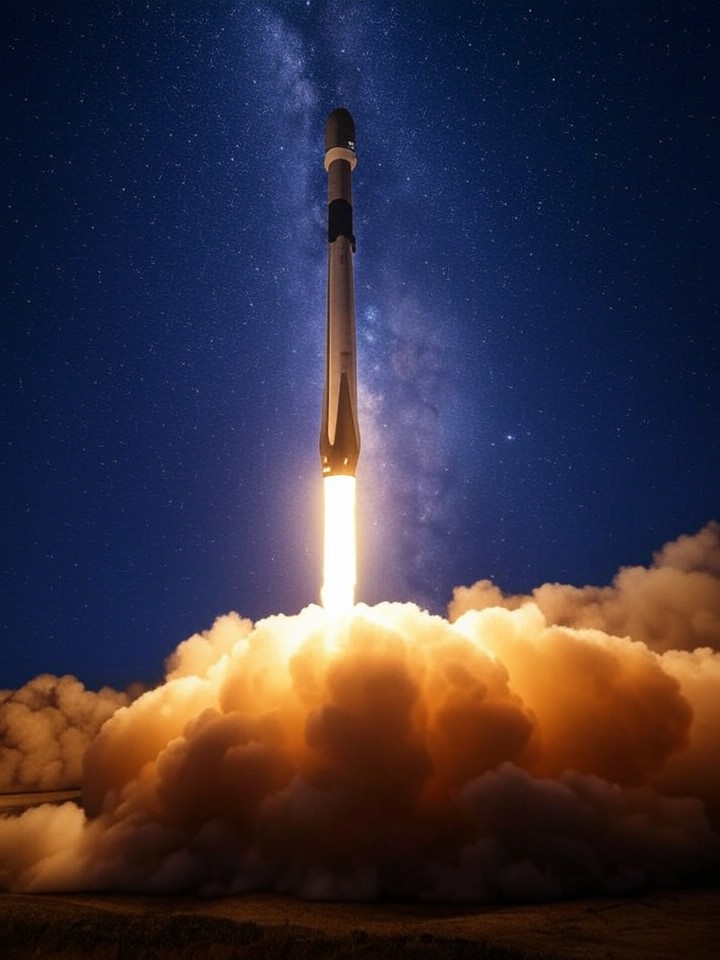
In the early hours of January 11, 2026, a SpaceX Falcon 9 rocket pierced the night sky from Vandenberg Space Force Base in California, carrying a payload that promises to revolutionize our understanding of distant worlds. At the heart of this mission was NASA’s Pandora SmallSat, a compact telescope designed specifically to complement the James Webb Space Telescope (JWST) in the hunt for habitable exoplanets. This launch, part of SpaceX’s “Twilight” rideshare program, not only deployed Pandora but also ferried dozens of other satellites, showcasing the efficiency of modern commercial spaceflight.
Pandora’s primary objective is to address a critical challenge in exoplanet research: stellar contamination. Stars often exhibit flares and spots that can mimic or obscure the subtle signals from planetary atmospheres, complicating data interpretation. By monitoring thousands of stars over extended periods, Pandora aims to filter out these stellar noises, providing cleaner datasets for JWST to analyze. This synergy is expected to enhance the accuracy of atmospheric characterizations, potentially identifying biosignatures on Earth-like planets.
The mission’s roots trace back to recognitions in the late 2010s about the severity of stellar activity issues, as highlighted in a recent article from Ars Technica. Scientists realized that without dedicated tools to account for such variability, even JWST’s advanced capabilities might fall short in pinpointing truly habitable worlds. Pandora, with its wide-field photometer, steps in as a vigilant watchdog, observing stars in multiple wavelengths to map their behaviors meticulously.
A Complementary Duo in Deep Space
JWST, launched in 2021 and operational since 2022, has already delivered stunning insights into the cosmos, from early galaxies to intricate nebulae. However, its strength lies in spectroscopic analysis, which requires precise targeting and can be time-intensive. Pandora augments this by pre-screening targets, ensuring that JWST’s observations are focused on the most promising candidates. This tag-team approach could accelerate discoveries, much like how ground-based surveys prepare the ground for space-based follow-ups.
According to NASA’s official updates on their Science page, JWST continues to serve as the premier observatory for the decade, studying every phase of cosmic history. The integration of Pandora’s data will refine models of exoplanet habitability, factoring in stellar influences that could affect planetary climates. For instance, frequent flares from a host star might strip away atmospheres, rendering planets inhospitable.
Industry experts note that this launch underscores SpaceX’s growing role in scientific missions. The Falcon 9’s reliability—boasting over 300 successful launches by 2026—makes it an ideal vehicle for cost-effective deployments. Pandora, built on a shoestring budget compared to flagship telescopes, exemplifies NASA’s push toward smaller, agile missions that punch above their weight.
Technical Innovations Driving the Mission
At its core, Pandora employs a 20-centimeter telescope equipped with filters sensitive to visible and near-infrared light, allowing it to detect stellar variability with high precision. Unlike JWST’s cryogenic requirements, Pandora operates at ambient temperatures, simplifying its design and reducing costs. This SmallSat, weighing just 100 kilograms, was developed by a consortium led by NASA’s Goddard Space Flight Center, with contributions from academic partners.
The launch itself was a multifaceted affair, as detailed in a Live Science report published shortly after the event. Alongside Pandora, the rocket carried payloads for commercial entities, government agencies, and international partners, demonstrating the economies of scale in rideshare launches. SpaceX’s reusable first stage landed successfully back at Vandenberg, further cutting expenses and environmental impact.
Post-launch, Pandora quickly established contact with ground stations, beginning its commissioning phase. Initial telemetry confirmed the satellite’s health, with solar panels deployed and instruments powering up nominally. Over the coming months, it will calibrate its systems before embarking on a two-year primary mission, extendable if performance warrants.
Broader Implications for Exoplanet Science
The data from Pandora will be publicly available, fostering global collaboration among astronomers. By characterizing stellar activity for thousands of targets, it will create a comprehensive database that benefits not just JWST but future observatories like the Nancy Grace Roman Space Telescope. This resource could refine our estimates of habitable zones, adjusting for stellar types ranging from calm G-type stars like our Sun to volatile M-dwarfs.
Recent discoveries underscore the urgency of such tools. JWST has already imaged exoplanet atmospheres, revealing compositions rich in water vapor and carbon dioxide, as noted in archives from NASA’s Webb blogs. However, ambiguities arise when stellar signals interfere, leading to debates over interpretations. Pandora’s long-term monitoring—observing stars for weeks or months—promises to resolve these uncertainties.
Moreover, this mission aligns with NASA’s broader strategy to democratize space science. By leveraging commercial launch providers like SpaceX, the agency can allocate resources more efficiently, funding more missions with diverse objectives. This shift has sparked discussions in the aerospace sector about the evolving dynamics between public and private entities.
Challenges and Future Horizons
Despite the optimism, challenges remain. Space is a harsh environment, and SmallSats like Pandora must contend with radiation, thermal fluctuations, and orbital debris. Engineers have incorporated redundant systems to mitigate risks, but the mission’s success hinges on sustained performance. Early data from similar projects, such as TESS, have shown that persistence pays off in exoplanet detections.
Public sentiment, as gauged from posts on X (formerly Twitter), reflects excitement about this launch. Users have shared enthusiasm for the collaborative potential between Pandora and JWST, with many highlighting SpaceX’s role in making such advancements accessible. While social media buzz isn’t definitive, it indicates growing public interest in space exploration, potentially influencing funding and policy.
Looking ahead, Pandora’s findings could inform astrobiology, guiding searches for life beyond Earth. If it identifies stable stellar environments around promising exoplanets, JWST could then probe for biomarkers like oxygen or methane. This stepwise progression mirrors historical astronomical breakthroughs, where preparatory missions paved the way for monumental discoveries.
Industry Ripple Effects and Economic Angles
The economic ramifications are noteworthy. SpaceX’s involvement in scientific launches bolsters its portfolio, attracting more contracts from NASA and beyond. With the global space economy projected to exceed $1 trillion by 2040, missions like this contribute to job creation in engineering, data analysis, and manufacturing sectors.
Collaborations extend internationally, with European and Asian partners contributing to data processing. This global network enhances the mission’s scope, as evidenced by JWST’s own multinational development. NASA’s 2026 news releases page details ongoing crewed missions and robotic explorations, painting a picture of a bustling era in space activities.
Critics, however, caution against over-reliance on commercial providers. Delays in past SpaceX launches have impacted timelines, though recent performance has been stellar. Balancing innovation with reliability remains a key discussion point among policymakers and scientists.
Scientific Milestones on the Horizon
As Pandora settles into its orbit, astronomers anticipate a flurry of proposals for joint observations with JWST. The telescope’s ability to monitor stars continuously will provide temporal data that’s invaluable for dynamic systems. For example, variable stars with exoplanet transits could reveal how stellar winds interact with planetary magnetospheres.
Integration with ground-based observatories will further amplify results. Facilities like the Vera C. Rubin Observatory could supply complementary wide-field surveys, creating a multi-layered view of exoplanetary systems. This holistic approach is essential for tackling complex questions about planetary formation and evolution.
In the context of recent JWST findings, such as the identification of unusual cosmic objects dubbed “Astronomy’s Platypus” in a NASA Science article, Pandora’s role becomes even more pivotal. By clarifying stellar backgrounds, it ensures that anomalies are planetary in origin rather than stellar artifacts.
Toward a New Era of Discovery
The Pandora mission exemplifies how targeted, affordable technology can extend the reach of flagship projects. With JWST’s operational lifespan extending into the 2030s, this partnership could yield decades of insights. Scientists are particularly eager to apply Pandora’s data to TRAPPIST-1-like systems, where multiple rocky planets orbit close to their star.
Educational outreach is another facet, inspiring the next generation. NASA’s NASA+ documentary on JWST’s story highlights the human element, from engineers overcoming setbacks to astronomers interpreting data. Pandora adds a chapter to this narrative, emphasizing innovation in small packages.
Ultimately, this launch reinforces the interconnectedness of space endeavors. As SpaceX continues to innovate with reusable rockets and Starship developments, the barriers to entry for scientific missions lower, promising an era rich with revelations about our place in the universe. With Pandora now in orbit, the quest for Earth 2.0 gains a powerful ally, poised to uncover secrets hidden in the light of distant stars.


 WebProNews is an iEntry Publication