
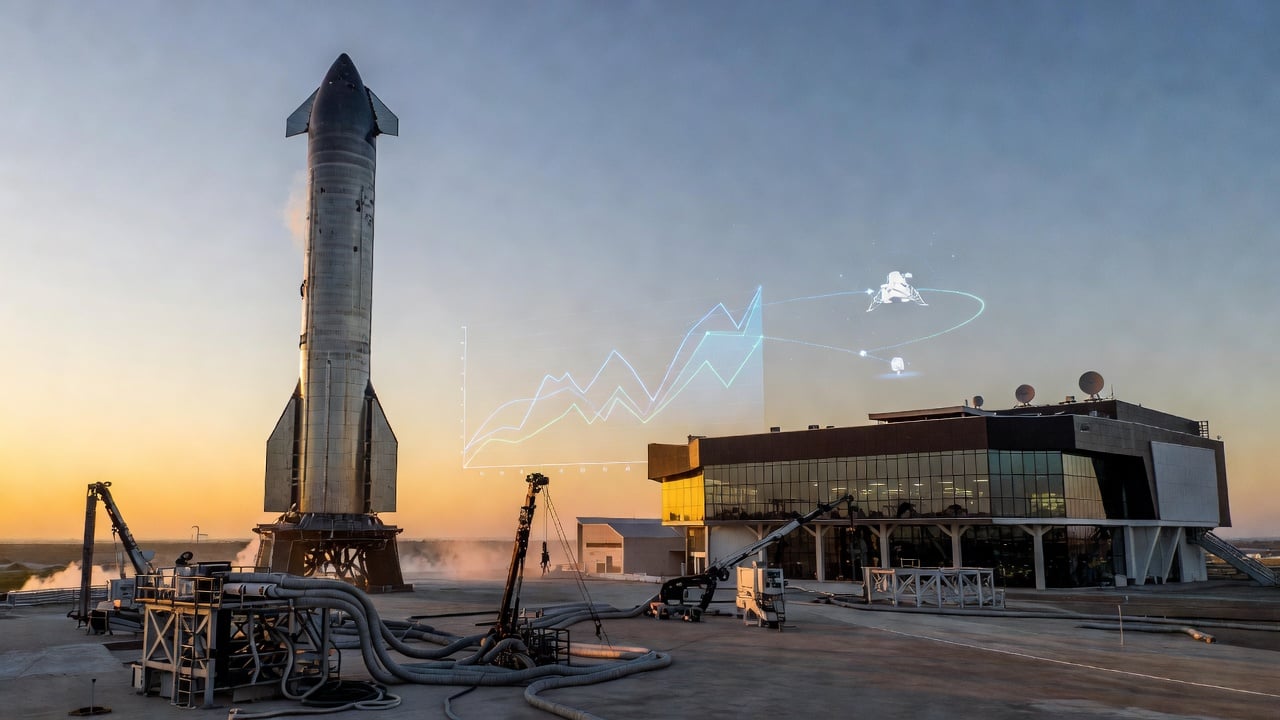
SpaceX has done it again. The rocket maker went public in mid-June 2026 and pulled in $75 billion. That haul made it the largest initial public offering ever. Shares jumped at first. They have since given back some gains. Yet the debut stands as proof that investors still crave big stories tied to space, satellites and artificial intelligence.
But the real action started weeks earlier. On May 22, a new version of Starship lifted off from Starbase in South Texas. The flight, the 12th in the test program, delivered a mostly successful run. The New York Times reported the upper stage survived reentry, fired two of three engines during its landing burn and splashed down in the Indian Ocean. It exploded on contact with the water, as planned. The Super Heavy booster did not fare as well. It crashed uncontrolled into the Gulf of Mexico.
Still, progress showed. Engineers had packed the vehicle with upgrades. Larger fuel tanks. Sleeker Raptor 3 engines. A fresh launch pad built for faster turnaround. The rocket stood 207 feet tall. Thirty-three engines roared at liftoff. One failed on the way up, but the system compensated. It deployed 22 dummy Starlink satellites, some fitted with cameras, faster than in past attempts. Seven months had passed since the previous test. That gap allowed time to fold in hard-won lessons from 2025 flights that ended in fiery disintegrations.
The timing mattered. SpaceX had set the stage for its stock market entry. A successful Starship outing reminded Wall Street why the company commands such attention. Revenue from Starlink keeps climbing. Contracts with NASA for Artemis lunar landers add predictability. And the promise of point-to-point Earth transport or data centers in orbit hints at markets that do not yet exist. Yahoo Finance captured the mood days after the IPO. The piece noted that early gains briefly made Elon Musk the world’s first trillionaire. It also warned of volatility. SpaceX shares pulled back, a reminder that even proven operators face sharp swings.
Analysts at Goldman Sachs, BlackRock and Russell Investments have watched the numbers. They project that 2026 IPO proceeds could top the 2021 record of $142 billion. But the shape of the market has changed. Fewer companies. Much bigger checks. SpaceX alone accounted for the bulk of the year’s activity. Renaissance Capital data cited in the Yahoo Finance report shows the rocket firm raised more than all U.S. IPOs from the previous two years combined. Next in line came AI chipmaker Cerebras with $5.6 billion. Nine other offerings topped $1 billion each. Fewer than 80 companies drove roughly $110 billion. Contrast that with nearly 400 listings needed to hit the 2021 total.
OpenAI and Anthropic have filed confidential paperwork. Both could follow. Yet the Yahoo Finance story says OpenAI may reconsider timing after SpaceX’s post-listing wobbles. The debut has become a barometer. Success breeds confidence. Pullbacks breed caution. Anduril, Discord and Kraken sit on the watch list too. The second half of the year looks crowded with heavyweights.
NASA took notice of the May launch. Administrator Bill Nelson posted on X that the flight brought humanity “one step closer to the Moon…one step closer to Mars.” The agency counts on Starship as its lunar lander for Artemis missions. Plans call for at least 15 Starship launches to support a single crewed Moon landing, according to recent NASA updates shared in industry briefings. That volume demands the very reusability SpaceX is chasing. Catching the booster on the launch tower remains the next milestone. No attempt succeeded in May. Engineers continue to refine the hardware.
Version 3 marks a clean-sheet redesign in several respects. Engineers reworked the propulsion system for higher reliability. They increased propellant capacity to stretch performance margins. The new pad at Starbase features improved flame diverters and quicker propellant loading. These changes address issues seen in earlier flights. Hot staging, heat shield tiles and engine-out capability have all improved. Yet the program still carries risk. Partial engine failures remain common. Reentry plasma can overwhelm sensors. And the final moments of flight continue to test the limits of materials and software.
Investors have priced in that risk. SpaceX’s valuation sits among the highest for any newly public company. Starlink, which now serves millions of subscribers, provides visible cash flow. Government contracts add stability. The IPO proceeds will fund more Starships, more test flights and expanded manufacturing. SpaceX says it aims to build up to 1,000 Starships per year at its Texas and Florida sites. That scale would support regular Mars windows and a self-sustaining presence on the Red Planet. Ambitious. Also expensive.
But the market has spoken. Demand for SpaceX options set records when they began trading. Bloomberg and Reuters covered the frenzy. One Reuters dispatch from early June described Wall Street banks hosting lavish events to court buyers ahead of the offering. Elon Musk addressed employees during a dual-listed Nasdaq bell ringing in New York and Texas. He spoke of revenue predictability and long-term vision. The stock ticker SPCX now trades alongside more traditional names.
Critics point to concentration. A handful of AI and space firms could dominate the year’s listings. Traditional IPO volume stays muted. Smaller companies struggle to attract the same attention. Yet the capital raised flows into technologies with national security ties, communications infrastructure and deep-space exploration. Those areas matter beyond quarterly returns.
Recent weeks show the pace picking up. SpaceX stacked another Starship for static-fire tests in late May. Flight 13 preparations are underway. NASA continues to integrate Starship into Artemis 4 plans targeted for 2028. And the IPO proceeds give Musk’s team runway to iterate quickly. Success in one domain feeds the other. A reliable Starship accelerates Starlink deployment at lower cost. Starlink cash flow funds Starship development. The loop tightens.
Not every flight will go smoothly. The May test still lost the booster. The upper stage met its end in a fireball. Those outcomes match expectations for an experimental vehicle. What counts is the data collected. Sensors captured reentry dynamics. Cameras showed deployment sequences. Flight computers logged engine behavior under stress. Each test shrinks the unknowns.
Wall Street has placed its bet. The largest IPO on record reflects belief that SpaceX can turn vision into revenue at planetary scale. Whether the next offerings from AI labs match that hype remains to be seen. For now, the rocket company sets the standard. Its stock performance will be watched closely. Its launch cadence will be watched even closer.
The year is only half over. More listings loom. Yet few will match the combination of technical ambition and financial scale that SpaceX has displayed. The company kicked off something bigger than its own debut. It signaled that capital markets remain open to bets on the future of human activity beyond Earth. That message resonates. And the rockets keep flying.


 WebProNews is an iEntry Publication