
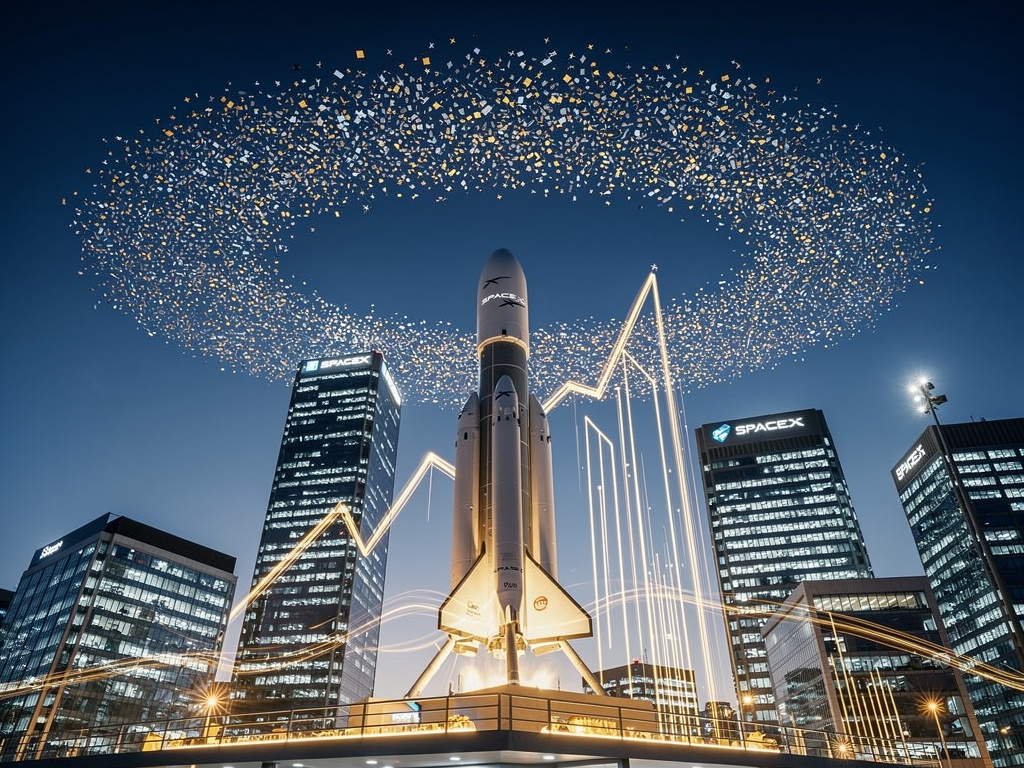
SpaceX has landed. The company founded by Elon Musk in 2002 with the modest goal of reaching Mars completed the largest initial public offering in history this week. It raised $75 billion by selling 555.6 million shares at $135 each. The stock opened at $150 on the Nasdaq under ticker SPCX. It climbed as high as $176 before closing the first day at $160.95, up 19% from the IPO price.
That debut pushed the company’s market value past $2.1 trillion. SpaceX now ranks as the sixth-most valuable public company in the U.S. The move delivered on years of speculation. It also handed Musk a distinction no one else holds. He became the world’s first trillionaire. But the real test begins now.
Investors didn’t just buy rockets. They bought a business that launches more payloads than any other entity on Earth, operates the largest satellite constellation in orbit, and funnels profits into ambitious projects that range from satellite internet to artificial intelligence infrastructure. Starlink, the satellite broadband service, drives much of the excitement. It generated over $11 billion in revenue last year and continues to add subscribers at a rapid clip. The service reached 10.3 million users across 155 countries by the end of March 2026.
Yet the numbers reveal complexity. SpaceX reported a net loss of nearly $5 billion in 2025 even as revenue grew. Government contracts with NASA and the Department of Defense provide steady cash. Starlink’s growth supplies the momentum. The combination convinced buyers to accept a valuation that some analysts viewed as stretched. Morningstar had pegged a fair value near $780 billion months earlier. The market disagreed. It bid the company well beyond that mark on day one.
Musk addressed employees and guests at the company’s Texas headquarters as trading began. He recalled the early days. “I gave SpaceX less than a 10% chance of succeeding at all,” he said, according to reports from the BBC. The ceremony took place alongside a parallel event at Nasdaq’s New York site. The contrast captured the moment. One foot planted firmly on the ground in Boca Chica. The other stepping onto Wall Street.
Early backers scored enormous gains. Founders Fund turned a $600 million investment into more than $50 billion. Sequoia Capital and Andreessen Horowitz each saw returns exceeding $10 billion and $20 billion respectively, per data cited by TechCrunch. The IPO also created roughly 4,400 new millionaires among current and former employees. That group included welders, technicians, and cafeteria staff who had received equity grants over the years. About 400 became centimillionaires. Broad ownership paid off in a way few companies achieve.
The offering carried unusual features. SpaceX set a fixed price of $135 well before the traditional roadshow concluded. It structured the deal as all-primary, meaning the entire $75 billion flowed to the company’s balance sheet rather than selling shareholders. Musk agreed to a 366-day lockup on his shares. Proceeds will fund expansion of the satellite network and AI-related initiatives, according to people familiar with the plans who spoke to Reuters.
Starlink sits at the center of the story. The service now accounts for the majority of SpaceX revenue and shows clear signs of scale. Analysts point to its low-Earth orbit constellation of nearly 10,000 satellites as a formidable barrier to entry. Competitors such as Amazon’s Project Kuiper trail far behind in deployment. Starlink’s ability to deliver broadband to remote areas, ships at sea, and even moving aircraft has turned it into a genuine growth engine. Some estimates suggest the business could command a standalone valuation well into the hundreds of billions if ever spun out.
Yet risks remain visible. Launch cadence must stay high to replenish satellites that deorbit after several years. Regulatory hurdles in multiple countries could slow international expansion. Capital demands for the next generation of vehicles, including Starship, stay enormous. And the company’s heavy involvement in defense projects ties its fortunes to geopolitical shifts and government budgets.
The debut also highlights broader market dynamics. Demand ran four times oversubscribed. The small public float amplified price action. Retail platforms reported record traffic. Robinhood saw especially heavy activity. At the same time, the capital raised in this single transaction exceeded many entire years of venture funding in the space sector. It sets a high bar for the wave of mega-IPOs expected to follow, including potential listings from OpenAI and Anthropic.
Employee wealth creation tells only part of the tale. The IPO minted paper fortunes on a historic scale. It also hands SpaceX a publicly traded currency for acquisitions, employee retention, and strategic flexibility. Musk has long preferred to avoid the quarterly scrutiny that comes with public status. He once called going public “very distracting.” The decision to proceed anyway suggests the benefits now outweigh the costs. Access to deeper pools of capital stands out as a primary driver.
Trading volume exceeded 500 million shares on the first day. That level approached the frenzy seen in Facebook’s 2012 debut. The stock’s path in coming weeks will draw intense focus. Inclusion in the Nasdaq-100 index later this month could bring additional buying from passive funds. Eligibility for the S&P 500 remains further off, likely mid-2027 at the earliest.
Longer term, investors will watch execution on several fronts. Can Starlink reach tens of millions of subscribers while maintaining healthy margins? Will Starship achieve the reusability and flight rate needed to slash launch costs further? How quickly can the company turn its AI efforts into commercial products? These questions will shape whether the $2 trillion valuation holds or contracts.
One thing looks clear already. The barrier between private space companies and public markets has been permanently lowered. SpaceX proved an enterprise once viewed as speculative can command the largest IPO ever recorded and trade like a technology titan. Its performance will influence how future aerospace and satellite businesses approach public listings.
The company that started with a handful of engineers and a Falcon 1 rocket now operates at a scale few imagined possible two decades ago. Public investors own a piece of that ambition. They also shoulder the responsibility of holding management accountable to deliver returns that justify the extraordinary price tag. The rocket has cleared the tower. The trajectory from here depends on sustained performance in orbit and on the balance sheet.


 WebProNews is an iEntry Publication