
Musk’s Intercompany Lifeline: SpaceX’s Massive Cybertruck Buyout and What It Means for Tesla’s Struggles
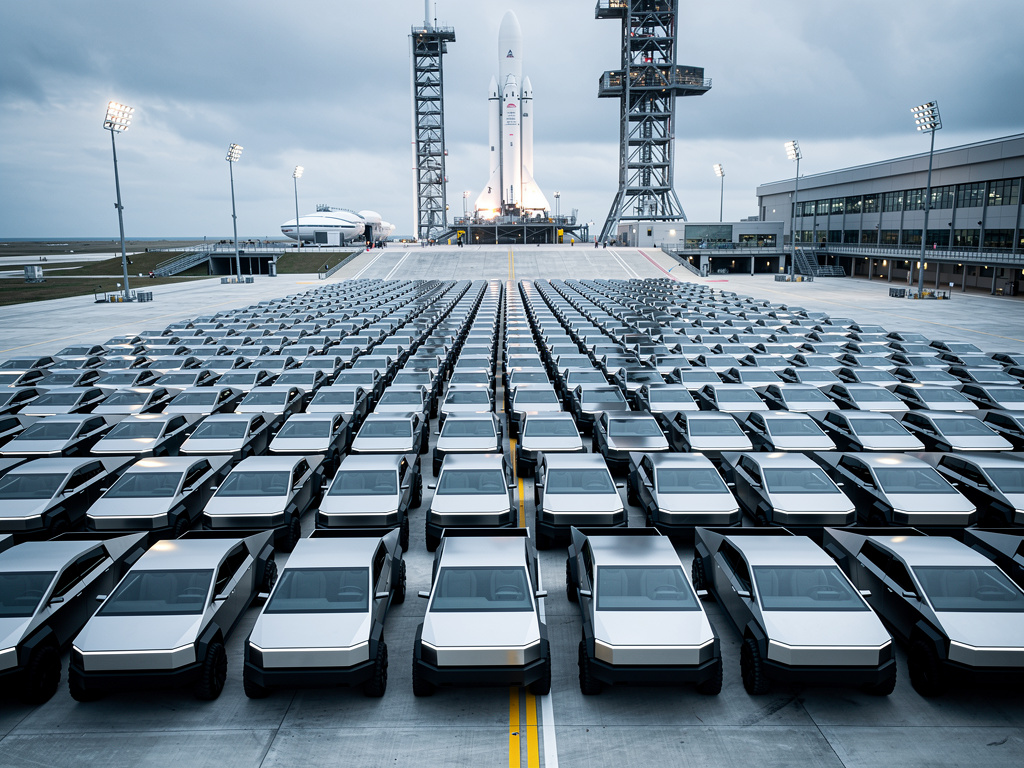
In a move that underscores the intricate web of Elon Musk’s business empire, SpaceX has reportedly acquired over 1,000 Cybertrucks from Tesla, with potential plans to scale up to 2,000 units. This bulk purchase, valued in the tens of millions of dollars, comes at a critical juncture for Tesla as it grapples with sluggish Cybertruck sales and mounting inventory pressures. Sources familiar with the deal, as reported by Electrek, indicate that SpaceX is stepping in to absorb unsold vehicles, effectively providing a financial boost to its sister company under Musk’s umbrella.
The transaction highlights the synergies—and potential conflicts—within Musk’s portfolio of ventures. SpaceX, known for its ambitious space exploration goals, isn’t typically in the market for electric pickup trucks. Yet, the company’s operational needs, from transporting equipment at launch sites to supporting ground operations, could justify such a fleet expansion. Critics, however, see this as a creative accounting maneuver to prop up Tesla’s fourth-quarter figures, which have been battered by production overruns and softening demand for the Cybertruck.
Details emerging from industry insiders suggest the deal was orchestrated swiftly, with deliveries already underway. Posts on X, formerly Twitter, from users tracking Tesla and SpaceX activities have speculated on the logistics, noting sightings of Cybertruck convoys heading to SpaceX facilities in Texas and California. While these social media observations aren’t definitive, they align with reports of hundreds of units spotted at SpaceX sites earlier this fall, as detailed in an October article from the same publication.
Unpacking the Financial Implications
Tesla’s Cybertruck, launched with much fanfare in 2019, promised to revolutionize the electric vehicle market with its angular design and touted durability. However, production delays, quality issues, and a price point starting at around $100,000 have dampened consumer enthusiasm. Sales data from the past year show the model underperforming expectations, leading to a buildup of inventory that Tesla has struggled to clear.
SpaceX’s intervention, as outlined in a recent piece by Jalopnik, could inject up to $200 million into Tesla’s coffers if the purchase reaches 2,000 units, assuming average pricing. This isn’t the first time Musk’s companies have cross-supported each other; earlier reports noted SpaceX committing $2 billion to xAI, another Musk venture facing cash flow challenges.
For investors, this raises questions about corporate governance. SpaceX, a privately held entity with significant backing from venture capitalists and institutional funds, must justify such expenditures. Analysts point out that while legal, these intercompany deals could invite scrutiny from stakeholders concerned about resource allocation. One industry observer noted that SpaceX’s utilization rate for these trucks—potentially low given the company’s focus on aerospace—might not align with optimal capital deployment.
Operational Synergies or Strategic Smoke Screen?
Delving deeper, the Cybertruck’s features make it a plausible fit for SpaceX’s rugged requirements. With its stainless-steel exoskeleton and off-road capabilities, the vehicle could serve in harsh environments like the Boca Chica launch site in Texas, where traditional trucks might falter. Tesla’s official site describes the Cybertruck as “built for adventure and comfort with a durable, unique exterior,” which resonates with SpaceX’s need for reliable transport in remote, high-stress operations.
Recent updates on X from Elon Musk himself, though not directly addressing the purchase, have touched on Cybertruck integrations with other technologies like Starlink. In one post from earlier this year, Musk mentioned the truck’s compatibility with Full Self-Driving software, hinting at potential autonomous applications in industrial settings. This could position the Cybertrucks as more than mere vehicles—perhaps as mobile command centers or power sources for Starlink terminals in connectivity-challenged areas.
However, skepticism abounds. A report from Futurism labels the scale of the buy as “unfathomable,” questioning whether SpaceX truly needs thousands of these trucks or if it’s a bailout disguised as operational necessity. The article cites Electrek’s sources, emphasizing how this move artificially inflates Tesla’s sales metrics at year-end, a tactic that echoes past controversies in Musk’s enterprises.
Market Reactions and Broader Industry Ripples
Tesla’s stock responded positively to the news, with shares jumping as reported by Yahoo Finance. The boost reflects investor relief amid Tesla’s broader challenges, including competition from established automakers like Ford and Rivian in the EV truck segment. Yet, the long-term viability of such intercompany support remains uncertain, especially as Tesla faces regulatory hurdles and supply chain disruptions.
Public sentiment, gauged from discussions on X, is divided. Supporters view it as a smart leveraging of Musk’s ecosystem, with some users praising the efficiency of using Cybertrucks for SpaceX’s ground fleet. Detractors, however, accuse it of market manipulation, pointing to the timing—just before Tesla’s quarterly earnings report. This echoes earlier instances, such as when xAI and SpaceX absorbed unsold Cybertrucks in October, as covered in prior Electrek coverage.
From a strategic standpoint, this deal could foreshadow deeper integrations across Musk’s companies. Imagine Cybertrucks equipped with Starlink for real-time data transmission during rocket tests, or even serving as emergency power units via their built-in batteries. Such innovations might validate the purchase, transforming what appears as a financial patch into a forward-thinking operational strategy.
Regulatory Scrutiny and Ethical Considerations
As Musk’s influence spans multiple industries, regulators are watching closely. The Federal Trade Commission and Securities and Exchange Commission have previously investigated intercompany transactions within his empire, though no major infractions have been found here. Still, SpaceX investors, including those in its latest funding rounds, might demand transparency on how these funds are used, especially with the company’s valuation soaring past $200 billion.
Industry experts argue that while legal, these moves blur the lines between independent entities. A piece from TipRanks posits SpaceX as potentially Tesla’s largest customer for the Cybertruck, underscoring the dependency. This could affect Tesla’s perceived market strength, as bulk internal sales don’t reflect genuine consumer demand.
Moreover, the environmental angle adds complexity. Both companies tout sustainability—Tesla with EVs, SpaceX with reusable rockets—but critics question the carbon footprint of producing and shipping thousands of trucks for what might be underutilized purposes. Discussions on platforms like X highlight this irony, with users debating the true green credentials of Musk’s ventures.
Future Prospects for Tesla and SpaceX Ties
Looking ahead, this purchase might signal a new phase in Musk’s conglomerate strategy. With Tesla ramping up Cybertruck production at its Austin Gigafactory, adjacent to SpaceX operations, logistical efficiencies are evident. Reports suggest ongoing deliveries, with potential for more as SpaceX expands its Starship program, which requires extensive ground support.
Analysts speculate on ripple effects for the EV market. If successful, this could encourage other corporations to adopt fleet electrification, boosting Tesla’s order book. Conversely, if perceived as a gimmick, it might erode investor confidence, particularly amid Tesla’s recent recalls and software glitches affecting the Cybertruck.
Ultimately, the deal exemplifies the high-stakes balancing act Musk performs across his companies. As SpaceX eyes Mars missions and Tesla pushes autonomous driving, these interconnections could either propel innovation or invite greater oversight. Industry watchers will be monitoring how this plays out in upcoming financial disclosures, where the true impact on both entities’ bottom lines will become clearer.
Evolving Dynamics in Musk’s Empire
The broader context reveals a pattern of mutual support among Musk’s ventures. Earlier this year, xAI also purchased Cybertrucks, as noted in Electrek’s October report, suggesting a coordinated effort to manage Tesla’s inventory. This isn’t isolated; SpaceX has integrated Tesla batteries into its facilities for energy storage, demonstrating tangible cross-benefits.
For industry insiders, the key takeaway is the resilience of Musk’s model. Despite criticisms, his ability to pivot resources across companies has sustained growth. Posts on X from Musk often allude to such synergies, like recent mentions of Starship expansions that could necessitate robust ground vehicles.
Yet, challenges loom. Tesla’s Cybertruck sales remain dismal compared to projections, with Jalopnik estimating that even 2,000 units from SpaceX represent a minor salve for overall figures. As competitors advance, Tesla must innovate beyond internal bailouts to reclaim market dominance.
Strategic Insights and Long-Term Viability
In dissecting the purchase, it’s clear that operational needs at SpaceX provide a defensible rationale. The company’s Boca Chica site, prone to extreme weather and heavy lifting, could benefit from the Cybertruck’s towing capacity and durability. Futurism’s coverage highlights the scale, but also notes potential for these vehicles in supporting Starlink deployments, as Musk has teased in past communications.
Financially, Yahoo Finance reports suggest this could stabilize Tesla’s quarter, but sustained demand is crucial. Investors should watch for utilization metrics—will these trucks sit idle, or integrate seamlessly into SpaceX workflows?
As the story unfolds, this episode may redefine intercompany dynamics in tech conglomerates, offering lessons on innovation versus insulation from market forces. With Musk at the helm, expect more such maneuvers, each pushing the boundaries of what’s possible in integrated business ecosystems.


 WebProNews is an iEntry Publication