
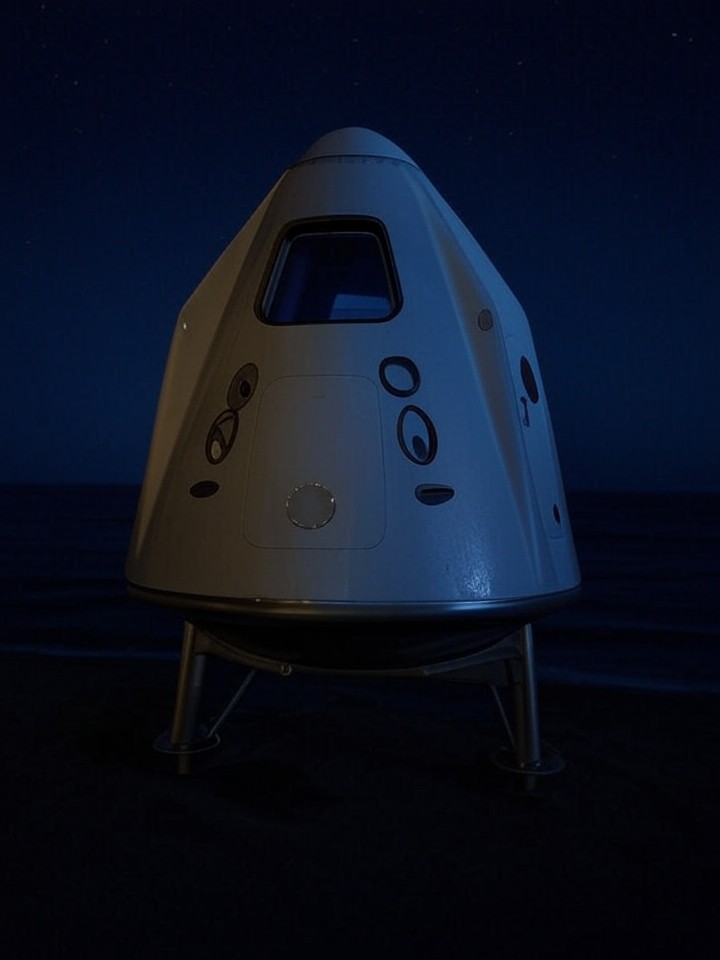
In the early hours of January 15, 2026, a SpaceX Dragon capsule plunged into the Pacific Ocean off the coast of California, marking the end of a mission that had been abruptly shortened by an unprecedented medical crisis aboard the International Space Station (ISS). The four astronauts—two Americans, one Japanese, and one Russian—emerged smiling and waving, but their early return underscored a rare vulnerability in human spaceflight: the limits of medical care in orbit. This event, described by NASA officials as the first-ever medical evacuation from the ISS, has sent ripples through the space industry, prompting questions about protocols, crew health, and the future of long-duration missions.
The mission, known as Crew-11, launched in August 2025 and was originally slated to last until late February 2026. However, just weeks before the splashdown, NASA announced that one crew member had developed a “serious medical condition” requiring immediate attention on Earth. Details remain scarce due to privacy laws, but sources indicate the issue was unrelated to the station’s environment or planned activities like spacewalks. The decision to expedite the return was not taken lightly; it involved coordination among NASA, SpaceX, and international partners, highlighting the intricate web of logistics that sustains the ISS.
Industry experts note that while the ISS is equipped with basic medical facilities—including ultrasound machines, defibrillators, and a stockpile of medications—the station lacks advanced diagnostic tools like CT scanners or surgical suites. In this case, the crew’s onboard physician and ground support teams stabilized the affected astronaut, but definitive treatment demanded a return to gravity-bound hospitals. This incident echoes past health scares in space, such as blood clots discovered in astronauts during previous missions, but it stands out as the first to trigger a full crew evacuation.
The Unfolding Crisis in Orbit
NASA’s Chief Health and Medical Officer, Dr. James Polk, emphasized in a press briefing that the condition was detected promptly, with fellow crew members providing immediate aid. According to reports from The New York Times, the evacuation was classified as a “controlled medical evacuation” rather than an emergency deorbit, allowing for a measured timeline that minimized risks to the crew and the station. This approach avoided the chaos of a rushed departure, which could have strained the Dragon capsule’s systems or left the ISS understaffed.
Posts on X (formerly Twitter) from space experts like astronomer Jonathan McDowell captured the gravity of the moment, describing it as a “big decision” with “multiple domino impacts” on operations. Former astronaut Chris Hadfield echoed this sentiment, praising NASA’s leadership for prioritizing crew safety in the station’s 25-year history. These reactions underscore a broader sentiment in the aerospace community: while spaceflight has become routine, medical emergencies expose the thin margin for error in an environment where help is hundreds of miles away.
The affected astronaut, whose identity NASA has not disclosed, is now receiving treatment at a U.S. facility. Updates from Sky News indicate the individual is stable, but the incident has sparked internal reviews at NASA. Insiders suggest it may involve circulatory issues, a known risk in microgravity where blood flow can lead to clots or other complications, as highlighted in older X posts referencing similar concerns from past missions.
Logistical Challenges and International Coordination
Bringing the crew home early required rejiggering the ISS’s carefully orchestrated schedule. With only one American and two Russians left aboard after the departure, NASA had to accelerate plans for the next crew rotation. SpaceX’s Crew Dragon, which has proven reliable for such transports, undocked smoothly on January 14, as detailed in coverage from CNN. The capsule’s splashdown was textbook, with recovery teams from SpaceX and NASA ensuring a swift extraction.
This event also spotlighted the multinational nature of the ISS program. The crew included astronauts from NASA, JAXA (Japan Aerospace Exploration Agency), and Roscosmos, Russia’s space agency. Coordination across time zones and agencies was critical, especially amid geopolitical tensions that have occasionally strained U.S.-Russian space relations. Yet, as Al Jazeera reported, the partners worked seamlessly, reinforcing the ISS as a symbol of international cooperation even in crisis.
From a technical standpoint, the early return tested the Dragon’s endurance. Designed for missions up to six months, the capsule handled the abbreviated timeline without issue, but engineers are now poring over data to assess any wear. Industry analysts point out that this flexibility is a boon for SpaceX, which has cornered the market on crewed flights to the ISS since the retirement of the Space Shuttle in 2011.
Health Risks in Prolonged Spaceflight
Microgravity’s toll on the human body is well-documented, but this incident brings fresh urgency to ongoing research. Astronauts face muscle atrophy, bone density loss, and fluid shifts that can affect vision and cardiovascular health. A 2025 X post from user pettitfrontier delved into circulatory risks, noting how weightlessness can create “severe” issues despite assumptions that it eases heart function. Such insights align with NASA’s studies, which have identified blood clots in jugular veins as a particular hazard.
In response, NASA has ramped up countermeasures, including exercise regimens and medications. However, as BBC News outlined in its coverage of the splashdown, the lack of onboard surgical capabilities remains a gap. For missions beyond low Earth orbit—like those planned for the moon or Mars—this limitation could be dire, prompting calls for advanced telemedicine or even robotic surgery tools.
The psychological impact on crews shouldn’t be overlooked. Isolation, combined with a medical scare, can heighten stress. Former astronauts have shared anecdotes of onboard health drills, but real emergencies test resilience. This evacuation may lead to enhanced training, incorporating scenarios drawn from this very event.
Implications for Future Missions
Looking ahead, the incident could influence NASA’s Artemis program and private ventures like Axiom Space’s planned stations. With ambitions to return to the moon by 2026, agencies are investing in better medical infrastructure. For instance, the Gateway lunar outpost will include upgraded health modules, learning from ISS lessons.
Cost considerations are also at play. Expediting a return isn’t cheap; estimates from industry sources peg the Dragon mission at hundreds of millions, with disruptions potentially adding more. NBC News highlighted how the early splashdown left the ISS with a skeleton crew, delaying experiments and maintenance.
Moreover, this has fueled debates on astronaut selection and monitoring. With missions growing longer, pre-flight health screenings are intensifying, incorporating genetic testing for predispositions to space-related ailments. Insiders speculate that data from this case will refine models for predicting risks.
Broader Industry Repercussions
The space sector is abuzz with discussions on redundancy. Boeing’s Starliner, still in testing phases, could provide an alternative transport option, reducing reliance on SpaceX. However, delays in that program mean Dragon remains the workhorse, as noted in ABC News reports.
Public perception matters too. High-profile incidents like this can sway funding; Congress has scrutinized NASA’s budget, and a smooth resolution here bolsters confidence. X posts from figures like Mario Nawfal, referencing past mysteries around astronaut health, show how speculation can amplify concerns, urging transparency without breaching privacy.
On the innovation front, companies like Blue Origin and Sierra Space are developing habitats with integrated medical bays. This evacuation serves as a case study, potentially accelerating patents for in-space diagnostics.
Lessons Learned and Path Forward
NASA’s post-mission analysis will be exhaustive, involving simulations to prevent recurrences. Partnerships with medical institutions, such as the Mayo Clinic, are expanding to bridge orbital and terrestrial care. The affected astronaut’s recovery will inform protocols, possibly leading to policy changes on mission durations.
Internationally, this strengthens ties. Roscosmos and JAXA have praised the handling, per PBS News, emphasizing shared responsibility.
Ultimately, this event humanizes space exploration, reminding stakeholders that behind the technology are people facing real perils. As the industry pushes boundaries, balancing ambition with safety remains paramount.
Evolving Standards in Space Medicine
Advancements in wearable tech could revolutionize monitoring. Devices tracking vital signs in real-time, linked to AI diagnostics, are in development, potentially averting future crises.
Regulatory bodies like the FAA are watching closely, as commercial spaceflight grows. Standards for crew health in tourist missions, like those from Virgin Galactic, may tighten.
This splashdown, while successful, marks a pivotal moment, urging the sector to innovate relentlessly for the stars.


 WebProNews is an iEntry Publication