
Catastrophe at Baikonur: Russia’s Space Ambitions Grounded by a Single Blunder
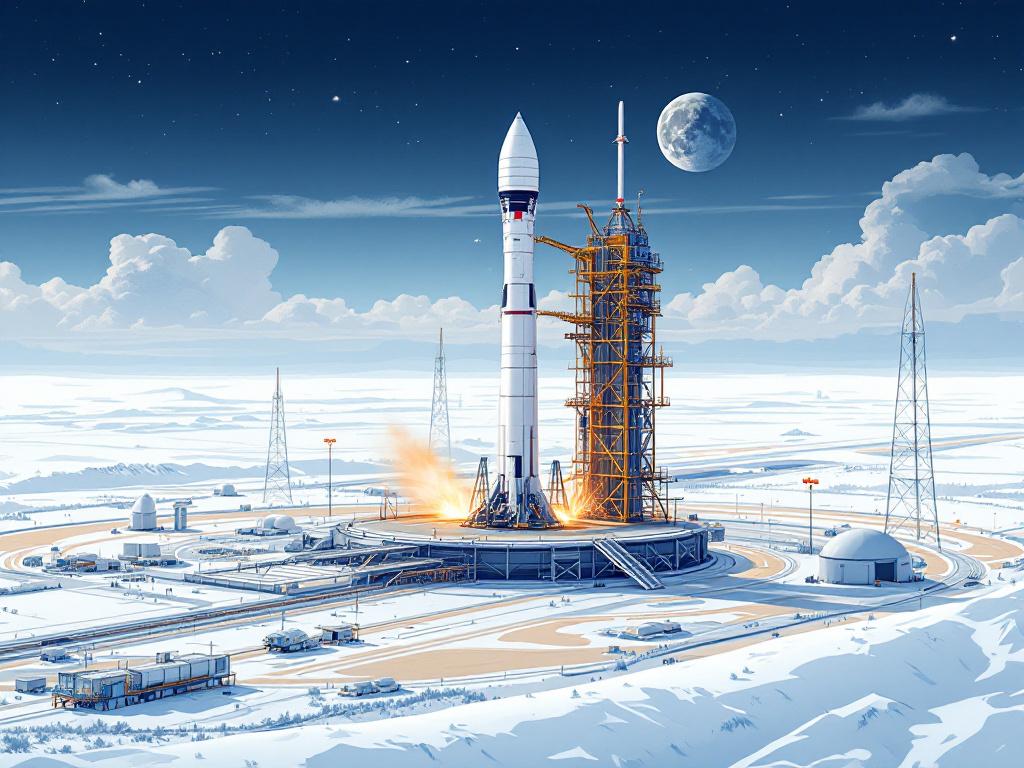
In the predawn hours of November 27, 2025, the Soyuz MS-28 spacecraft lifted off from Kazakhstan’s Baikonur Cosmodrome, carrying two Russian cosmonauts and a NASA astronaut bound for the International Space Station. What should have been a routine mission in the annals of U.S.-Russia space cooperation quickly devolved into a crisis. As the rocket’s engines roared to life, a massive service platform—meant to retract safely—failed to do so, plummeting into the launch pad’s exhaust trench and causing extensive damage. This incident, captured in dramatic footage, has effectively halted Russia’s ability to send humans into space, marking a historic setback for a program that has operated continuously since 1961.
Roscosmos, Russia’s state space agency, confirmed the damage shortly after the launch, downplaying the severity by stating repairs would be completed “very soon.” However, independent assessments paint a grimmer picture. Space analysts estimate that the Baikonur site, Russia’s sole facility for crewed launches, could be out of commission for months or even years. The accident occurred at Site 31/6, the only pad equipped for Soyuz-2 rockets used in human spaceflight. With no alternative sites ready, this mishap exposes vulnerabilities in Russia’s space infrastructure, strained by years of sanctions, budget cuts, and geopolitical tensions.
The crew—Roscosmos cosmonauts Sergey Kud-Sverchkov and Sergey Mikaev, alongside NASA astronaut Chris Williams—docked successfully with the ISS later that day, oblivious to the chaos left behind. Yet, the ground-level fallout is profound. Eyewitness accounts and video from the launch show the 20-ton service bay collapsing into the flame trench, scattering debris and compromising structural integrity. Roscosmos officials have initiated an investigation, but early reports suggest human error: someone forgot to secure the platform properly before ignition.
The Immediate Aftermath and Technical Fallout
According to a report from Al Jazeera, authorities at Baikonur are scrambling to assess the full extent of the damage, with restoration efforts already underway. The cosmodrome, leased from Kazakhstan since the Soviet era, has long been a linchpin of Russia’s space endeavors, but this event underscores its aging infrastructure. Built in the 1950s, Baikonur has seen better days, with maintenance challenges exacerbated by Western sanctions following Russia’s 2022 invasion of Ukraine. These restrictions have limited access to critical components, forcing Roscosmos to improvise with domestic alternatives that may not match previous standards.
Industry experts, including those cited in Business Insider, warn that the exhaust trench, designed to channel rocket plumes away from the pad, is now severely compromised. Repairing it could involve excavating tons of debris, reinforcing concrete structures, and recalibrating launch systems—a process that might take up to two years. In the interim, Russia’s human spaceflight program is grounded, a first in over six decades. This hiatus disrupts not only Roscosmos’s operations but also international partnerships, as the Soyuz has been a reliable ferry for astronauts from multiple nations to the ISS.
The timing couldn’t be worse. With NASA’s Commercial Crew Program, led by SpaceX and Boeing, gaining momentum, Russia’s monopoly on crewed transport to the ISS has already eroded. Yet, Soyuz missions remain a vital backup, especially amid delays in Boeing’s Starliner program. Posts on X (formerly Twitter) from space enthusiasts and analysts reflect widespread concern, with many speculating that this accident could accelerate a shift toward U.S.-dominated access to the station. One viral thread highlighted the irony: even as geopolitical rivals, the U.S. and Russia continue to collaborate in space, a rare bright spot amid strained relations.
Geopolitical Ripples and Historical Context
This isn’t the first hiccup for Roscosmos. The agency has faced a string of setbacks, from the failed Luna-25 moon mission in 2023 to multiple launch anomalies in recent years. But the Baikonur incident stands out for its potential to reshape global space dynamics. As detailed in Phys.org, space remains one of the few arenas of U.S.-Russia cooperation, enduring despite the Ukraine conflict and ensuing sanctions. The joint Soyuz MS-28 launch exemplified this, blending Russian hardware with American personnel under the Cross-Flight Agreement.
However, the accident amplifies calls for diversification. India, for instance, is ramping up its own capabilities through the Indian Space Research Organisation (ISRO), with plans to expand launch pads to avoid similar single-point failures. A recent piece in India Today argues that Russia’s mishap highlights the risks of overreliance on one site, urging nations like India to accelerate infrastructure builds. For Russia, alternatives exist in theory—the Vostochny Cosmodrome in the Far East was intended as a modern replacement—but it’s not yet certified for crewed Soyuz launches and faces its own delays.
Historical parallels abound. The Soviet Union pioneered human spaceflight with Yuri Gagarin’s 1961 orbit, and Baikonur has been the launchpad for every Russian cosmonaut since. Losing this capability, even temporarily, evokes memories of the U.S. Space Shuttle program’s grounding after the 2003 Columbia disaster, which forced NASA to hitch rides on Soyuz rockets. Now, the tables may turn, with Russia potentially needing Western assistance. Analysts on X have drawn these comparisons, noting that while the ISS partnership endures until at least 2030, this event could strain it further.
Economic Toll and Repair Challenges
The financial implications are staggering. Repairing Baikonur could cost hundreds of millions, straining Roscosmos’s budget already hit by inflation and reduced international contracts. A Ars Technica analysis suggests that the agency might need to divert funds from other projects, like the planned Russian Orbital Station, to expedite fixes. Kazakhstan, as the host nation, will also play a role, with negotiations likely over lease terms and shared repair costs.
Technically, the damage extends beyond the visible. The flame trench’s integrity is crucial for dissipating the immense heat and force of rocket exhaust. If compromised, future launches risk further structural failures or even catastrophic explosions. Engineers will need to conduct thorough inspections, possibly using drones and AI-driven diagnostics, to map out repairs. Meanwhile, the grounded program means delayed crew rotations for the ISS, where current expeditions rely on timely resupplies and personnel swaps.
Public sentiment, as gleaned from X posts, mixes schadenfreude with concern. Some users celebrate it as a blow to Russian prestige, while others worry about the broader implications for space exploration. One post likened it to the 2023 Luna-25 crash, where a leading scientist reportedly fell ill amid the fallout, underscoring the high stakes in Russia’s space sector.
Future Prospects and International Ramifications
Looking ahead, Russia faces tough choices. Accelerating Vostochny’s certification for crewed missions is one option, but that site has its own history of construction scandals and delays. Partnering with China, whose space program is burgeoning, could provide another avenue, though ideological differences might complicate matters. As Ukrainska Pravda reports, this accident marks the most significant failure in Russian space efforts since the Soviet collapse, potentially ceding ground to emerging players.
For NASA and its partners, the incident accelerates contingency planning. SpaceX’s Crew Dragon has proven reliable, with multiple successful ISS missions. Boeing’s Starliner, despite teething issues, is poised for more routine flights. This could lead to a scenario where the U.S. holds a near-monopoly on crewed access to the ISS, altering the balance of power in low-Earth orbit operations.
The accident also raises questions about safety protocols. Why wasn’t the service platform secured? Was it oversight, understaffing, or equipment fatigue? Roscosmos’s investigation will likely reveal systemic issues, from training deficiencies to supply chain disruptions caused by sanctions. Industry insiders speculate that this could prompt a broader overhaul, perhaps incorporating more automation to prevent human error.
Lessons Learned and Path Forward
In the broader scheme of space exploration, this event serves as a stark reminder of the field’s inherent risks. Nations worldwide are watching closely, with countries like the U.S. and China investing heavily in redundant systems to mitigate such failures. For Russia, rebounding will require not just technical fixes but also diplomatic finesse to maintain its role in international space efforts.
As repairs progress, the global community awaits updates. Will Baikonur return to service swiftly, or will this mark the beginning of a prolonged eclipse for Russian human spaceflight? The answers could redefine collaborations in orbit, pushing for more resilient, diversified approaches to reaching the stars.
Meanwhile, the ISS crew continues their work, a testament to human ingenuity amid adversity. Yet, on the ground, the debris at Baikonur symbolizes a program at a crossroads, forcing Russia to confront its vulnerabilities in an era of intensifying space competition.


 WebProNews is an iEntry Publication