
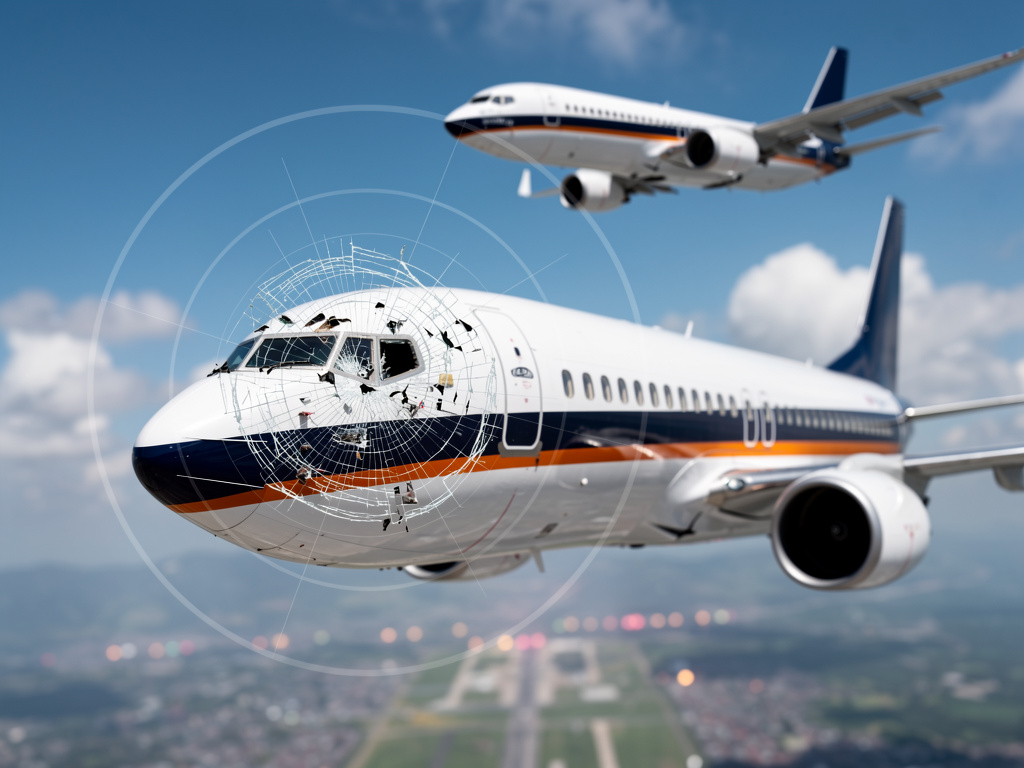
At 31,000 feet over Oklahoma, the captain’s side windshield on a Southwest Airlines Boeing 737 suddenly shattered. The cockpit view turned opaque. Pilots declared an emergency. They turned the jet toward Tulsa.
The May 11 incident aboard Flight 2665 from Albuquerque to Baltimore ended without injury. Passengers reached their destination four hours late. Yet the event has drawn fresh attention to a vulnerability few flyers consider. Windscreens fail. When they do, crews act fast.
Southwest confirmed the details in a statement. “Southwest Airlines Flight 2665 diverted safely to Tulsa due to a windshield crack. The flight landed uneventfully and customers were reaccommodated to Baltimore on another aircraft. We appreciate the professionalism of our flight crew,” the carrier told local news outlets including KRQE. Nothing is more important than safety, the airline added.
The Federal Aviation Administration offered its own account. The plane landed safely after the crew reported a cracked windshield. Investigators would examine what happened. USA Today reported the FAA’s commitment to review the case.
Passenger George Gonzales captured the damage on his phone. He shared the image with reporters. Over the intercom, pilots had explained the situation plainly. Nothing struck the aircraft. The windshield started cracking. Then it exploded. “So credit to the pilots for landing the plane and getting us down safely,” Gonzales said, according to KRQE.
Accounts differ slightly on altitude. Some place the jet at 37,000 feet when the turn south began. Others cite 31,000 feet at the moment of shattering. The aircraft, a 19-year-old Boeing 737-700 registered N265WN, had departed Albuquerque International Sunport around 11 a.m. local time. It was roughly one hour into the flight when trouble appeared. Business Insider detailed the diversion timeline and late arrival into Baltimore around 11:30 p.m.
Windscreens on commercial jets consist of multiple layers. Tempered glass. Vinyl interlayers. The design contains shattering. A single layer can fail while others hold pressure and visibility. Pilots train for such events. They descend if needed. They divert. Procedures exist because risks do.
This wasn’t Southwest’s first encounter. In March, another of the carrier’s 737s returned to Orlando after a crew reported a cracked windshield shortly after takeoff. That flight never left Florida airspace. AirlineGeeks covered the earlier episode.
Nor is Southwest alone. United Airlines faced a more dramatic case last October. A Boeing 737 bound from Denver to Los Angeles suffered a cracked windshield near Moab, Utah. The pilot sustained injury. The jet diverted to Salt Lake City. Officials later pointed to a possible weather balloon strike. A 2.4-pound object. Los Angeles Times reported the injury and emergency landing. The National Transportation Safety Board sent the windshield for laboratory analysis.
Bird strikes cause more windshield damage than balloons or debris. Hail at lower altitudes adds risk. Spontaneous cracks remain uncommon. Yet they happen often enough to warrant procedures and investigations. The FAA logs them. Manufacturers study the materials.
Modern jets fly with redundant systems. Two pilots. Multiple layers of glass. Backup instruments. Still, a shattered captain’s windshield demands attention. Visibility drops. Structural integrity questions arise. Descent rates increase. Pilots prioritize landing.
In the Hainan Airlines case from February, a Boeing 787 crew spotted a crack in the captain’s windshield while climbing through 37,000 feet over the Atlantic. They returned to Brussels. Textbook decision. No one questioned the caution.
Southwest’s latest event comes as the airline manages other changes. Assigned seating arrives later this year. Fleet modernization continues. Operational reliability draws constant scrutiny. One diversion rarely shifts stock prices. Patterns do.
The aircraft involved in the Albuquerque flight continued service after inspection, according to standard practice. Technicians replaced the windshield. Engineers checked for related issues. Regulators will want data from the flight recorders. Weather at altitude. Any maintenance history.
Gonzales’ photo showed a web of fractures across the captain’s panel. The inner layers appeared to have contained the failure. No decompression. No injuries. Passengers transferred to a replacement jet in Tulsa. They reached Baltimore late but intact.
Aviation safety records show these failures rarely lead to catastrophe. The 1990 British Airways incident involved a different failure mode. A cockpit window blew out after improper installation. A pilot was partially sucked out. That event drove new maintenance standards.
Today’s windshields benefit from decades of engineering refinement. They withstand bird impacts at high speed. They resist temperature extremes. They maintain cabin pressure. But age, manufacturing variances, or unseen stresses can still produce cracks.
The FAA’s investigation into the Southwest case will likely take weeks. Preliminary findings could point to material fatigue. Or an undetected flaw. Or nothing conclusive. Such inquiries often close with no dramatic revelation. The system worked. The plane landed.
Travelers rarely think about the thick glass panels at the front of the cockpit. They trust them. Crews train to handle their failure. And on May 11, that preparation paid off. The jet reached Tulsa. Passengers transferred. Life continued.
But the image of a shattered windshield at altitude lingers. It reminds everyone that commercial flight, for all its routine, still carries edge cases. Crews manage them. Regulators study them. Airlines reassure the public. Safety rests on layers. Glass. Training. Redundancy. Quick decisions.
So far, no new incidents have surfaced in the days since. The story remains contained to this one flight. Yet each event adds to the record. Each adds data points for engineers and inspectors. The industry learns. It adapts. Flyers keep boarding.


 WebProNews is an iEntry Publication