
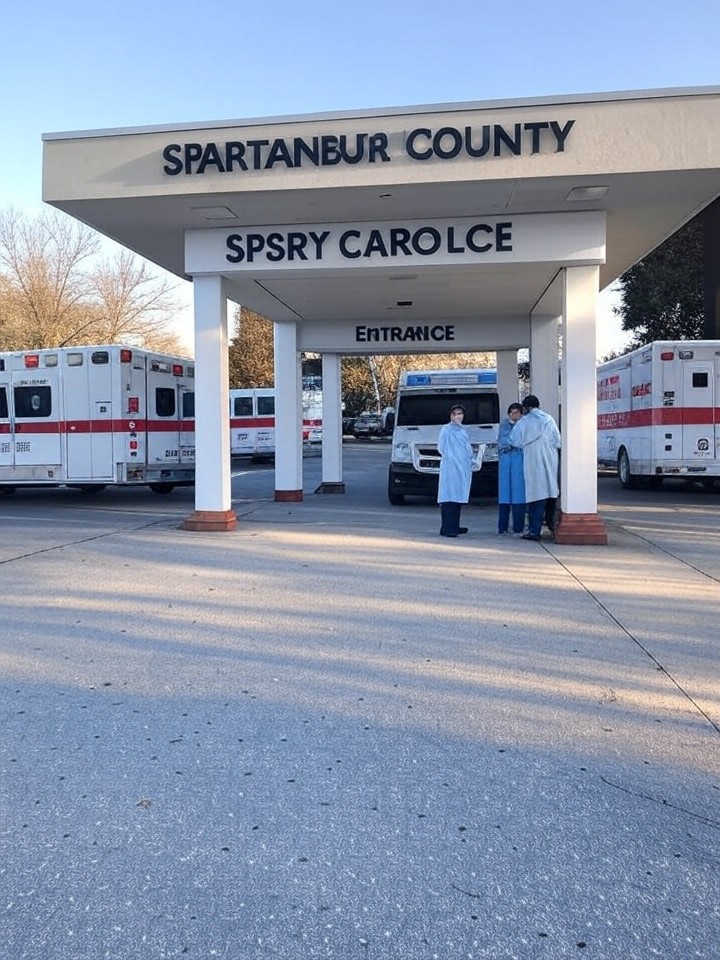
In the heart of South Carolina’s Upstate region, a measles outbreak that began last fall has escalated into one of the most severe public health challenges the state has faced in decades. What started as a handful of confirmed cases in October 2025 has ballooned to over 300 infections, with health officials scrambling to contain the highly contagious virus. The epicenter remains Spartanburg County, where unvaccinated populations, holiday gatherings, and lingering vaccine hesitancy have fueled rapid transmission. As of January 9, 2026, the South Carolina Department of Public Health reported 310 cases, including 99 new ones confirmed in just the past few days, marking a stark reminder of how quickly preventable diseases can resurface in under-immunized communities.
This surge comes amid broader national concerns, with measles cases reaching a 30-year high in the U.S. in 2025, totaling over 2,000 infections across multiple states. South Carolina’s outbreak, declared official on October 2, 2025, after three linked cases, has now surpassed similar flare-ups in Arizona, North Carolina, Ohio, and Utah. Public health experts point to a combination of factors: imported cases from international travel, community spread in areas with low vaccination rates, and the virus’s extraordinary contagiousness—one infected person can potentially transmit it to up to 20 unvaccinated contacts in close quarters.
The human toll is evident in the stories emerging from affected areas. Most cases involve children, many from households where parents opted out of routine MMR (measles, mumps, rubella) vaccinations due to misinformation or personal beliefs. Health officials have quarantined at least 200 individuals, though they warn that hundreds more may have been exposed unknowingly at public sites like schools, stores, and events. “The number of those in quarantine does not reflect the number actually exposed,” noted Dr. Linda Bell, South Carolina’s state epidemiologist, in a recent press release from the South Carolina Department of Public Health.
Rapid Escalation and Community Impact
The outbreak’s acceleration became particularly pronounced after Thanksgiving 2025, when family gatherings amplified transmission. By early December, cases had climbed to over 100, predominantly among unvaccinated children, leading to school closures and widespread quarantines that disrupted education and local economies. Posts on social media platform X highlight public frustration and fear, with users sharing anecdotes of families isolated for multiple 21-day periods, underscoring the virus’s long incubation and the strain on daily life.
Experts from the Centers for Disease Control and Prevention (CDC) have been monitoring the situation closely, updating their data weekly. According to the CDC’s measles cases page, South Carolina’s numbers now rival those in Arizona, which reported nine new cases on the same day the Palmetto State’s tally hit 214 earlier this month. The virus’s spread to neighboring states like North Carolina and Ohio suggests interstate travel and shared community ties are exacerbating the problem, turning a regional issue into a potential multi-state crisis.
Hospitalizations have mounted, with several children requiring intensive care for complications such as pneumonia and encephalitis. The New York Times reported that the outbreak has affected more than 300 people, mostly minors, highlighting the disproportionate burden on young, unvaccinated individuals. Public health campaigns are urging immediate vaccinations, but resistance persists in some pockets, fueled by online narratives questioning vaccine safety despite overwhelming scientific evidence of their efficacy.
Vaccination Gaps and Historical Context
At the root of this crisis lies a troubling decline in vaccination rates. South Carolina’s measles vaccination coverage hovers around 90% in some areas, below the 95% threshold needed for herd immunity. This gap has been widening since the COVID-19 pandemic, when general vaccine skepticism spilled over to routine immunizations. The New York Times article notes that many cases stem from unvaccinated households, a pattern echoed in outbreaks elsewhere.
Historically, the U.S. declared measles eliminated in 2000, meaning no continuous transmission for over a year. However, imported cases and pockets of low immunity have led to periodic resurgences. The current situation risks stripping the nation of that elimination status for the first time in 25 years, as warned in posts on X from epidemiologists like Eric Feigl-Ding. South Carolina’s outbreak follows a record 2025, when the U.S. saw its highest annual cases in over three decades, per reports from Al Jazeera.
State officials have identified multiple exposure sites, including retail outlets and community events, complicating contact tracing. The Center for Infectious Disease Research and Policy (CIDRAP) detailed how 26 new cases pushed the total to 214 by early January, with Arizona matching that figure shortly after. This rapid reporting underscores the challenges in real-time surveillance, as officials struggle to pinpoint infection sources amid widespread community circulation.
Public Health Response and Challenges
In response, South Carolina’s Department of Public Health has ramped up vaccination clinics, offering free MMR shots and emphasizing post-exposure prophylaxis for those potentially infected. Dr. Bell has stressed the importance of quarantine compliance, warning that non-immune individuals face high risks. Yet, enforcement remains tricky in a state where personal freedoms often clash with public health mandates.
Nationally, the CDC recommends two doses of MMR for children, with adults encouraged to verify their immunity through titers if uncertain. The outbreak has prompted calls for stronger school vaccination requirements, though political divisions—evident in X posts blaming figures like RFK Jr. for anti-vaccine rhetoric—complicate policy changes. A NBC News report confirmed the 99 new cases since Tuesday, noting spread to other states and the quarantine of hundreds.
Complicating matters, some cases lack identifiable sources, suggesting undetected community transmission. Ars Technica’s coverage in their recent article highlights how exposure sites are so numerous that tracing becomes nearly impossible, with officials admitting the outbreak is “raging” without clear containment.
Economic and Social Ripples
Beyond health impacts, the outbreak is straining local economies. Businesses in Spartanburg County report absenteeism due to quarantines, while tourism and events have taken hits from public avoidance. Schools have shifted to remote learning in affected districts, echoing pandemic-era disruptions but without the same federal support.
Parents and educators express heartbreak over preventable suffering, as seen in X sentiments where users decry the risks to children from “owning the libs” through vaccine refusal. The ABC News story on the 99 new cases emphasizes the ongoing push for vaccinations, with officials like Dr. Bell quoting studies showing one case’s potential to spawn 20 more.
Comparisons to past outbreaks, such as the 2019 surge in New York, reveal patterns: dense populations with vaccine exemptions accelerate spread. South Carolina’s situation, however, is amplified by recent holiday activities, as detailed in a CNN analysis showing a 68% weekly jump amid festivities and lagging immunizations.
Looking Ahead: Strategies for Containment
To curb the tide, experts advocate multifaceted approaches, including targeted education campaigns to combat misinformation. Partnerships with faith communities and local leaders in low-vaccination areas could rebuild trust, drawing from successful models in other states.
The interstate spread adds urgency, with U.S. News & World Report noting confirmed cases in North Carolina and Ohio linked to South Carolina travel. This connectivity demands coordinated federal response, potentially including emergency funding for vaccines and tracing.
Long-term, bolstering surveillance systems and addressing social determinants—like access to healthcare in rural Upstate regions—will be key. As the outbreak nears 400 cases, per projections from health models, the stakes rise for preventing a nationwide resurgence.
Voices from the Frontlines
Interviews with affected families reveal raw emotions: one parent, speaking anonymously to local media, described watching their child battle high fevers, regretting delayed vaccination amid online doubts. Healthcare workers, overburdened, echo calls for community solidarity.
Posts on X from users like public health advocates amplify these narratives, stressing that measles, once nearly eradicated, thrives on complacency. The Post and Courier labels it the largest active U.S. outbreak, with nearly 100 new cases propelling Spartanburg to the forefront.
Ultimately, this crisis serves as a stark lesson in the fragility of public health gains. With vaccination as the proven shield, South Carolina’s path forward hinges on collective action to protect the vulnerable and halt the virus’s march. As cases mount, the resolve of officials and residents alike will determine if this outbreak becomes a turning point or a prolonged battle.


 WebProNews is an iEntry Publication