
Heartbeat of Defense: Revolutionizing Cyber Protection Through Synchronized Intelligence
In an era where cyber threats evolve at breakneck speed, organizations are turning to integrated systems that promise not just detection but automated, intelligent responses. At the forefront of this shift is Sophos’ Synchronized Security, a framework that links various security components to share intelligence in real time. This approach, powered by the innovative Security Heartbeat technology, allows endpoints and firewalls to communicate seamlessly, elevating defenses from reactive to proactive. By enabling automatic threat isolation and remediation, it addresses the fragmented nature of traditional security setups, where siloed tools often fail to keep pace with sophisticated attacks.
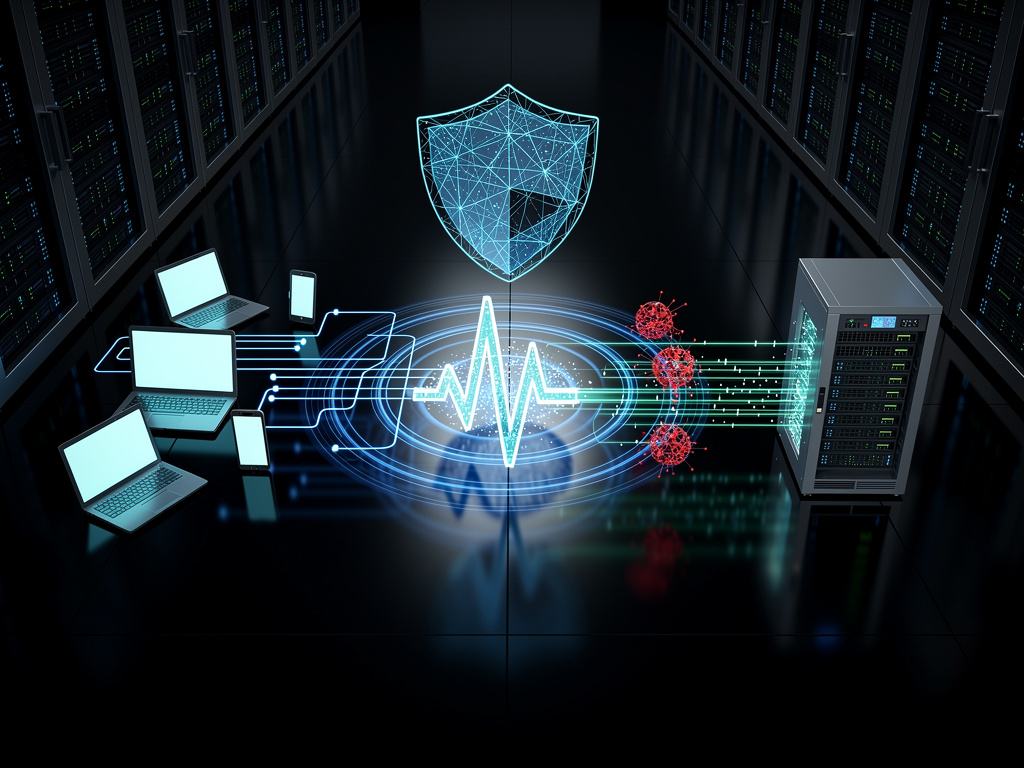
The core idea behind Synchronized Security is straightforward yet powerful: when one part of the network detects a threat, it instantly alerts others, triggering coordinated actions. For instance, if an endpoint identifies suspicious activity, it can signal the firewall to block related traffic, preventing lateral movement by attackers. This interconnectedness reduces response times dramatically, often from hours to seconds, which is crucial in mitigating damage from ransomware or advanced persistent threats. Industry experts have noted that such synchronization is becoming essential as attackers exploit gaps between security layers.
Sophos introduced Security Heartbeat as a key enabler of this ecosystem, essentially acting as a pulse that transmits health status and threat data between devices. According to a detailed explanation in the company’s blog, this technology ensures that compromised endpoints are isolated automatically, limiting the spread of malware. The blog post, available at Sophos Blog, highlights how this feature integrates with products like Intercept X and XG Firewall, creating a unified front against cyber intrusions.
Evolving Threats Demand Integrated Responses
Recent developments underscore the urgency for such technologies. A report from The Hacker News, dated early 2026, discusses how cybersecurity is shifting toward AI-driven defenses and enhanced network visibility to counter faster-moving attackers across cloud and endpoints. This aligns with Sophos’ approach, where Security Heartbeat provides the real-time data sharing needed for these advancements. As threats become more automated and stealthy, the ability to synchronize responses across an organization’s infrastructure is no longer optional but imperative.
Moreover, MITRE’s launch of the Embedded Systems Threat Matrix in January 2026 emphasizes strengthening defenses for critical infrastructure, which often relies on interconnected systems. This matrix, detailed in a GlobeNewswire release at GlobeNewswire, outlines threats to embedded devices, where synchronized security could play a pivotal role by ensuring that vulnerabilities in one area don’t cascade into systemic failures. Sophos’ technology fits neatly into this framework, offering automated isolation that prevents exploitation in real time.
Posts on X from Sophos in early 2026 highlight practical applications, such as defending against North Korean operatives posing as IT workers to gain access. These insights reveal how synchronized systems can detect anomalous behaviors, like unusual remote access attempts, and respond by quarantining affected endpoints. This real-world relevance demonstrates Security Heartbeat’s value in hybrid work environments, where remote threats are rampant.
Technical Underpinnings and Implementation Strategies
Diving deeper into the mechanics, Security Heartbeat operates on a simple yet robust protocol that exchanges lightweight messages containing security status. Healthy endpoints send a “green” heartbeat, while suspicious ones trigger “yellow” or “red” alerts, prompting immediate actions like network isolation. This is particularly effective against zero-day exploits, where traditional signatures fall short. The Sophos Blog elaborates on how this integration extends to cloud workloads, ensuring consistent protection across on-premises and virtual environments.
Implementation requires careful planning, starting with assessing current security tools for compatibility. Organizations often begin by deploying Sophos Central, the management platform that orchestrates these synchronized elements. Case studies show that companies adopting this have reduced incident response times by up to 80%, as the automated threat response minimizes human intervention. For insiders, the key is configuring policies that balance sensitivity to avoid false positives while maximizing coverage.
Furthermore, a PR Newswire article on next-gen defense technologies, published in January 2026 at PR Newswire, notes the transition of AI-driven systems to large-scale deployment. Sophos’ Security Heartbeat exemplifies this, incorporating machine learning to refine threat intelligence over time, adapting to emerging patterns without constant manual updates.
Case Studies and Real-World Impact
One compelling example comes from the healthcare sector, where a major hospital chain implemented Synchronized Security to combat ransomware waves. When an endpoint detected a phishing payload, the heartbeat alerted the firewall to sever connections, containing the threat before it encrypted critical patient data. This not only saved millions in potential downtime but also preserved trust in the institution. Such stories are echoed in industry analyses, reinforcing the technology’s efficacy.
In the financial industry, where compliance is paramount, synchronized defenses help meet regulations like GDPR by ensuring rapid breach containment. A 2026 threatscape report from HarfangLab, accessible at HarfangLab, predicts increased cyber interventions in geopolitical conflicts, making automated responses like those from Security Heartbeat vital for national security assets.
X posts from Sophos also discuss campaigns like Cl0p’s exploitation of vulnerabilities, where synchronized security could have isolated affected systems early. By sharing these narratives, the company illustrates how its technology counters evolving tactics, such as weaponized resumes from threat groups like GOLD BLADE.
Challenges and Mitigation Approaches
Despite its strengths, adopting synchronized security isn’t without hurdles. Integration with legacy systems can be complex, requiring phased rollouts and potential upgrades. Cybersecurity professionals must also address the risk of over-reliance on automation, ensuring human oversight for nuanced threats. Training teams to interpret heartbeat data effectively is crucial to avoid alert fatigue.
A GovTech blog post on security predictions for 2026, found at GovTech, warns of rising APT groups, as detailed in a SocRadar piece at SocRadar. These predictions highlight the need for technologies like Security Heartbeat to evolve, perhaps incorporating more advanced AI for predictive analytics.
To mitigate these challenges, Sophos recommends starting with pilot programs in high-risk areas, gradually expanding based on performance metrics. This iterative approach allows organizations to fine-tune configurations, ensuring the system enhances rather than complicates existing defenses.
Future Directions in Cyber Synchronization
Looking ahead, the integration of quantum-resistant encryption into synchronized frameworks could fortify against future computational threats. Innovations in edge computing will likely demand even tighter synchronization to protect distributed networks. As per a Reuters cybersecurity update at Reuters, global news points to increased focus on OT networks, where guidance from the NCSC, detailed in an Industrial Cyber article at Industrial Cyber, advocates for secure connectivity principles that align with Sophos’ model.
Sophos’ recent launch of Workspace Protection, as mentioned in their X posts, extends synchronized security to remote users, addressing the dispersed nature of modern workforces. This evolution ensures that defenses follow users beyond traditional perimeters, adapting to hybrid models.
Industry insiders anticipate broader adoption as costs decrease and integrations simplify. Partnerships with other vendors could expand the ecosystem, creating cross-platform heartbeats for comprehensive coverage.
Strategic Advantages for Enterprises
For enterprises, the strategic edge lies in the data insights generated by synchronized systems. Analytics from heartbeat exchanges provide visibility into threat patterns, informing proactive policy adjustments. This intelligence loop not only bolsters immediate defenses but also supports long-term resilience planning.
In critical sectors like energy and transportation, where disrupting infrastructure could have cascading effects, Security Heartbeat’s automated responses are game-changers. A Wired security news piece at Wired covers national security implications, emphasizing the need for such technologies amid rising cyber-physical threats.
Ultimately, as cyber adversaries grow more coordinated, defenses must match that sophistication. Synchronized Security, with its heartbeat at the core, represents a paradigm shift toward intelligent, automated protection that could redefine organizational security postures.
Beyond Automation: Human Elements in Synchronized Defense
While technology drives the system, human factors remain integral. Cybersecurity teams must cultivate a culture of vigilance, using synchronized tools as force multipliers rather than replacements. Regular simulations and audits ensure the heartbeat’s effectiveness, identifying blind spots before attackers do.
Insights from Cybersecurity Dive at Cybersecurity Dive and SecurityWeek at SecurityWeek stress the importance of human risk management alongside tech innovations. Sophos’ approach integrates this by providing dashboards that empower analysts to act on synchronized alerts.
As we navigate an increasingly interconnected digital realm, technologies like Security Heartbeat offer a blueprint for resilient defenses, blending automation with strategic oversight to stay ahead of threats.
Global Perspectives and Collaborative Efforts
Internationally, synchronized security concepts are gaining traction in collaborative frameworks. For example, joint initiatives between governments and private sectors aim to standardize threat-sharing protocols, much like Security Heartbeat’s model. A Cybersecurity News article at Cybersecurity News reports on vulnerability analyses that benefit from such integrations.
X posts from Sophos underscore defenses against social engineering, like email bombing tactics, where synchronized responses can flag and isolate suspicious communications swiftly.
By fostering global standards, the industry can amplify the impact of synchronized technologies, creating a unified front against borderless threats. This collaborative spirit, combined with innovative tools, positions organizations to thrive in a high-stakes cyber environment.


 WebProNews is an iEntry Publication