
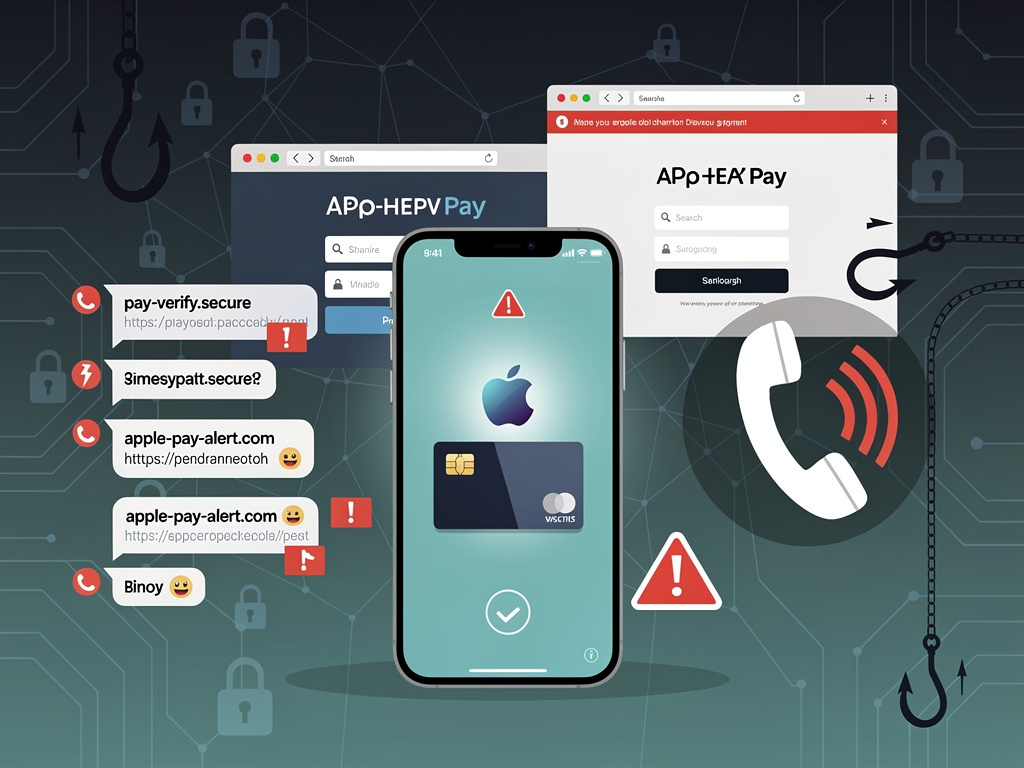
A sophisticated phishing campaign targeting Apple users has emerged, exploiting the trusted Apple Pay platform through a coordinated multi-channel approach that security experts warn represents an evolution in social engineering tactics. The scheme, which combines text messages, phone calls, and fraudulent emails, has successfully compromised user accounts by leveraging the psychological pressure of time-sensitive payment notifications.
According to AppleInsider, the campaign begins with users receiving text messages claiming suspicious activity on their Apple Pay accounts, followed by phone calls from individuals posing as Apple security representatives. The attackers have demonstrated a deep understanding of Apple’s legitimate security protocols, making their fraudulent communications difficult to distinguish from authentic warnings.
The phishing operation represents a significant departure from traditional email-based scams, instead employing what cybersecurity professionals call “smishing” – SMS-based phishing – combined with voice phishing or “vishing” techniques. This multi-pronged approach increases the likelihood of success by creating a sense of urgency and legitimacy that single-channel attacks often fail to achieve. Victims report receiving messages that appear to originate from Apple’s official communication channels, complete with branding and language that mirrors the company’s customer service protocols.
Security researchers have identified several key characteristics that distinguish this campaign from previous Apple-focused phishing attempts. The attackers demonstrate patience, often engaging in extended conversations with potential victims to build trust before requesting sensitive information. They reference specific transaction amounts and merchant names, suggesting access to compromised data or sophisticated social engineering research on their targets.
The Anatomy of a Coordinated Attack
The phishing campaign operates through a carefully orchestrated sequence designed to overwhelm victims’ natural skepticism. Initial contact typically occurs via text message, alerting users to a supposedly unauthorized Apple Pay transaction ranging from $50 to several hundred dollars. The message includes a phone number for users to call if they did not authorize the payment, creating an immediate sense of urgency and providing a direct line to the attackers.
When victims call the provided number, they encounter individuals who present themselves as Apple security specialists. These actors employ scripts that incorporate genuine Apple terminology and procedures, asking victims to verify their identity through a series of questions that seem reasonable but are designed to extract sensitive information. The conversations often last 15 to 30 minutes, with the fraudsters displaying knowledge of Apple’s ecosystem that lends credibility to their claims.
The final stage of the attack involves directing victims to fraudulent websites that closely replicate Apple’s official login pages. These sites are designed to harvest Apple ID credentials, payment information, and in some cases, two-factor authentication codes. The sophistication of these replica sites has increased substantially, with some incorporating real-time elements that adjust based on user input, making them nearly indistinguishable from legitimate Apple interfaces.
Cybersecurity experts note that the campaign’s success rate appears higher than typical phishing operations due to its multi-channel approach and the exploitation of Apple Pay’s relatively recent integration into users’ daily financial activities. Many Apple users have not yet developed the same level of skepticism toward Apple Pay communications as they have toward traditional banking alerts, creating a vulnerability that attackers are actively exploiting.
Technical Indicators and Red Flags
Despite the campaign’s sophistication, security professionals have identified several technical indicators that users can employ to identify fraudulent communications. Legitimate Apple notifications never request passwords, credit card security codes, or full account credentials through text message or unsolicited phone calls. Apple’s official policy, clearly stated on their support website, emphasizes that the company will never ask users to disable security features or provide sensitive information through these channels.
The phone numbers used in the campaign frequently employ spoofing techniques to display caller IDs that appear similar to Apple’s official customer service numbers. However, careful examination often reveals slight variations – an extra digit, a different area code, or formatting inconsistencies. The text messages, while visually convincing, sometimes originate from standard mobile numbers rather than the short codes Apple typically uses for automated communications.
Email components of the campaign, when present, contain subtle grammatical errors and formatting inconsistencies that trained observers can detect. The sender addresses, while appearing legitimate at first glance, often use domains that are variations of Apple’s official domains – substituting characters or adding extra words that casual readers might overlook. Security researchers recommend that users always verify sender information by manually navigating to Apple’s official website rather than clicking embedded links.
The fraudulent websites employed in the campaign utilize HTTPS encryption, which displays the padlock icon in browsers that many users associate with security. However, this encryption only indicates that the connection to the site is secure, not that the site itself is legitimate. Attackers have increasingly adopted SSL certificates to add an additional layer of perceived authenticity to their operations.
Industry Response and Protective Measures
Apple has not issued an official public statement specifically addressing this campaign, maintaining its standard practice of handling security matters through direct customer communication and support channels. However, the company’s existing security guidelines and support documentation provide clear instructions for users who suspect they have been targeted by phishing attempts. Apple recommends that users report suspicious messages to reportphishing@apple.com and delete them immediately without clicking any links or calling provided phone numbers.
Financial institutions partnered with Apple Pay have begun implementing additional verification procedures for transactions flagged as potentially fraudulent. These measures include real-time alerts through official banking apps and increased scrutiny of payment method changes. Some banks have reported blocking transactions that match patterns associated with the phishing campaign, though the effectiveness of these measures varies across institutions.
Cybersecurity firms specializing in financial fraud have noted that this campaign represents part of a broader trend toward payment platform exploitation. As digital wallets and contactless payment methods gain market share, attackers are shifting focus from traditional credit card fraud to these newer technologies. The relative novelty of these platforms means that both users and security systems have less experience identifying and preventing sophisticated attacks targeting them.
Industry analysts suggest that the campaign’s emergence coincides with increased Apple Pay adoption following recent iPhone releases and expanded merchant acceptance. The larger user base creates a more attractive target for cybercriminals, who can achieve greater returns on their investment in developing sophisticated phishing infrastructure. The timing also suggests that attackers are monitoring technology adoption trends and adjusting their strategies accordingly.
User Education and Long-Term Prevention
Security experts emphasize that user education remains the most effective defense against phishing campaigns of this nature. Organizations specializing in cybersecurity awareness training have begun incorporating Apple Pay-specific scenarios into their programs, recognizing that many users lack familiarity with the platform’s legitimate security protocols. These educational initiatives focus on teaching users to recognize the warning signs of social engineering attempts and to verify the authenticity of communications through official channels.
The Federal Trade Commission has updated its consumer guidance to address mobile payment platform security, recommending that users enable all available security features including two-factor authentication, biometric verification, and transaction notifications. These measures, while not foolproof, significantly increase the difficulty for attackers attempting to compromise accounts. The FTC also advises users to regularly review their transaction histories and report any unauthorized activity immediately.
Technology companies and financial institutions are exploring advanced authentication methods that could reduce vulnerability to phishing attacks. Biometric authentication, behavioral analysis, and device-based verification represent potential solutions that could make credential theft less valuable to attackers. However, implementation of these technologies across the fragmented payment ecosystem remains a significant challenge requiring coordination among multiple stakeholders.
The phishing campaign highlights the ongoing tension between user convenience and security in digital payment systems. Apple Pay’s design prioritizes seamless transactions and minimal user friction, characteristics that also create opportunities for exploitation when users are conditioned to approve payments quickly without extensive verification. Balancing these competing priorities will require continued innovation in security technology and sustained investment in user education.
Broader Implications for Digital Payment Security
The sophistication demonstrated by this phishing campaign signals a maturation of cybercriminal operations targeting mobile payment platforms. The coordination required to execute multi-channel attacks, maintain convincing impersonations, and operate fraudulent infrastructure suggests well-funded organizations with significant technical capabilities. This evolution parallels the professionalization of cybercrime observed in other sectors, where attackers increasingly operate with business-like efficiency and specialization.
Payment industry observers note that successful attacks against Apple Pay could have ripple effects across the digital wallet ecosystem. Competitors including Google Pay, Samsung Pay, and emerging cryptocurrency-based payment systems face similar vulnerabilities and may experience copycat campaigns as attackers refine their techniques. The interconnected nature of modern financial systems means that a breach in one platform can undermine consumer confidence across the entire sector, potentially slowing adoption of innovative payment technologies.
Regulatory bodies are beginning to scrutinize the security practices of digital payment providers more closely, with some jurisdictions considering mandatory security standards and breach notification requirements. The European Union’s revised Payment Services Directive and similar initiatives in other regions aim to establish baseline security requirements that all payment platforms must meet. However, the rapid pace of technological change often outstrips regulatory adaptation, leaving gaps that attackers can exploit.
As digital payment platforms become increasingly central to consumer financial activities, the stakes for security failures continue to rise. A successful large-scale compromise could expose millions of users to financial fraud and identity theft, creating liability concerns for platform operators and payment processors. The industry’s response to emerging threats like this phishing campaign will likely shape the future development of payment security standards and influence consumer trust in digital financial services for years to come.


 WebProNews is an iEntry Publication