
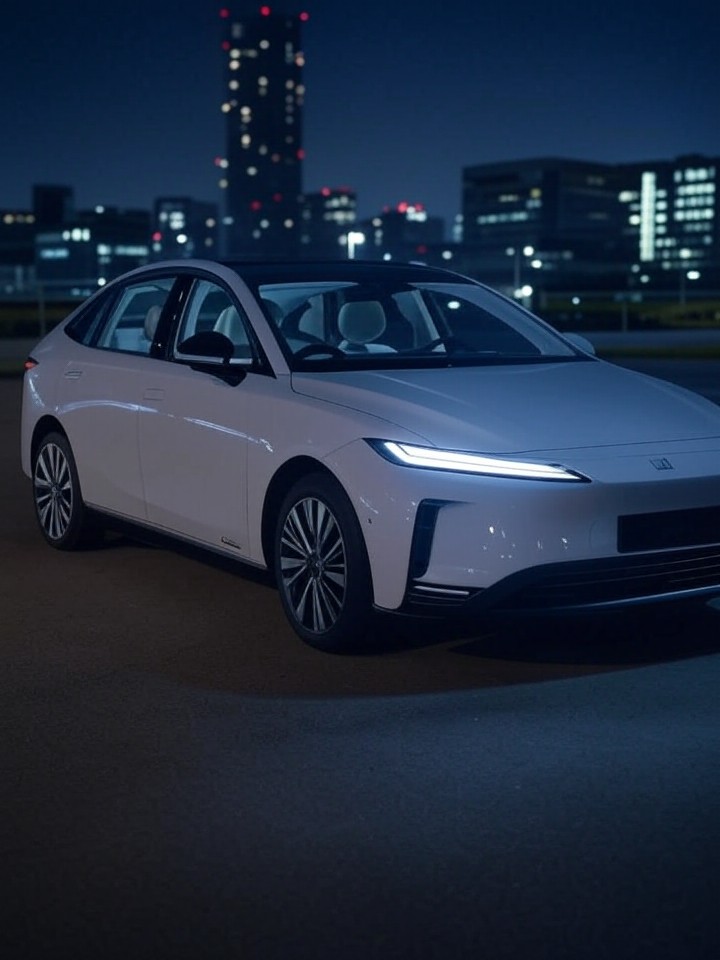
Sony’s Afeela Gambit: Tech Overdrive in an EV World Hungry for Range and Affordability
In the bustling halls of CES 2026, Sony Honda Mobility pulled back the curtain on what could be its defining entry into the electric vehicle arena: the Afeela 1 sedan and a teaser for a crossover variant. This joint venture between electronics giant Sony and automotive stalwart Honda isn’t just dipping a toe into the market; it’s diving in with a vehicle that promises to blend cutting-edge artificial intelligence, immersive entertainment, and semi-autonomous driving into a seamless mobility experience. But as industry observers dissect the prototypes, questions linger about whether this tech-heavy approach can compete in a segment increasingly defined by battery efficiency, charging speed, and price competitiveness.
The Afeela 1, set for initial deliveries in California later this year, boasts an array of features that read like a wishlist from a sci-fi novel. With 40 sensors including cameras, LiDAR, radars, and ultrasonics, the car aims for Level 3 autonomy, allowing drivers to take their hands off the wheel in certain conditions. Inside, a massive dashboard-spanning screen integrates Sony’s entertainment prowess, offering built-in PlayStation remote play and a “creative entertainment space” that could turn commutes into gaming sessions or virtual concerts. Honda contributes the engineering backbone, ensuring the dual-motor all-wheel-drive setup delivers 482 horsepower and a respectable 300 miles of EPA-estimated range from a 91 kWh battery.
Pricing starts at $89,900 for the base trim, climbing to $102,900 for the higher-end model, positioning it squarely in the luxury EV bracket. Yet, as MSN points out in a recent analysis, this tech infusion comes at the expense of core EV attributes like extended range and rapid charging, potentially limiting its appeal in a market where consumers prioritize practicality over gadgets.
AI at the Wheel: Redefining Driver Assistance
Sony Honda Mobility envisions the Afeela as more than transportation—it’s a “mobility as a creative space,” according to company executives at the CES keynote. The integration of conversational AI allows for natural language interactions, where the car can adjust settings, recommend routes, or even curate playlists based on voice commands. This builds on Sony’s heritage in consumer electronics, leveraging algorithms similar to those in its Bravia TVs and noise-canceling headphones to create an intuitive user interface.
Posts on X from influencers like Sawyer Merritt highlight the buzz around these features, noting the vehicle’s support for Tesla’s Supercharger network—a smart nod to infrastructure realities. Merritt’s updates emphasize the pre-production status in Ohio, underscoring the venture’s commitment to North American manufacturing. However, critics argue that while the AI-driven autonomy is impressive, it falls short of full self-driving capabilities offered by rivals like Tesla’s Full Self-Driving suite or Waymo’s robotaxi services.
The crossover prototype, unveiled alongside the sedan, hints at expansion plans. Described in Ars Technica as a vehicle “heavy on AI,” it promises similar tech but in a more family-friendly SUV form factor. This could broaden appeal, especially as SUVs dominate U.S. sales, but details remain sparse, with deliveries not expected until 2028 at the earliest.
Market Positioning Amid Fierce Rivalry
Entering the EV fray in 2026 means contending with established players like Tesla, Rivian, and legacy automakers electrifying their lineups. Sony’s foray isn’t entirely new; the company teased concepts like the Vision-S back in 2020, as recalled in posts on X from Marques Brownlee, who praised its sleek design but lamented its demo-only status. Now, with Honda’s manufacturing muscle, the Afeela represents a tangible product, but one that must navigate a crowded field.
According to Reuters, the joint venture aims for U.S. deliveries by 2028 for broader models, starting with California to leverage the state’s EV incentives and tech-savvy populace. This phased rollout echoes strategies from startups like Lucid, which focused on premium segments before scaling. Yet, BloombergNEF’s Electric Vehicle Outlook, accessible via their site, forecasts that by 2026, global EV adoption will surge, driven by models under $50,000— a price point the Afeela overshoots significantly.
Industry insiders whisper about potential challenges in supply chains, particularly for advanced sensors. Sony’s expertise in imaging tech gives it an edge, but scaling production for automotive-grade components differs vastly from consumer gadgets. Honda’s role mitigates some risks, drawing on decades of reliable vehicle assembly, yet the partnership must prove it can deliver on promises without the recalls that plagued early Tesla models.
Entertainment Edge: Sony’s Secret Weapon?
What sets the Afeela apart is its emphasis on in-car entertainment, a domain where Sony reigns supreme. The dashboard integrates high-fidelity audio with 360-degree sound, reminiscent of the company’s audio innovations. Passengers can stream content, play games via PlayStation integration, or even collaborate on creative projects using the car’s software ecosystem. As detailed in Autoweek, this turns the vehicle into an “interactive tech-packed experience,” potentially justifying the six-figure price for affluent buyers who view driving as downtime.
X posts from outlets like carwow rave about features like built-in PlayStation remote play, speculating on prices exceeding £74,000 in Europe. This aligns with Sony’s broader strategy to extend its entertainment empire into mobility, much like Apple’s CarPlay ecosystem. However, skeptics question if gamers will embrace playing on a moving screen, especially with motion sickness concerns.
Moreover, the software side opens doors to creator-led development. Sony Honda Mobility plans an app store-like platform where developers can build custom experiences, fostering a community around the vehicle. This could evolve the Afeela into a platform rather than just a car, similar to how Tesla’s over-the-air updates keep vehicles fresh.
Battery and Performance Realities
Under the hood—or rather, under the floor—the Afeela’s 91 kWh battery supports DC fast charging, but specifics on speed remain vague. In a market where competitors like the Hyundai Ioniq 5 achieve 10-80% charges in under 20 minutes, the Afeela’s estimated 300-mile range feels adequate but not groundbreaking. Electrek reports that while the sedan launches this year, the SUV variant could offer more range, addressing family needs for longer trips.
Performance-wise, the 482 hp output propels the car from 0-60 mph in around 4.5 seconds, competitive with luxury EVs like the BMW i4. Yet, as MSN’s piece critiques, the focus on tech might overshadow these fundamentals, leaving buyers wondering if the premium is worth it when alternatives like the Tesla Model S offer superior range for similar money.
Sustainability also factors in. Manufactured in Ohio, the Afeela benefits from U.S. incentives under the Inflation Reduction Act, potentially qualifying for tax credits. Honda’s commitment to electrification aligns with global shifts, but Sony must ensure its supply chain for rare earth materials in sensors doesn’t undermine eco-credentials.
Strategic Alliances and Future Horizons
The Sony-Honda partnership leverages complementary strengths: Sony’s innovation in AI and entertainment, Honda’s reliability in vehicles. As Engadget covered in live CES updates, the prototypes showcase this synergy, with a new concept model hinting at even bolder designs.
Looking ahead, expansion beyond California could hinge on building a dealer network or adopting direct-to-consumer sales like Tesla. X sentiment, as seen in posts from Global News Report, buzzes with excitement over the SUV’s potential to “redefine the EV market,” but real-world testing will be key.
Regulatory hurdles loom, particularly for Level 3 autonomy. U.S. agencies like NHTSA scrutinize such systems post-Tesla incidents, demanding robust safety data. Sony Honda Mobility must navigate this carefully to avoid setbacks.
Innovation vs. Market Realities
As the EV sector matures, consumer priorities shift toward affordability and infrastructure compatibility. The Afeela’s Tesla Supercharger integration is a plus, easing range anxiety in the U.S. Ubergizmo notes the teaser for a larger SUV, signaling ambitions to capture more segments.
Yet, with BloombergNEF projecting EVs comprising 30% of global sales by 2027, newcomers like Sony must differentiate without alienating price-sensitive buyers. The Afeela’s tech allure might win early adopters, but sustained success requires balancing innovation with everyday usability.
Ultimately, this venture tests whether a tech company’s flair can disrupt automotive norms. If successful, it could inspire more cross-industry collaborations; if not, it serves as a cautionary tale of overemphasizing gadgets in a practicality-driven market.
Global Ambitions and Competitive Pressures
Sony’s gaze toward EVs dates back to 2022 announcements, as chronicled in The Mainichi, signaling intensified competition. Today, with prototypes rolling out, the focus sharpens on execution.
In Europe and Asia, where EV adoption varies, the Afeela might adapt features like enhanced AI for dense urban driving. Honda’s global footprint could facilitate this, but tariffs and local regulations pose challenges.
Rivals aren’t standing still. Mercedes’ EQS and Audi’s e-tron lineups already blend luxury with tech, while Chinese makers like BYD offer value-packed options. Sony Honda must carve a niche through superior integration.
The Road Ahead for Afeela
Pre-orders are open via Sony Honda Mobility’s site, with reservations signaling strong initial interest. Yet, as Lifehacker observed, the CES keynote’s car-centric focus underscores Sony’s pivot from gadgets to mobility.
Long-term, software updates could keep the Afeela relevant, much like Tesla’s model. This ecosystem approach might generate recurring revenue through subscriptions for premium features.
For industry watchers, the Afeela represents a bold experiment. Its success hinges on whether consumers value immersive experiences enough to overlook EV shortcomings, potentially reshaping how we define vehicles in the electric age.


 WebProNews is an iEntry Publication