
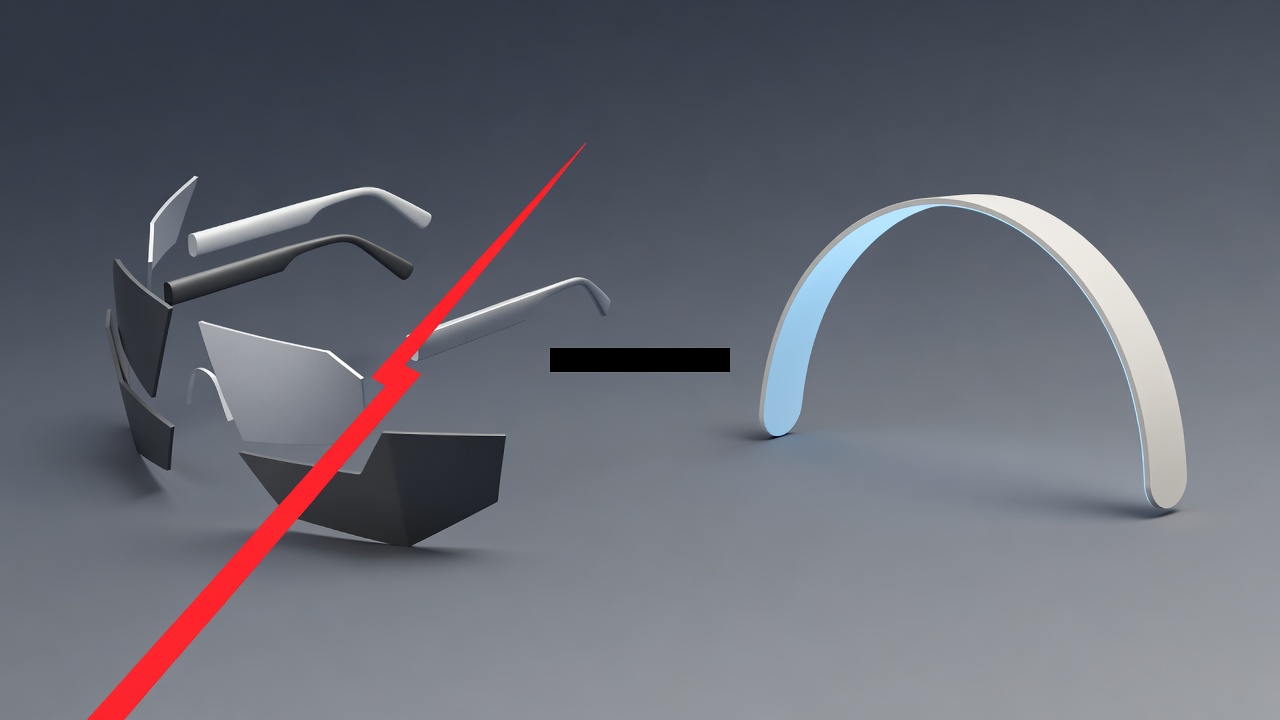
Solos has a problem to fix. Smart glasses with cameras spark outrage over constant recording. The company now offers a literal shield.
Announced today, the new Privacy Kit for its AirGo V2 model lets owners swap out camera-equipped temples for plain ones. A clip-on cover blocks the lens entirely. And a fresh pair of even lighter camera-free glasses joins the lineup. The moves come as privacy backlash against devices from Meta grows louder than ever.
But first, the details. The AirGo V2 sells for $300 and includes a detachable camera in one temple. Users can swap that temple for a $39 pair of transparent, non-powered replacements in various colors. Or they can buy the full Privacy Kit. For $49, it bundles the clip-on shield with clip-on sunglasses that cut glare and UV rays. Grab everything for $79. The shield physically prevents the camera from seeing anything. Simple. Effective. A bit odd to buy a camera then hide it. Yet it addresses real worries head-on.
Alongside the kit, Solos introduced the AirGo A6. These weigh just 19 grams without lenses. That’s roughly half the weight of last year’s A5 version. Thinner temple arms house the speakers, battery and electronics. Multiple frame styles appear, including transparent options. They support full prescription lenses. Voice commands pull up an AI assistant for translations, reminders, messages and more. Open-ear audio plays music or calls while users still hear the world around them. Pricing for the A6 remains unannounced.
The approach stands in sharp contrast to Meta’s strategy. Its Ray-Ban smart glasses have sold more than seven million pairs. They dominate over 80 percent of the AI glasses market in the second half of 2025, according to BBC News. Shipments jumped 139 percent year over year. Yet reports of secret filming, online trolling and human reviewers seeing intimate footage have fueled criticism.
One Swedish investigation revealed contractors in Kenya view videos from Meta glasses used for AI training. “We see everything, from living rooms to naked bodies,” a worker told reporters. Cases included people undressing, using the bathroom or engaging in sex. Meta’s terms of service disclose that humans may review content. The company insists users consent when they opt in to data sharing. Still, the revelation triggered a federal lawsuit and fresh scrutiny.
The Electronic Frontier Foundation urges caution. In a detailed analysis, the group warns that footage can capture passwords on screens, bank details or private talks. The small recording light often goes unnoticed in daylight. Data flows to Meta’s cloud by default. From there it could reach law enforcement or device makers’ servers. “Technology like this is fundamentally an invasion of privacy and it’s really going to face more and more backlash,” said David Harris, a former Meta AI researcher, in the BBC report.
Solos takes a different path. Its modular design appeared last year with the AirGo Vision and V2. Owners could choose camera or no-camera temples from the start. The new kit extends that flexibility to existing V2 owners. No software toggle or app permission can match a physical block. Once the shield snaps on or the camera temple comes off, recording stops. Period.
Privacy advocates have called for exactly this kind of hardware solution. Laws rarely ban public photography. Social norms lag behind the technology. Museums, courts, gyms and restrooms struggle with enforcement. Women report being filmed without consent during private moments then harassed online. Some face demands for payment to remove videos. The AirGo A6 skips the camera altogether. At 19 grams it feels closer to ordinary eyewear than the heavier Meta models, which range from 54 to 60 grams.
Yet Solos faces limits. The A6 and camera-free setups rely on voice for input. They lack the visual AI capabilities that make camera glasses powerful for object recognition or live translation overlays. Users trade functionality for peace of mind. The company integrates with multiple AI services including its own SolosAI and SolosChat. Real-time translation works through audio. Voice memos and calendar alerts function without visual data. Convenient for many tasks. Insufficient for others.
Industry watchers note the timing. Meta announced new glasses last month. Apple, Snap and Google prepare their own entries. Predictions suggest 100 million users within years. That scale could overwhelm existing social contracts. A EFF analysis from March highlights how facial recognition could combine with always-on cameras to identify strangers instantly. Harvard students demonstrated the risk using Meta glasses and external tools.
Solos avoids that path for its base models. The Privacy Kit and A6 signal that not every company chases the same features. Some buyers want AI assistance without the surveillance stigma. Others prefer to add vision capabilities only when needed. The modular system supports both. Swap once for a meeting. Swap back for a hike where photos matter.
Reviewers have called the kit “delightfully weird.” It is. Purchasing glasses with a camera then immediately disabling it raises eyebrows. Why not start with the camera-free pair? The answer lies in flexibility. One device serves multiple needs. And for owners already invested in the V2, the kit offers an upgrade without buying new frames.
Battery life details for the A6 remain scarce. Earlier models delivered solid all-day use for audio and AI queries. The lighter design may require trade-offs. Solos has not released exact figures. Real-world tests will decide comfort over extended wear.
Public reaction on X mixed excitement with skepticism. Some praised the privacy focus. Others questioned whether physical covers feel clunky in daily life. The clip-on shield adds slight bulk. Transparent temples maintain style. Early feedback suggests the lighter A6 could win converts tired of heavier frames.
Broader questions remain. Will hardware fixes satisfy regulators? Europe examines GDPR compliance for always-listening devices. Lawsuits against Meta test claims about data use. If backlash intensifies, more companies may adopt Solos-style modularity. Physical separation of camera and compute offers clear boundaries that software promises cannot match.
For now, Solos positions itself as the thoughtful alternative. Its glasses deliver AI without demanding constant trust. The Privacy Kit turns a potential liability into a feature. Owners control exactly when and how their glasses see the world. In an era of rampant data collection, that choice feels refreshing.
Whether it sways buyers away from Meta’s runaway success story is another matter. Sales numbers tell one tale. Privacy complaints tell another. Solos hopes its hybrid approach splits the difference. Time and user adoption will judge the bet.


 WebProNews is an iEntry Publication