
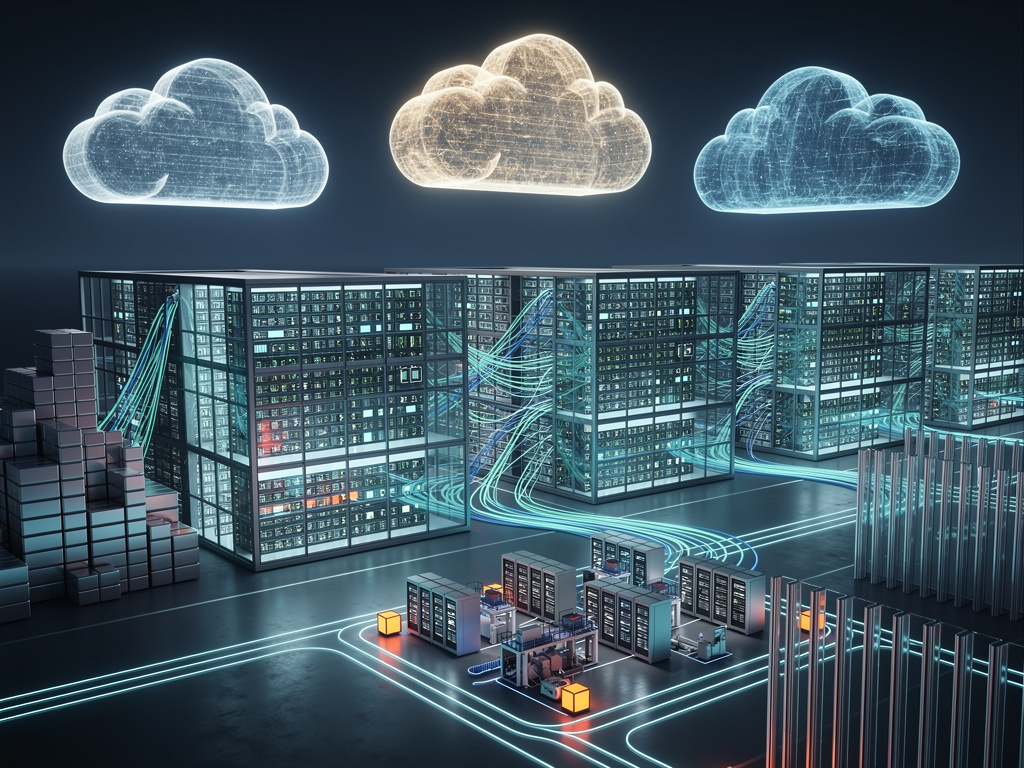
SoftBank’s AI Empire Expands: The $4 Billion DigitalBridge Gambit and Beyond
In the high-stakes world of artificial intelligence, SoftBank Group Corp. is making waves with its latest acquisition, snapping up DigitalBridge Group Inc. for approximately $4 billion. This move, announced on December 29, 2025, underscores the Japanese conglomerate’s aggressive push into AI infrastructure, positioning it as a central player in the burgeoning field of data centers and digital networks essential for powering advanced AI systems. According to details from the official press release on SoftBank’s website, the deal involves acquiring DigitalBridge, a Florida-based alternative asset manager specializing in digital infrastructure like data centers, cell towers, and fiber networks. This acquisition is not just a financial transaction but a strategic alignment aimed at scaling next-generation AI capabilities.
SoftBank’s CEO, Masayoshi Son, has long been known for his visionary—some might say audacious—investments in technology. The DigitalBridge purchase fits neatly into his broader strategy, which has seen SoftBank pour billions into AI-related ventures. Sources close to the matter, as reported in Reuters, indicate that the deal values DigitalBridge at an enterprise value of $4 billion, with SoftBank offering a premium to secure control over its extensive portfolio. This includes assets critical for AI computations, such as high-capacity data centers that can handle the immense processing demands of machine learning models.
The timing of this acquisition is particularly noteworthy, coming on the heels of SoftBank’s frantic efforts to fulfill a massive $22.5 billion funding commitment to OpenAI. As detailed in an exclusive report from the same publication, SoftBank has been racing against a year-end deadline, selling off stakes in companies like Nvidia and T-Mobile US, and even trimming staff to raise the necessary capital. This “all-in” bet on OpenAI, the maker of ChatGPT, highlights Son’s belief in AI as the defining technology of the era.
Building the Backbone for AI Dominance
DigitalBridge’s appeal lies in its specialized focus on the infrastructure that underpins AI advancements. With assets under management exceeding $100 billion, as noted in posts circulating on X (formerly Twitter), the company manages a global network of data centers and connectivity solutions that are increasingly vital as AI models grow in complexity and require more computational power. SoftBank’s integration of these assets could accelerate projects like “Project Stargate,” an ambitious initiative mentioned in a comprehensive research feature on FinancialContent Markets, which aims to create massive AI data centers in collaboration with partners like Microsoft and OpenAI.
Industry insiders view this acquisition as a defensive play against competitors like Amazon Web Services and Google Cloud, who dominate the cloud computing space. By owning DigitalBridge, SoftBank gains direct access to the physical and digital foundations needed for AI training and deployment. A report from The Guardian emphasizes how this deal expands SoftBank’s footprint in AI, allowing it to “center itself in the boom” by deepening ties to essential infrastructure. The premium paid—around 65% over DigitalBridge’s recent stock price, according to some X posts—reflects the urgency and high valuation placed on AI-enabling technologies.
Moreover, this isn’t SoftBank’s first foray into bolstering AI infrastructure. Earlier in 2025, the company was involved in discussions for multi-billion-dollar investments, including a potential $25 billion direct infusion into OpenAI, as buzzed about in various X threads. While not all rumors panned out, they illustrate the fervor surrounding SoftBank’s moves. The DigitalBridge deal, expected to close in the second half of 2026, per SoftBank’s announcement, could provide the hardware backbone for such software-focused investments.
From Vision Fund to AI Powerhouse
SoftBank’s journey in AI investments traces back to its Vision Fund, which has backed numerous startups in the sector. However, the shift toward infrastructure marks a maturation of strategy. In November 2025, SoftBank sold its entire stake in Nvidia for $5.83 billion, as covered by CNBC, redirecting funds toward commitments like the OpenAI pledge. This liquidation spree, including offloading T-Mobile shares worth $4.8 billion, demonstrates the lengths to which Son is going to fund his AI ambitions.
The OpenAI commitment itself is staggering. Sources in a Yahoo Finance article, drawing from Reuters insights, describe how SoftBank tapped undrawn margin loans against its Arm Holdings stake to meet the $22.5 billion target by December 31, 2025. This investment cements SoftBank’s position as a major backer of OpenAI, potentially influencing the development of future AI models. Industry observers on X have speculated about partnerships, such as a $500 billion AI infrastructure play involving OpenAI, SoftBank, and Oracle, with immediate deployments in Texas—though these remain unconfirmed, they fuel excitement about collaborative mega-projects.
Critics, however, point to risks. SoftBank’s heavy concentration in AI and semiconductors, as analyzed in the FinancialContent Markets piece, means its fortunes are tied to the sector’s success. A downturn in AI hype could spell trouble, especially given past Vision Fund losses. Yet, Son’s track record of bold bets, like his early investment in Alibaba, suggests he thrives on such high-wire acts.
Navigating Regulatory and Market Hurdles
As SoftBank integrates DigitalBridge, regulatory scrutiny looms. The deal, involving critical infrastructure, may attract attention from antitrust bodies in the U.S. and Japan. A piece from The Tech Portal notes that this acquisition plugs directly into Son’s AI buildout, potentially raising concerns about market concentration in data centers. SoftBank has assured stakeholders that the merger will enhance competition by scaling infrastructure for broader AI adoption.
Market reactions have been mixed but generally positive. SoftBank’s stock saw a bump following the announcement, with analysts praising the strategic fit. Posts on X highlight sentiment, with users like financial commentators expressing optimism about SoftBank’s “doubling down on AI” through this $4 billion cash deal. This enthusiasm contrasts with earlier skepticism, such as warnings about overcommitment to OpenAI amid market volatility.
Looking ahead, SoftBank’s moves could reshape global AI dynamics. By controlling more of the supply chain—from chips via Arm to data centers via DigitalBridge—SoftBank aims to create an ecosystem resilient to external disruptions. The company’s press release on its site underscores this, stating the acquisition will “scale next-gen AI infrastructure” for a rapidly evolving tech environment.
The Broader Implications for Tech Giants
This acquisition also ties into SoftBank’s other 2025 activities. For instance, rumors of a $40 billion investment in OpenAI at a $260 billion valuation, floated on X, suggest even larger plays are in the works. While not verified, such discussions indicate SoftBank’s appetite for scale. Additionally, the sale of Nvidia stakes, as reported by CNBC, freed up capital that could fund further acquisitions or R&D in AI.
Competitors are taking note. Oracle’s rumored involvement in a massive infrastructure partnership, as per X posts, points to potential alliances that could accelerate AI deployment. SoftBank’s strategy here mirrors broader industry trends, where firms like Microsoft and Google are investing heavily in proprietary data centers to support their AI ambitions.
For industry insiders, the key takeaway is SoftBank’s pivot from pure venture capital to integrated operations. By owning infrastructure, SoftBank reduces dependency on third parties and positions itself to profit from the AI surge. As one X user put it, this is SoftBank “moving to control AI infra,” a sentiment echoed in reports from American Bazaar Online, which links the deal to SoftBank’s OpenAI commitments.
Strategic Bets in a Volatile Arena
Delving deeper, SoftBank’s financial maneuvering reveals a company unafraid of leverage. The use of margin loans against Arm, a chip designer pivotal to AI, adds layers of risk but also potential reward. If AI continues its trajectory, these investments could yield exponential returns, much like SoftBank’s past successes.
Challenges remain, including integration risks with DigitalBridge. Merging cultures and operations across continents will test SoftBank’s management. Moreover, geopolitical tensions could impact global infrastructure deals, as hinted in Guardian coverage.
Yet, optimism prevails. With the DigitalBridge acquisition, SoftBank is not just investing in AI—it’s building the very foundations. This could herald a new era where conglomerates like SoftBank dictate the pace of technological progress.
Looking Toward Tomorrow’s Innovations
As 2025 draws to a close, SoftBank’s actions signal confidence in AI’s longevity. The $4 billion deal, combined with the OpenAI funding, positions the company at the forefront of innovation. Industry watchers will monitor the upcoming stock split in January 2026, as mentioned in FinancialContent Markets, as a bellwether for SoftBank’s health.
Partners like OpenAI stand to benefit from enhanced infrastructure, potentially speeding up advancements in generative AI. For investors, this represents a high-reward opportunity, albeit with inherent volatility.
Ultimately, Masayoshi Son’s vision is clear: dominate AI through strategic acquisitions and bold investments. Whether this gambit pays off will define SoftBank’s legacy in the coming years. (Word count approximation: 1240)


 WebProNews is an iEntry Publication