
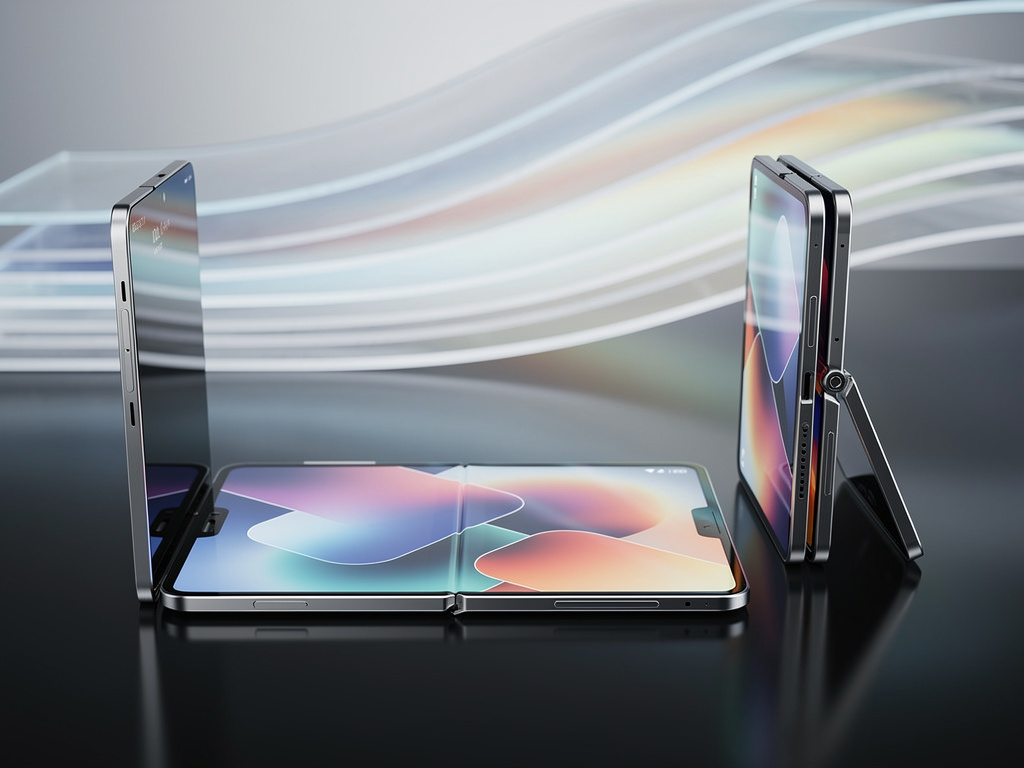
Unfolding Ambition: Smartphone Makers Bet Big on Slimmer Silhouettes and Bendable Boundaries
In an era where smartphone designs have often felt stagnant, a fresh wave of creativity is emerging from the world’s top manufacturers. Companies like Samsung, Huawei, and Apple are pushing the envelope with devices that fold, bend, and slim down to unprecedented dimensions, signaling a renewed focus on form factor as a key differentiator. This shift comes at a time when consumers are demanding more than just incremental upgrades in processing power or camera specs—they want gadgets that redefine portability and functionality. As we approach 2026, these innovations are not merely aesthetic; they’re strategic moves to capture market share in a saturated field.
The resurgence of interest in foldable phones, in particular, marks a pivotal turn. After years of experimentation, foldables are transitioning from niche curiosities to mainstream contenders. Market analysts project significant growth, driven by advancements in materials science and display technology that address early pain points like durability and creases. This evolution is evident in recent launches, where devices unfold into tablet-like screens while maintaining pocket-friendly profiles, appealing to professionals who juggle work and leisure on the go.
Beyond foldables, the trend toward ultra-thin designs is gaining traction, with brands vying to produce the slimmest flagships yet. These efforts reflect a broader industry push to innovate amid slowing sales cycles, where differentiation through physical design can sway buyers more than software tweaks alone. As competition intensifies, these developments could reshape consumer expectations and force laggards to adapt.
Revitalizing Form Factors Amid Market Plateaus
Drawing from recent industry reports, the foldable segment is poised for a breakout. According to a forecast by IDC, the worldwide foldable smartphone market is expected to grow 30% year-over-year in 2026, fueled in part by Apple’s anticipated entry with a foldable iPhone. This projection underscores how established players are betting on foldables to inject excitement into their lineups, especially as traditional slab phones struggle to differentiate.
Posts on X highlight growing enthusiasm among tech enthusiasts for these evolving designs. Users are buzzing about tri-fold concepts and slimmer profiles, with discussions pointing to Huawei’s Mate XT Ultimate as a standout example that unfolds into a mini-tablet, blending phone and tablet functionalities seamlessly. Such sentiment reflects a consumer base eager for devices that adapt to multifaceted lifestyles, from productivity tasks to immersive entertainment.
Meanwhile, Samsung appears to be doubling down on foldables for 2026, as noted in a TechRadar analysis. The company is exploring models like the Galaxy Z Trifold, which promises to expand the foldable category beyond book-style and flip designs. This focus stems from internal strategies to lead in innovation, particularly as rivals like Oppo and Motorola introduce competitive alternatives with enhanced cover screens and AI integrations.
Engineering Challenges and Breakthroughs
Creating these transformative devices isn’t without hurdles. Early foldables suffered from visible creases and fragility, but recent advancements in ultra-thin glass and hinge mechanisms have mitigated these issues. For instance, Samsung’s goals for its Fold series include reducing creases, integrating styluses, and improving cameras while trimming size and weight, as shared in discussions on X dating back to development phases.
A deeper look reveals how material innovations are key. Companies are leveraging flexible OLED panels that withstand thousands of folds without degrading, a feat achieved through layered composites and reinforced substrates. This progress is crucial for mainstream adoption, as reliability concerns have historically deterred buyers. Market data from Mordor Intelligence indicates the foldable market could reach $31.30 billion in 2025, growing at a compound annual rate of over 30% through 2030, with major players like Samsung, Huawei, and Oppo driving the charge.
On the slim side, the push for thinner phones is equally ambitious. Reports suggest brands are targeting sub-7mm thicknesses, incorporating larger batteries and advanced cooling systems without compromising performance. A CNET piece explores how this trend signals a return to bold innovation, with manufacturers like Samsung and Apple rumored to release “Slim” variants of their flagships in 2025 and beyond.
Market Dynamics and Consumer Shifts
The competitive arena is heating up, with foldables expected to outpace overall smartphone growth. Omdia’s analysis, as detailed in a blog post, forecasts flat shipments at 17.2 million units for 2025 before a surge in 2026, attributed to new entrants and refined designs. This plateau in 2025 highlights the need for compelling features to reignite demand, such as AI-enhanced multitasking on larger unfolded screens.
Consumer trends are evolving in tandem. A TechTimes exploration of 2026 trends emphasizes sustainable, immersive devices that integrate seamlessly into daily routines. Foldables, with their ability to morph from compact phones to expansive displays, cater to this by enabling better content creation and consumption without carrying multiple gadgets.
X posts further illustrate this shift, with users praising models like the Motorola Razr Ultra for its stylish flip design and premium features, including large cover screens and fast charging. Such feedback suggests that aesthetics and versatility are becoming as important as raw specs, influencing purchasing decisions in a market where differentiation is paramount.
Strategic Plays by Industry Giants
Apple’s potential foldable iPhone, slated for 2026, could be a game-changer. IDC’s report anticipates this move will boost the category significantly, drawing in iOS loyalists who have waited for Cupertino to innovate in this space. Until then, Android makers are filling the void, with Samsung leading through iterative improvements and Huawei pushing boundaries with tri-fold experiments.
Forbes outlines eight key trends shaping 2026 smartphones in a recent article, including major upgrades in AI, connectivity, and design. Foldables fit neatly into this narrative, offering smarter interfaces that leverage on-device AI for predictive folding behaviors and enhanced user experiences.
Moreover, the integration of foldables with emerging tech like AR glasses is on the horizon. Mashable’s forecast in a piece predicts that foldable displays will dominate headlines alongside AI robots, creating ecosystems where phones serve as hubs for augmented realities.
Global Adoption and Economic Implications
Adoption rates vary by region, with Asia leading due to early launches from Samsung and Huawei. In the U.S., foldables are gaining ground as prices drop and durability improves, making them accessible beyond early adopters. Electronics For You reports in a feature that new launches from multiple brands will propel 30% growth in 2026, far outstripping the broader market.
Economic factors play a role too. Rising component costs for flexible displays could keep prices premium, but economies of scale are expected to lower barriers. Vocal Media’s futurism take, found in a post, posits that by 2025, foldables will become mainstream, revolutionizing interactions through AI and adaptive interfaces.
X conversations echo this optimism, with posts speculating on rollable designs from Samsung that expand from flip-phone sizes to full displays, hinting at even more radical form factors ahead.
Innovation’s Ripple Effects on Ecosystems
These design shifts are influencing accessory markets and software development. App developers are optimizing for variable screen sizes, while case makers innovate with flexible protections. CNET’s review of 2025’s standout phone features in another article highlights big batteries and skinny designs as exciters, underscoring how thinness complements foldability.
The Straits Times reported on Samsung’s 10-inch pocketable screen, as seen in recent X shares, ending debates on portability versus size. This capability positions foldables as productivity powerhouses, ideal for remote workers and creatives.
Looking ahead, the fusion of slim and foldable tech could lead to hybrid devices that roll, fold, and stretch, as teased in conceptual videos circulating on X. Huawei’s tri-fold, for example, has drawn crowds at events, signaling strong market potential.
Pushing Boundaries for Tomorrow’s Devices
As 2026 looms, the emphasis on innovative designs is clear. Brands are not just iterating; they’re reimagining what a smartphone can be. From Samsung’s trifold ambitions to Apple’s rumored entry, the sector is abuzz with possibilities that blend hardware prowess with user-centric features.
Challenges remain, such as ensuring battery life in slim profiles and perfecting hinges for longevity. Yet, the momentum is undeniable, with market forecasts painting a vibrant picture of growth and diversification.
Ultimately, these advancements promise to make smartphones more versatile companions, adapting to our needs rather than dictating them. As industry insiders watch closely, the coming years will reveal whether this wave of creativity sustains or folds under pressure.


 WebProNews is an iEntry Publication