
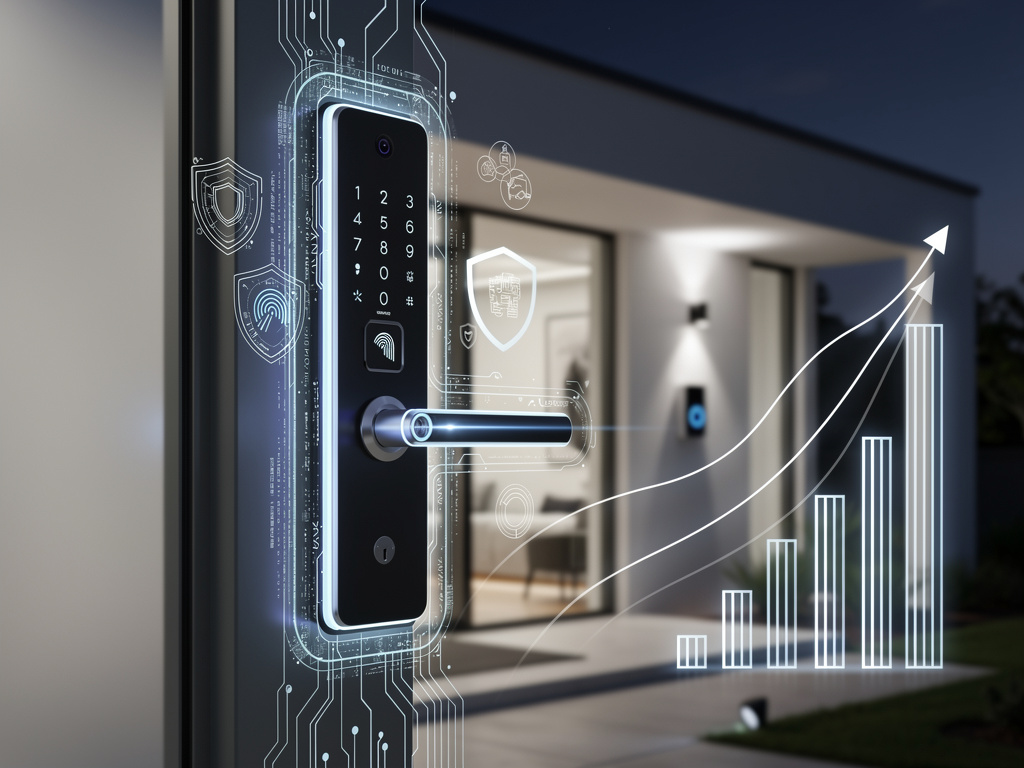
In an era where convenience and security increasingly intersect with technology, smart locks and keyless entry systems have transformed from niche gadgets to essential components of modern homes. These devices promise to eliminate the fumbling for keys, offering instead seamless access through apps, biometrics, or voice commands. But as adoption surges, questions about reliability, cybersecurity, and integration with broader smart home ecosystems loom large for industry professionals and homeowners alike.
Recent advancements highlight how far this technology has come. For instance, models like the Schlage Arrive Smart WiFi Deadbolt, praised for its sturdiness and simplicity in a review by The New York Times’ Wirecutter, allow users to monitor and control access remotely. This lock integrates with major platforms like Amazon Alexa and Google Assistant, enabling voice-activated locking and unlocking. Such features not only enhance user experience but also address practical concerns, such as granting temporary access to guests or service providers without physical keys.
The market’s growth underscores this shift. According to a report from SNS Insider, the U.S. digital door lock system market was valued at $2.21 billion in 2024 and is projected to reach $4.79 billion by 2032, driven by demand for keyless access. Globally, Astute Analytica forecasts the smart lock market to exceed $16.47 billion by 2033, fueled by innovations in connectivity and security protocols. These figures reflect a broader trend toward automated home security, where traditional locks are being supplanted by digital alternatives that promise enhanced protection against unauthorized entry.
Evolving Security Features in Smart Locks
At the heart of smart lock appeal is their multifaceted security enhancements. Biometric options, such as fingerprint scanners and facial recognition, are becoming standard, reducing reliance on easily lost or duplicated keys. A post on X from industry observers notes the rise of ultra-wideband (UWB) technology in locks like the Ultraloq Bolt Mission, which enables hands-free unlocking while maintaining high privacy standards. This aligns with predictions that fingerprint-based systems may dominate over facial recognition in residential settings by 2026, due to concerns over data privacy and accuracy in varying lighting conditions.
Innovations aren’t limited to access methods. AI-powered theft detection is emerging as a key feature, with systems using machine learning to identify unusual patterns, such as repeated failed entry attempts, and alert homeowners instantly. For example, the Theft Detection Lock, discussed in various tech forums, employs AI to safeguard not just physical entry but also digital data associated with the lock’s app. This dual-layer protection is crucial as cyber threats evolve, with hackers potentially targeting connected devices to gain unauthorized access.
However, security concerns persist. Older implementations, as highlighted in a decade-old but still relevant critique by cybersecurity expert Lesley Carhart on X, warn against vulnerabilities in WiFi-connected hubs that could expose credentials. Modern solutions mitigate this through encrypted communications and regular firmware updates, but industry insiders emphasize the need for robust protocols like WPA3 and two-factor authentication to prevent breaches. Recent news from SlashGear, via IoT Breakthrough posts on X, points out risks with smart garage doors, which share similarities with door locks, potentially leaving homes unsecured if connectivity fails.
Integration and Compatibility Challenges
Compatibility with existing smart home setups is a pivotal factor for widespread adoption. Leading models, such as those tested by CNET, integrate seamlessly with ecosystems like Apple HomeKit, allowing for automated routines where lights turn on upon unlocking. This interoperability extends to emerging technologies, including millimeter-wave sensing and UWB, as seen in the new Doma Home motorized door from the founders of August locks, reported by The Verge. Such doors use facial recognition and sensors to automate opening and closing, representing a leap toward fully autonomous entry systems.
Yet, challenges in integration can deter users. Not all locks work with every door type or smart hub, leading to installation hurdles. Reviews from PCMag stress the importance of easy setup, with top picks like those from Yale and August offering retrofit options that don’t require replacing the entire deadbolt. For industry professionals, this means advising clients on compatibility checks, such as ensuring Bluetooth or WiFi bridges are supported, to avoid post-purchase frustrations.
Market trends also reveal a push toward multifunctional devices. The ARTO 3D Face Recognition Smart Door Lock, promoted in deals on X, combines biometrics with app control and even camera integration, making it ideal for commercial spaces like hotels. This versatility is echoed in projections from GlobeNewswire reports, which anticipate continued growth through 2032 as consumers seek locks that double as surveillance tools, blending entry control with real-time monitoring.
Innovations on the Horizon for 2026
Looking ahead, 2026 promises groundbreaking developments in smart lock technology. According to a blog post on The Connected Shop, advancements include quantum-proof encryption to counter future computing threats, as alluded to in X posts about signature updates that add layers of unbreakable security. These innovations aim to make keys “impossible to copy,” even by advanced quantum computers, addressing long-term vulnerabilities in digital security.
Apple’s rumored Face ID doorbell camera, teased in X updates from Mario Nawfal, could integrate with smart locks for glance-based unlocking, potentially arriving as early as 2025 but influencing 2026 designs. This convergence of facial biometrics with entry systems highlights a trend toward invisible security—where access feels effortless yet impenetrable. Industry forecasts from Security Journal Americas on X predict that AI-driven protection and next-level access control will redefine safety for homes and businesses, incorporating smarter video surveillance to preempt threats.
Confidential computing, as discussed in X posts about Inco technology, is another frontier. Applied to smart locks, it ensures data remains encrypted during storage and processing, fundamentally improving security structures. This could mitigate risks like those in older IoT devices, where physical access to a hub might compromise the network. For insiders, these trends suggest a need to prioritize locks with open-source or verifiable security audits to build consumer trust.
Real-World Applications and User Experiences
User testimonials provide valuable insights into practical benefits. In a personal account from MakeUseOf, the author describes ditching physical keys over a year ago after installing a smart lock, citing the convenience of app-based management and notifications for every entry. This mirrors broader sentiments on X, where users praise devices like the Sinx 6 for multiple unlocking methods—including fingerprints, apps, cards, and pins—complete with emergency keys as a failsafe.
Commercial applications are expanding too. Locks like the Ultraloq series are being adopted in apartments and offices for their ability to manage access logs remotely, reducing administrative burdens. A guide from Lockin emphasizes how these systems combat rising burglary rates through enhanced security and integration with smart home networks, offering peace of mind via real-time alerts.
Despite these advantages, reliability issues can arise. Power failures or dead batteries might lock users out, though many models include backup options like rechargeable batteries or manual overrides. Recent tests by Bob Vila evaluated connectivity and fingerprint readers, recommending units that balance innovation with dependability. For professionals, this underscores the importance of educating users on maintenance, such as regular updates and battery checks, to ensure uninterrupted performance.
Market Dynamics and Future Outlook
The competitive arena is heating up, with established players like Schlage and newcomers innovating rapidly. CNET’s buying guide advises considering factors like battery life and compatibility when selecting a lock, helping consumers navigate options from basic keyless entry to advanced biometric systems. This guidance is timely as the market diversifies, with projections indicating sustained growth through smart home integration.
Security trends for 2026, as outlined by Guardian Protection on X, include AI enhancements that predict and prevent intrusions, extending beyond locks to comprehensive systems. This holistic approach could see smart locks evolving into central hubs for home automation, controlling everything from lighting to climate based on entry patterns.
Ultimately, the trajectory of smart locks points to a future where physical keys become relics, replaced by intelligent systems that prioritize both convenience and robust defense. As innovations accelerate, industry stakeholders must balance cutting-edge features with ironclad security to foster widespread trust and adoption. With ongoing developments, these devices are poised to redefine how we secure our spaces, blending technology seamlessly into daily life.


 WebProNews is an iEntry Publication