
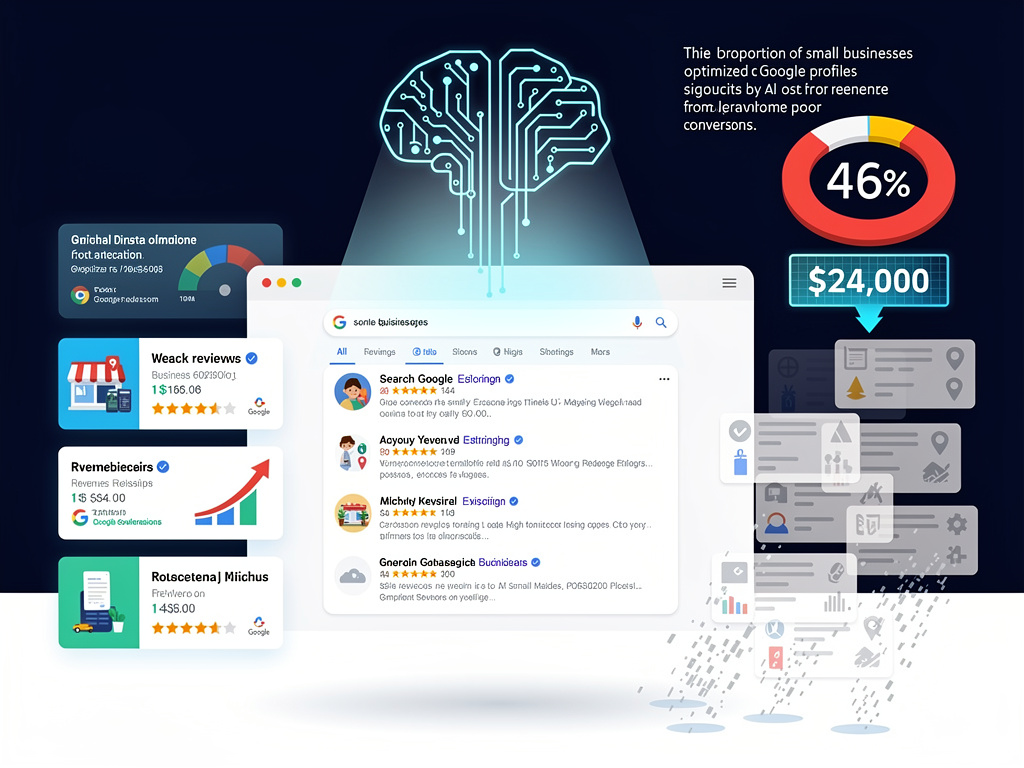
Wyoming-based Weblish dropped a bombshell this month: Most local small businesses are nearly invisible on Google, hemorrhaging an estimated $24,000 in annual revenue due to shoddy profiles and scant reviews. The platform agency’s 2025 Small Business Local Visibility and Trust Report, based on 1,732 businesses from clinics to salons, paints a grim picture of digital neglect amid a mobile-search-dominated world.
Ali Asad Naqvi, Weblish founder and CEO, didn’t mince words: “Today, the first thing people do is search on their phone and tap a map result. For most small businesses, that crucial first impression is weak or broken. They are investing in websites and marketing but still showing up as half-complete, low-review listings next to competitors who look far more trustworthy.” The report, detailed in a Redding Record Searchlight press release, underscores how basic oversights turn promising leads into rival wins.
Weak profiles convert just 2.1% of views into calls or directions, versus 6.2% for strong ones—equating to 295 missed opportunities yearly for a typical operation drawing 7,200 monthly views. At 35% close rates and $240 average customer value, that’s $24,720 forgone.
Report’s Stark Data Dive
Weblish’s methodology was rigorous: For each business, researchers verified Google Business Profile claims, tallied reviews and ratings, checked recency, and audited essentials like hours, phones, and websites. Findings? Forty-six percent lacked full optimization; 58% had 10 or fewer reviews; 37% no updates in 90 days; 32% botched hours; 27% missing websites. Syndicated widely, including by the Journal & Courier, the stats echo across outlets like the Courier-Journal.
Naqvi emphasized the math’s conservatism: “These are not edge cases. We used standard search volumes and reasonable customer values. For many clinics, trades and specialist services, a single new customer is worth far more than $240 – which means the real upside of fixing local visibility can be significantly higher.” Small operators, lacking big-brand clout, hinge on these signals more than ever.
Three culprits dominate: unclaimed profiles devoid of photos or descriptions; stale reviews signaling dormancy; inaccurate info shunting customers elsewhere. “Large brands can lean on name recognition and big campaigns. Small businesses succeed or fail based on how they look in that tiny space on a mobile phone screen,” Naqvi told reporters.
Local Search’s High Stakes
Broader data amplifies the peril. A SeoProfy compilation of 2026 local SEO stats notes 72% of consumers scour Google for nearby services, with on-page signals, updated profiles, and reviews as top rank factors. SynUp data flags rising zero-click queries, tripling as AI pulls direct info—leaving incomplete profiles sidelined.
Search Engine Journal warns in a January 2026 webinar promo that AI tools like Gemini bypass traditional rankings, rendering most small businesses “invisible to AI because their Google Business Profile information is incomplete, inconsistent, or structured in ways these AI chat systems cannot confidently interpret.” In 2026, local SERPs bow to answer engines favoring data-rich profiles.
SagaPixel’s 26 Local SEO Stats update stresses: “If your business isn’t showing up correctly on Google Maps, you could be invisible to the vast majority of local searchers.” Mobile dominates, with millions daily hunting services—yet many listings falter on basics.
Optimization’s Proven Payoff
Weblish prescribes fixes: Claim profiles, cultivate review habits, sync data. Their subscription model handles optimization, listings alignment, and review systems. Naqvi: “Local visibility is not a complex equation. A few disciplined steps can turn a weak, overlooked profile into one that reliably brings new customers through the door.” The full report and audit checklist await via free consultations.
X chatter reinforces urgency. Bodhi Local SEO posted January 5: “Most businesses have a Google Business Profile. Almost none of them are optimized correctly.” Sarvesh Shrivastava urged: “80% of local businesses ignore GBP until they’re invisible on Google.” EvōkLocal noted: “Most SMBs are blind to their own Google Business Profile data.” These voices highlight a sector awakening too late.
Treble Tree’s 2026 GBP playbook quizzes owners: Average profiles score 4-6 points, dooming them to obscurity amid AI scrutiny. Levitate adds: “Visibility on Google can make or break your day. If customers can’t find you when they search, they’re going somewhere else.” For cash-strapped locals, organic trust is survival.
AI and Future Fault Lines
CPA Practice Advisor reports businesses “invisible to AI search platforms risk becoming irrelevant,” urging original data integration. Reddit’s r/GoogleMyBusiness frets AI shifts hitting small biz hardest, rewarding rounded practices like consistent service and reviews. As X user Utah SEO Sync observes, visibility fades gradually: “Inconsistent listings, outdated photos, review velocity slowing, competitors staying active.”
Weblish’s analysis, absent major pushback in web or X scans, spotlights a fixable crisis. With 76% of “near me” mobile searches yielding same-day visits per Brafton, inaction costs dearly. Owners must audit now—before rivals claim the map pack.


 WebProNews is an iEntry Publication