
Stripped to the Core: Slate’s Bold Gamble on Analog Simplicity in the EV Era
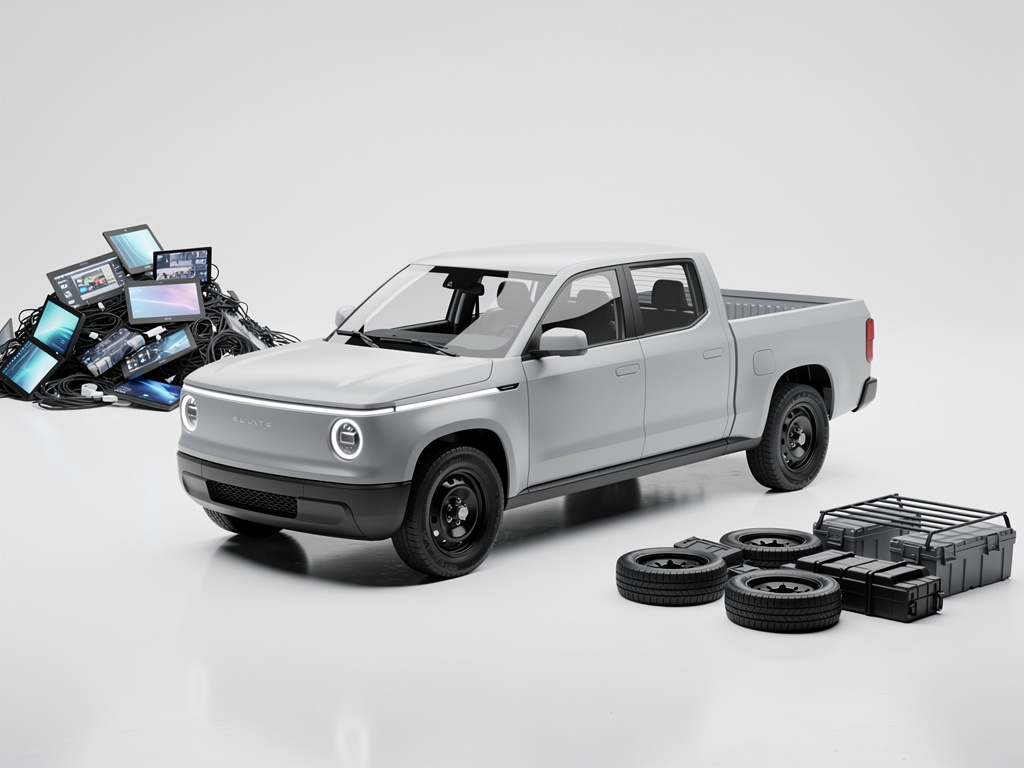
In an industry increasingly dominated by touchscreen interfaces and connectivity overload, Slate Auto is charting a contrarian path with its upcoming electric pickup truck. The startup’s design philosophy eschews modern conveniences like infotainment screens, built-in stereos, and even power windows, opting instead for a bare-bones approach that harks back to automotive basics. This decision, as explained by Slate’s head of design in a recent interview, stems from a calculated bet on consumer fatigue with over-engineered vehicles. By stripping away digital distractions, Slate aims to appeal to buyers seeking affordability, customizability, and a return to tactile driving experiences.
The Slate Truck, set to launch in 2026 with a starting price under $28,000, positions itself as an antidote to the feature creep plaguing today’s electric vehicles. According to details from Wikipedia, the vehicle features a single rear-mounted motor delivering 201 horsepower and options for two battery sizes—52.7 kWh for about 150 miles of range or 84.3 kWh for up to 240 miles. But it’s the absence of amenities that sets it apart: manual crank windows, no radio, and a dashboard devoid of glowing displays. This minimalist ethos isn’t just cost-cutting; it’s a deliberate strategy to differentiate in a crowded market.
Slate’s leadership sees this as capitalizing on a growing backlash against the digitization of everything automotive. In conversations with industry observers, the company highlights how drivers are increasingly frustrated with subscription-locked features and glitchy software updates. By forgoing these, Slate reduces production complexity and passes savings to consumers, potentially making it one of the most accessible EVs on the market after incentives—though recent policy changes, like the elimination of federal subsidies under the One Big Beautiful Bill Act, have forced adjustments to pricing claims.
The Philosophy Behind the Minimalism
At the heart of Slate’s design is a focus on what the company calls “essential utility.” The head of design, speaking to Business Insider, elaborated that the truck was built to be a “blank canvas” for owners. Without pre-installed screens or audio systems, users can customize their vehicles with aftermarket additions or keep them spartan. This approach not only lowers the base price but also empowers DIY enthusiasts, with over 100 modular upgrades available, including conversions to a five-seat SUV or lift kits.
Industry insiders note that this strategy echoes historical trends in automotive design, where simplicity often equated to reliability. For instance, early pickup trucks like the Ford Model T prioritized function over flair, a parallel Slate seems eager to revive in the electric age. Recent posts on X from users like automotive enthusiasts highlight excitement around this no-frills appeal, with many praising the truck’s potential as an affordable workhorse amid rising EV costs.
However, skepticism abounds. A hands-on preview from InsideEVs expressed concerns about whether American consumers truly want such austerity, especially in a market where competitors like Tesla and Rivian tout advanced tech as selling points. The article questioned the truck’s build quality after an in-person viewing, suggesting that while the concept is intriguing, execution will be key to overcoming perceptions of it being “too basic” for mainstream adoption.
Market Positioning and Consumer Sentiment
Slate’s timing couldn’t be more poignant, as EV adoption faces headwinds from economic pressures and shifting incentives. Data from recent web searches indicate that the startup has amassed over 150,000 reservations, a milestone reported by InsideEVs just days ago, despite a broader cooling in electric truck enthusiasm. This surge suggests a niche but dedicated audience for vehicles that prioritize affordability over luxury.
On social platforms like X, sentiment is mixed but vibrant. Posts from April 2025, when the truck was first revealed, buzzed with details on its specs—crank windows, steel wheels, and rear-wheel drive only—framing it as a refreshing throwback. More recent discussions, including shares of design explanations, underscore a divide: some users laud the escape from “gadget overload,” while others mock it as outdated in an era of autonomous features.
Comparisons to past affordable pickups are inevitable. As Car and Driver pointed out in a September 2025 feature, America once thrived on small, budget-friendly trucks, a segment that’s dwindled amid the rise of larger, tech-heavy models. Slate aims to resurrect this with its compact footprint and customizable body styles, potentially filling a gap for urban dwellers or fleet operators who don’t need bells and whistles.
Engineering Choices and Technical Trade-offs
Diving deeper into the specs, the Slate Truck’s engineering reflects its minimalist mandate. Without power windows or electronic controls, the vehicle sheds weight and complexity, which could enhance efficiency and reduce failure points. The 120 kW peak DC fast-charging capability, as noted in X posts from influencers like Kyle Conner, is modest but aligns with the truck’s no-nonsense vibe—no battery preconditioning means simpler systems, though it might frustrate users expecting rapid recharges.
Battery options further underscore this balance. The smaller 52.7 kWh pack suits short-haul needs, like city deliveries, while the larger one extends usability for longer trips. Yet, as Electrifying detailed in its November 2025 preview, practicality remains a question mark—cargo space, towing capacity (unspecified but likely limited), and real-world range will be scrutinized when prototypes hit the roads.
From a manufacturing standpoint, Slate’s U.S.-based production, as advertised on its official site Slate Auto, could appeal to buyers prioritizing domestic assembly. This contrasts with rivals sourcing components globally, potentially giving Slate an edge in supply chain resilience amid ongoing trade tensions.
Challenges in a Tech-Driven Industry
Despite the buzz, Slate faces formidable hurdles. The elimination of EV tax credits has already prompted the company to revise marketing, shifting from sub-$20,000 claims to a more realistic under-$28,000 base. A TechCrunch report from December 2025, accessible via TechCrunch, notes that while reservations are climbing, cancellations could rise if economic conditions worsen or if competitors undercut on price.
Moreover, the absence of screens raises safety concerns in an age of distracted driving regulations. Without integrated navigation or hands-free calling, drivers might rely more on personal devices, potentially increasing risks. Industry experts, drawing from broader web analyses, argue that Slate must navigate certification processes carefully to ensure compliance without adding unwanted electronics.
Competitive pressures add another layer. As Car and Driver highlighted in a recent roundup of 2026 models, Slate joins a wave of affordable EVs, but its analog focus might alienate tech-savvy millennials who dominate the market. Yet, for older demographics or tradespeople, this could be a selling point, echoing sentiments in X threads where users compare it favorably to the overcomplicated Cybertruck.
Future Prospects and Broader Implications
Looking ahead, Slate’s success hinges on delivering on customizability promises. With accessories like fastback bed caps and wrap options, the truck could foster a vibrant aftermarket ecosystem, much like Jeep’s modding community. A first-look video from AutoGuide showcased this potential, emphasizing how owners can transform the vehicle from pickup to SUV seamlessly.
Broader industry implications are intriguing. If Slate thrives, it could pressure giants like Ford and GM to offer stripped-down variants of their electric lineups, democratizing access to sustainable transport. Recent news from InsideEVs, in a piece on 2026 EV predictions InsideEVs, positions Slate among the most anticipated models, suggesting its minimalist bet might resonate amid calls for simpler, greener mobility.
Ultimately, Slate’s design chief’s rationale—tapping into anti-digital sentiment—could redefine value in EVs. By prioritizing manual controls and modularity, the company isn’t just building a truck; it’s challenging the notion that more features equal better vehicles. As reservations mount and prototypes emerge, the automotive world watches to see if this analog rebellion sparks a wider shift toward essentialism in electric design.
Innovation Through Subtraction
Extending this narrative, Slate’s approach invites reflection on innovation paradigms. In an interview republished on DNYUZ, the design head reiterated that subtracting features enhances user agency, allowing personalization without factory-imposed limits. This philosophy aligns with emerging trends in sustainable design, where reducing electronic waste becomes a priority.
Consumer feedback, gleaned from X discussions, reveals enthusiasm for this empowerment. Posts praising the truck’s crank windows and lack of stereo evoke nostalgia for pre-digital eras, while critics worry about resale value in a market favoring connectivity. Balancing these views will be crucial as Slate refines its offering.
For industry insiders, the real test comes in scalability. With Amazon backing hinted in early announcements, as per Autocar’s coverage on X, Slate has resources to iterate. Yet, maintaining affordability amid inflation and component shortages remains a tightrope walk.
Slate’s Place in EV Evolution
As 2026 approaches, Slate’s truck embodies a pivotal moment in EV evolution. Unlike high-end models from established players, its focus on core functionality could attract first-time electric buyers deterred by complexity. Insights from InkFreeNews on the company’s Q&A sessions reveal CEO optimism about demand, even as market enthusiasm wanes.
This positioning might also influence policy debates on EV accessibility. By offering a low-entry barrier, Slate could advocate for renewed incentives, arguing that simple designs broaden adoption.
In the grand scheme, Slate’s minimalist truck isn’t just a product—it’s a statement. If it succeeds, it proves that in the rush toward futuristic mobility, there’s enduring appeal in going back to basics, redefining what drivers truly need from their electric future.


 WebProNews is an iEntry Publication