
Slate Auto Opens Order Books for Low-Cost EV Truck as Reservations Top 160,000

Slate Auto begins taking orders for its modular, low-cost electric truck on June 24, revealing final pricing the same day. With over 160,000 reservations and $1.4 billion in funding, the company targets late 2026 deliveries from its Indiana factory. Success hinges on converting interest into firm purchases at a mid-$20,000 starting point.
Slate Auto Opens Order Books for Low-Cost EV Truck as Reservations Top 160,000
Written by Maya Perez

Slate Auto will start taking orders June 24. The Bezos-backed startup has teased an affordable electric truck for months. Now comes the moment of truth.

Customers with existing reservations will receive an email and a link. They must log into their Slate account to see an assigned delivery window. A $300 non-refundable deposit locks it in. The original $50 reservation fee counts toward that amount. Move fast. After 30 days the window slides later in the queue.

Pricing arrives with the preorder window. The company once talked about a base truck under $20,000 after the federal tax credit. That credit disappeared. Slate now points to a blank truck in the mid-$20,000s. Full pricing, including wraps, accessories and the optional SUV conversion kit, lands June 24. TechCrunch first reported the order date.

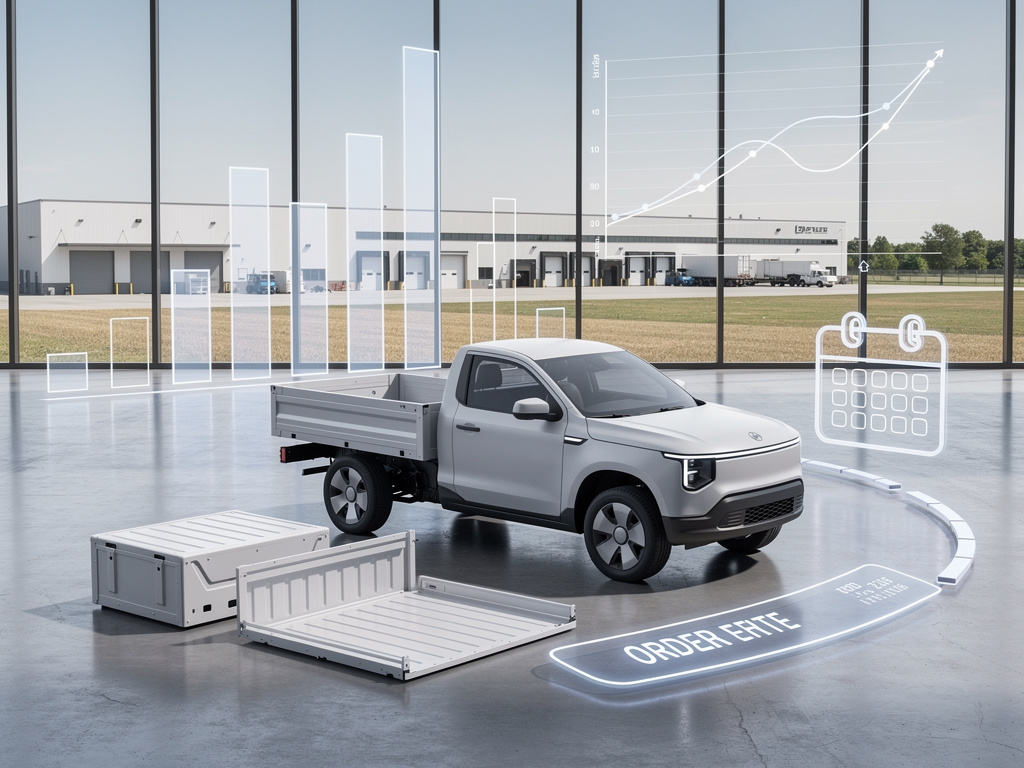
Production remains on track for late 2026. First deliveries follow soon after. The modular vehicle starts as a two-seat pickup. Owners add panels, seats and accessories to turn it into a five-seat SUV or specialized work rig. Hand-crank windows. No factory paint. Just a bare “slate” surface ready for vinyl wraps. The approach keeps costs down. It also invites owners to make each truck their own.

More than 160,000 people have placed refundable $50 deposits. That figure matches the annual capacity Slate plans at its Warsaw, Indiana factory. The company will invest roughly $400 million there and create more than 2,000 jobs. CEO Peter Faricy said the recent capital “will enable Slate to reach the next stages of production this year: on time and on budget.”

The Funding Foundation

Slate closed a $650 million Series C in April. TWG Global, led by Los Angeles Dodgers owner Mark Walter, anchored the round. Total funding now sits near $1.4 billion. The cash gives the startup runway to tool up the former factory and hit its late-2026 target. Former CEO Chris Barman, who stepped back when Faricy arrived from Amazon, stressed the company stayed “laser-focused” on delivering “at nearly half the cost of the average new vehicle.”

Yet hurdles remain. Other EV startups have watched enthusiastic reservation lists shrink when real prices and delivery dates appeared. Slate must convert interest into paid orders. The removal of the $7,500 tax credit stings. A base price in the mid-$20,000s still undercuts most new trucks and many SUVs. But buyers will compare it against used vehicles and cheaper gas options.

Recent coverage shows the market stays skeptical but attentive. Autoevolution noted that personalization begins in fall 2026. Buyers configure wraps and accessories then. The preorder deposit applies to the final price. Those who wait beyond the initial 30-day window simply accept a later slot. No one loses their place entirely.

Slate sells direct. It partners with RepairPal for service and gained access to the Tesla Supercharger network. The truck uses the North American Charging Standard. These moves solve two classic startup problems: where to fix it and where to charge it. Still, the vehicle skips advanced driver assistance. No self-driving hardware. The focus stays on simplicity and low price.

Jeff Bezos’ representative left the board in early May. The departure, reported by multiple outlets, signals nothing dramatic. Bezos remains an investor. Faricy’s Amazon pedigree runs deep across the leadership team. That experience shows in the preorder system. Customers reserve early, see their place in line, then configure later. The staged approach reduces pressure on the young production line.

Industry watchers wonder if the modular concept will stick. Some call the hand-crank windows a gimmick. Others see honesty. The truck does not pretend to be a luxury EV. It offers 150 or 230 miles of range depending on battery choice. Exact figures come with the June 24 announcement. Fleet operators have shown interest. Small businesses that need basic hauling without frills could form the early core.

But. The EV market has cooled. Interest rates linger. Gas prices fluctuate but remain competitive in many regions. Slate bets that enough buyers want an American-made electric truck they can modify themselves. The company avoided the heavy spending on glitzy features that sank some rivals. Its factory conversion in Indiana revives local manufacturing. That story may help politically and with customers who value domestic production.

Orders open in under a month. The next few weeks will bring final specs, exact pricing tiers and accessory costs. Those 160,000 reservation holders now decide whether to pull the trigger. Their choices will test whether Slate’s stripped-down formula can succeed where others with bigger batteries and fancier tech have struggled.

The startup has talked a good game for more than a year. June 24 marks the shift from promises to purchases. Delivery still sits months away. Yet the order book will reveal real demand. If conversion rates hold, Slate could fill its first year of production before the first truck rolls off the line. That would be rare air for any new automaker.

Subscribe for Updates

ElectricVehicleTrends Newsletter

By signing up for our newsletter you agree to receive content related to ientry.com / webpronews.com and our affiliate partners. For additional information refer to our terms of service.

Slate Auto Opens Order Books for Low-Cost EV Truck as Reservations Top 160,000

Slate Auto begins taking orders for its modular, low-cost electric truck on June 24, revealing final pricing the same day. With over 160,000 reservations and $1.4 billion in funding, the company targets late 2026 deliveries from its Indiana factory. Success hinges on converting interest into firm purchases at a mid-$20,000 starting point.
Slate Auto Opens Order Books for Low-Cost EV Truck as Reservations Top 160,000
Written by Maya Perez

Slate Auto will start taking orders June 24. The Bezos-backed startup has teased an affordable electric truck for months. Now comes the moment of truth.

Customers with existing reservations will receive an email and a link. They must log into their Slate account to see an assigned delivery window. A $300 non-refundable deposit locks it in. The original $50 reservation fee counts toward that amount. Move fast. After 30 days the window slides later in the queue.

Pricing arrives with the preorder window. The company once talked about a base truck under $20,000 after the federal tax credit. That credit disappeared. Slate now points to a blank truck in the mid-$20,000s. Full pricing, including wraps, accessories and the optional SUV conversion kit, lands June 24. TechCrunch first reported the order date.

Production remains on track for late 2026. First deliveries follow soon after. The modular vehicle starts as a two-seat pickup. Owners add panels, seats and accessories to turn it into a five-seat SUV or specialized work rig. Hand-crank windows. No factory paint. Just a bare “slate” surface ready for vinyl wraps. The approach keeps costs down. It also invites owners to make each truck their own.

More than 160,000 people have placed refundable $50 deposits. That figure matches the annual capacity Slate plans at its Warsaw, Indiana factory. The company will invest roughly $400 million there and create more than 2,000 jobs. CEO Peter Faricy said the recent capital “will enable Slate to reach the next stages of production this year: on time and on budget.”

The Funding Foundation

Slate closed a $650 million Series C in April. TWG Global, led by Los Angeles Dodgers owner Mark Walter, anchored the round. Total funding now sits near $1.4 billion. The cash gives the startup runway to tool up the former factory and hit its late-2026 target. Former CEO Chris Barman, who stepped back when Faricy arrived from Amazon, stressed the company stayed “laser-focused” on delivering “at nearly half the cost of the average new vehicle.”

Yet hurdles remain. Other EV startups have watched enthusiastic reservation lists shrink when real prices and delivery dates appeared. Slate must convert interest into paid orders. The removal of the $7,500 tax credit stings. A base price in the mid-$20,000s still undercuts most new trucks and many SUVs. But buyers will compare it against used vehicles and cheaper gas options.

Recent coverage shows the market stays skeptical but attentive. Autoevolution noted that personalization begins in fall 2026. Buyers configure wraps and accessories then. The preorder deposit applies to the final price. Those who wait beyond the initial 30-day window simply accept a later slot. No one loses their place entirely.

Slate sells direct. It partners with RepairPal for service and gained access to the Tesla Supercharger network. The truck uses the North American Charging Standard. These moves solve two classic startup problems: where to fix it and where to charge it. Still, the vehicle skips advanced driver assistance. No self-driving hardware. The focus stays on simplicity and low price.

Jeff Bezos’ representative left the board in early May. The departure, reported by multiple outlets, signals nothing dramatic. Bezos remains an investor. Faricy’s Amazon pedigree runs deep across the leadership team. That experience shows in the preorder system. Customers reserve early, see their place in line, then configure later. The staged approach reduces pressure on the young production line.

Industry watchers wonder if the modular concept will stick. Some call the hand-crank windows a gimmick. Others see honesty. The truck does not pretend to be a luxury EV. It offers 150 or 230 miles of range depending on battery choice. Exact figures come with the June 24 announcement. Fleet operators have shown interest. Small businesses that need basic hauling without frills could form the early core.

But. The EV market has cooled. Interest rates linger. Gas prices fluctuate but remain competitive in many regions. Slate bets that enough buyers want an American-made electric truck they can modify themselves. The company avoided the heavy spending on glitzy features that sank some rivals. Its factory conversion in Indiana revives local manufacturing. That story may help politically and with customers who value domestic production.

Orders open in under a month. The next few weeks will bring final specs, exact pricing tiers and accessory costs. Those 160,000 reservation holders now decide whether to pull the trigger. Their choices will test whether Slate’s stripped-down formula can succeed where others with bigger batteries and fancier tech have struggled.

The startup has talked a good game for more than a year. June 24 marks the shift from promises to purchases. Delivery still sits months away. Yet the order book will reveal real demand. If conversion rates hold, Slate could fill its first year of production before the first truck rolls off the line. That would be rare air for any new automaker.

Subscribe for Updates

ElectricVehicleTrends Newsletter

By signing up for our newsletter you agree to receive content related to ientry.com / webpronews.com and our affiliate partners. For additional information refer to our terms of service.

Notice an error?

Help us improve our content by reporting any issues you find.

Get the WebProNews newsletter delivered to your inbox

Get the free daily newsletter read by decision makers

Subscribe
Advertise with Us

Ready to get started?

Get our media kit

Advertise with Us