
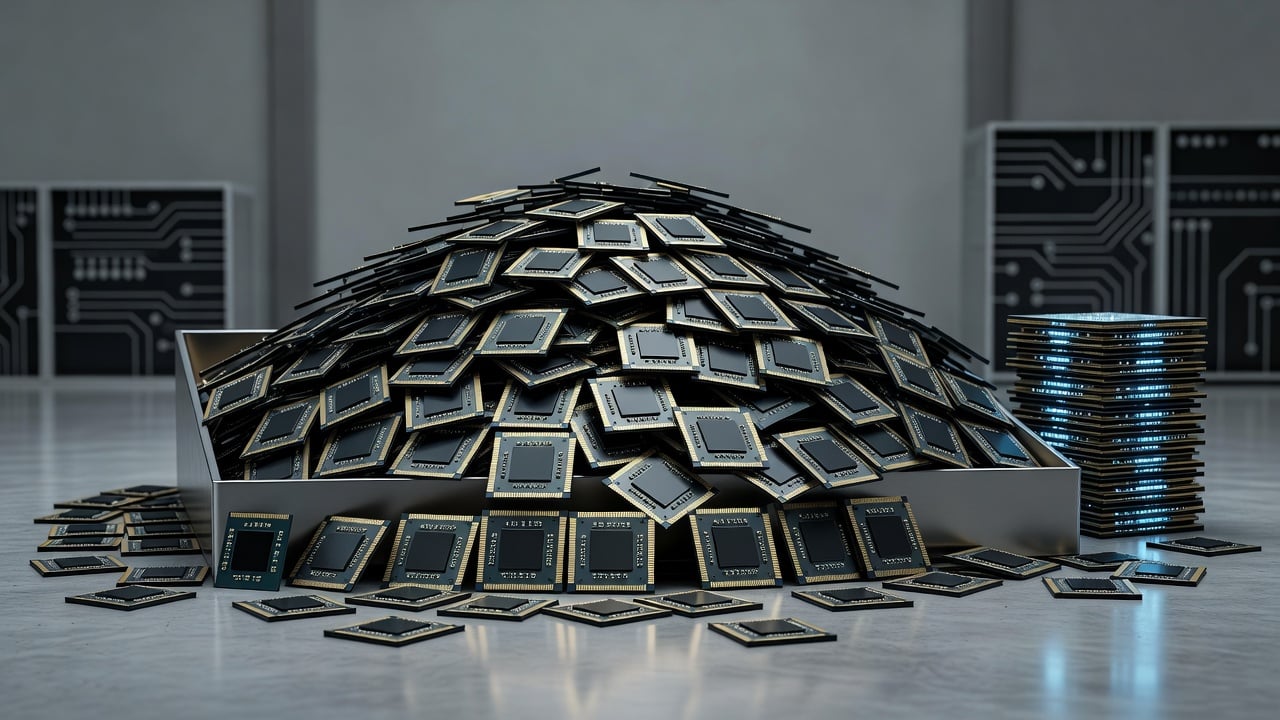
SK Hynix CEO Kim Jong-hoon has issued a stark warning about the semiconductor memory market, describing current conditions as the worst he has seen in his three-decade career at the company. Speaking at a recent industry event covered by Yahoo Finance, Kim highlighted persistent oversupply issues, softening demand from key customers, and intensifying competition that together paint a challenging picture for memory chip makers through the remainder of the year.
The executive’s comments carry particular weight given SK Hynix’s position as the world’s second-largest producer of DRAM and the top supplier of high-bandwidth memory chips used in artificial intelligence systems. His assessment comes at a time when the broader semiconductor industry has been riding a wave of optimism fueled by AI investments, yet memory manufacturers continue to face structural problems that predate the recent boom. Kim noted that inventory levels across the supply chain remain elevated despite earlier efforts to reduce production, creating downward pressure on prices and margins.
Memory chips serve as the foundational storage and working memory components in everything from smartphones to servers. DRAM handles temporary data storage for quick access by processors, while NAND flash provides longer-term storage. High-bandwidth memory, or HBM, represents a specialized form of DRAM optimized for rapid data transfer rates essential in AI training and inference workloads. SK Hynix has invested heavily in HBM technology, positioning itself as a critical supplier to companies developing advanced AI accelerators.
Kim’s remarks reflect the cyclical nature of the memory business, which has historically experienced dramatic swings between periods of shortage and glut. The industry typically requires massive capital investments to build fabrication facilities, or fabs, that can cost billions of dollars. These facilities take years to construct and bring online, meaning manufacturers must forecast demand far into the future. When projections prove inaccurate, as happened following the pandemic-driven surge in electronics demand, the resulting oversupply can take quarters or even years to absorb.
Current market dynamics show several factors converging to create what Kim characterized as exceptionally difficult operating conditions. Consumer electronics demand has weakened as inflation and economic uncertainty prompt households to delay upgrades to phones, laptops, and other devices. Enterprise spending on traditional servers has also moderated, with many organizations focusing instead on targeted AI infrastructure projects that do not necessarily drive proportional increases in overall memory consumption.
The AI boom itself presents a complicated picture for memory suppliers. While demand for HBM has surged due to its critical role in powering graphics processing units from Nvidia and other manufacturers, this specialized product represents only a fraction of overall memory revenue. Standard DRAM and NAND products continue to account for the majority of production volume, and these segments face significant headwinds. The concentration of AI-related demand among a relatively small number of hyperscale cloud providers and AI startups creates additional vulnerability to shifts in their capital expenditure plans.
Competition within the memory industry has grown increasingly fierce. Samsung Electronics, the market leader in both DRAM and NAND, has pursued aggressive pricing strategies to maintain share. Micron Technology, the American memory manufacturer, has also expanded its production capabilities and strengthened its technology roadmap. Chinese manufacturers, supported by government initiatives to reduce dependence on foreign suppliers, have made notable progress in closing the technological gap, particularly in less advanced memory nodes.
SK Hynix has responded to these pressures by focusing on technological differentiation and operational efficiency. The company has accelerated development of next-generation HBM products, including HBM4, which promises even higher bandwidth and capacity for future AI systems. By prioritizing advanced packaging technologies that stack multiple memory dies with logic chips, SK Hynix aims to create products that competitors will find difficult to replicate quickly.
The CEO’s assessment extends beyond immediate market conditions to address longer-term structural changes in the industry. He pointed to the increasing complexity of semiconductor manufacturing processes, which drive up costs and extend development timelines. As feature sizes shrink toward atomic scales, the technical challenges multiply, requiring ever-larger research and development budgets. This dynamic favors companies with substantial financial resources and established technology portfolios.
Global supply chain considerations also factor prominently in Kim’s outlook. Geopolitical tensions have prompted governments worldwide to implement policies aimed at securing domestic semiconductor production capacity. The United States CHIPS Act, European Chips Act, and similar initiatives in Japan, South Korea, and Taiwan all seek to reduce reliance on concentrated manufacturing hubs. While these efforts may eventually diversify production, the transition period creates uncertainty about capacity utilization and investment returns.
For SK Hynix specifically, the company maintains a strong position in the HBM market that could provide some insulation against broader industry weakness. Its close technical collaboration with Nvidia has helped establish leadership in supplying memory for the most advanced AI training systems. However, even this advantage faces potential challenges as competitors develop their own HBM solutions and as alternative AI hardware architectures potentially reduce memory bandwidth requirements.
Industry analysts have offered mixed reactions to Kim’s comments. Some view his frank assessment as a realistic acknowledgment of market realities that many executives have been reluctant to address publicly. Others suggest the comments may serve strategic purposes, potentially tempering expectations ahead of earnings reports or influencing negotiations with customers and suppliers. Regardless of motivation, the statement from a senior leader at a major memory producer signals that the anticipated recovery in the sector may face more obstacles than previously assumed.
The memory market’s importance extends far beyond the financial performance of SK Hynix and its competitors. Modern computing systems of all types depend on adequate memory capacity and performance to function effectively. Shortages or price volatility in memory chips can ripple through the entire technology industry, affecting product pricing, availability, and innovation timelines. The current situation therefore warrants attention from technology companies, investors, and policymakers alike.
Looking ahead, several developments could influence the memory market’s trajectory. Continued advancement in AI applications may drive sustained demand for high-performance memory solutions. Automotive electrification and the proliferation of advanced driver assistance systems require substantial memory content per vehicle. The expansion of edge computing and Internet of Things devices could create new demand sources for specialized memory products.
However, these potential growth areas must contend with persistent challenges. Economic conditions remain uncertain, with central banks balancing inflation concerns against growth objectives. Trade restrictions and export controls on advanced semiconductor technology add layers of complexity to global supply chains. The memory industry’s inherent cyclicality suggests that periods of oversupply may continue to occur even as underlying demand grows over time.
SK Hynix has demonstrated resilience through previous market downturns by maintaining disciplined capital expenditure, investing consistently in research and development, and building strong customer relationships. The company’s emphasis on specialty memory products, including those for automotive and industrial applications, provides some diversification beyond consumer and computing markets. Its progress in developing advanced packaging solutions positions the firm to benefit from the industry trend toward heterogeneous integration of multiple chip types.
Kim’s three decades at SK Hynix give him a unique perspective on the company’s evolution from a relatively small player to a global technology leader. His willingness to characterize current conditions as the most difficult he has encountered suggests that the combination of factors at play today presents distinctive challenges compared to previous cycles. The executive’s comments may also reflect internal assessments that indicate prolonged weakness rather than a quick rebound.
For investors in the semiconductor sector, the CEO’s assessment provides a sobering counterpoint to narratives focused exclusively on AI growth potential. While artificial intelligence undoubtedly represents a significant long-term opportunity, the memory industry’s near-term performance will likely continue reflecting broader economic conditions and traditional demand patterns. Companies that can successfully manage through the current environment while positioning for future growth may emerge stronger when market conditions improve.
The semiconductor memory business has always required careful balancing of aggressive investment in new technology with prudent management of production capacity. SK Hynix and its peers must navigate these requirements while adapting to an industry landscape transformed by artificial intelligence, geopolitical considerations, and shifting end-market priorities. Kim Jong-hoon’s candid evaluation serves as a reminder that even in periods of technological excitement, fundamental market dynamics continue to shape business outcomes.
As the year progresses, attention will focus on whether memory manufacturers can successfully reduce inventory levels and stabilize pricing. The performance of leading technology companies in upcoming earnings reports may provide additional signals about the health of memory demand. For SK Hynix specifically, its ability to capitalize on HBM leadership while addressing challenges in traditional memory segments will likely determine its relative performance compared to competitors.
The memory industry’s challenges reflect broader tensions in the global technology supply chain. Massive investments in new manufacturing capacity must be weighed against demand uncertainty. Technological advancement continues at a rapid pace, but the economic returns from each successive process node become more difficult to achieve. Companies must increasingly consider not just what they can build, but what the market will actually need and be willing to pay for.
Kim’s assessment, while sobering, does not necessarily indicate permanent problems for the memory sector. The industry has repeatedly demonstrated its capacity to adapt to changing conditions and emerge from difficult periods with renewed strength. However, the current combination of high inventories, moderating traditional demand, and concentrated AI-related opportunities creates a particularly complex environment that will test even the most experienced executives.
SK Hynix’s strategic decisions in response to these conditions will likely influence its competitive position for years to come. The company’s focus on advanced memory technologies and packaging innovations reflects a bet that differentiation through performance and specialized capabilities can provide more stable returns than competing primarily on cost and volume. Whether this approach succeeds will depend on execution, market developments, and the broader economic context.
The coming months will reveal whether Kim’s characterization of current conditions as the worst in thirty years proves accurate or if market dynamics shift more favorably than anticipated. For now, his comments from the Yahoo Finance article serve as a clear-eyed evaluation of an industry grappling with the persistent cycles that have long defined semiconductor memory markets. The path forward will require careful management, strategic investment, and perhaps a measure of patience as the market works through its current imbalances.


 WebProNews is an iEntry Publication