
Platform teams in 2026 face the same problem that has dogged DevSecOps since the term emerged. Scans pass. Builds stay green. Yet incidents still trace back to decisions made in the wrong place at the wrong time.
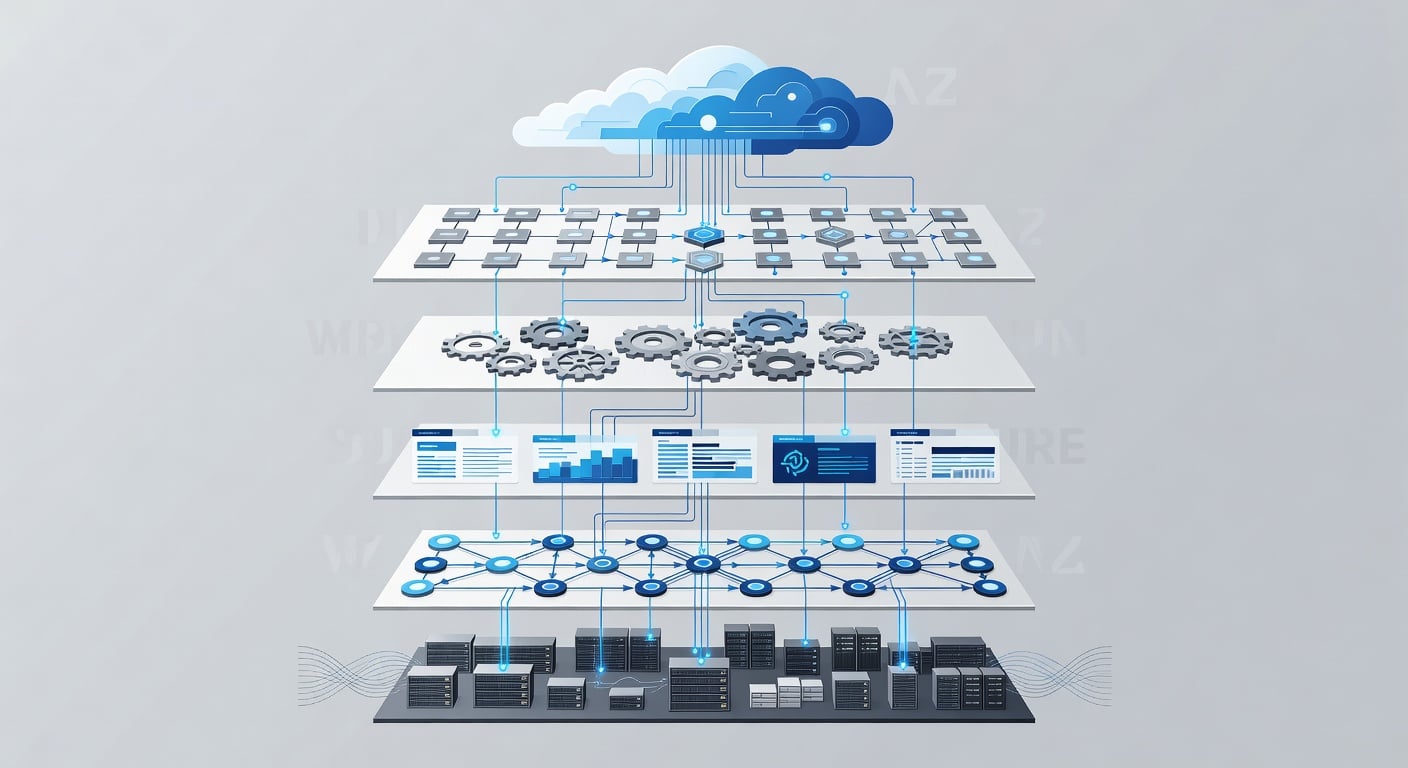
Cloudaware’s May 2026 update on its reference architecture lays out six layers that have held up under real scale, along with three approaches that collapse when volume rises. The model focuses on decision points rather than tool lists. Valentin Kel, DevSecOps practice lead at Cloudaware, reviewed the piece. It includes whiteboard diagrams and an Azure mapping for teams that need a concrete starting point.
The core idea is straightforward. Security decisions must sit where the risk category can be handled cheapest and with clearest ownership. Code defects, supply-chain issues, environment-specific exposure, and runtime drift each surface at different moments. Treating them identically breaks automation and buries evidence.
Early layers handle prevention. Code and dependency checks catch logic errors and inherited open-source risk before artifacts form. CI applies narrow, deterministic gates. It blocks known vulnerabilities, leaked secrets, unsafe dependencies, and invalid infrastructure-as-code. Nothing more. Contextual judgments about runtime exposure or business impact belong later.
Once an artifact exists, the supply-chain layer preserves trust. Signed builds carry SBOMs as first-class inputs, not after-the-fact reports. Promotion decisions reference verified components and accepted risk rather than forcing rebuilds. This separation of duties keeps traceability intact across environments.
CD gates evaluate context that CI cannot see. Environment, data sensitivity, blast radius, and rollback options determine whether an artifact may advance. Rules stay consistent so automation holds. Ad-hoc reviews turn gates into bottlenecks.
Runtime security observes what pipelines cannot predict. Identity misuse, configuration drift, and unexpected network exposure depend on live tokens, effective permissions, and real traffic. Signals feed back into policy and backlog instead of stopping delivery.
IaC forms its own security surface. One definition change can replicate across accounts and regions in minutes. Policy evaluation happens before apply. Declared state anchors drift detection. Emergency console changes become visible because they deviate from versioned intent.
Governance sits across all layers. It captures ownership, approvals, checks performed, artifacts promoted, and runtime state. Auditors receive a chain they can follow without reconstructing events from scattered logs.
Cloudaware notes that three patterns fail at scale. Overloading CI with contextual decisions slows pipelines and increases bypasses. Treating SBOMs as compliance artifacts instead of control inputs breaks promotion traceability. Leaving runtime feedback disconnected from earlier decisions leaves policy stale.
The Azure example maps each layer to native services. Microsoft Defender for DevOps and GitHub Advanced Security handle early scans. Azure Policy and Bicep enforce IaC rules. Key Vault manages secrets. Azure Monitor and Application Insights surface runtime signals. Azure DevOps pipelines and environments provide the gates and evidence store. The mapping keeps the architecture stable even as workloads grow.
Wiz’s February 2026 guide on DevSecOps maturity describes a similar shift. Teams move from isolated shift-left scans to continuous, context-aware controls. Secure-by-default templates and automated guardrails replace manual reviews. Mars scaled its Azure footprint with decentralized teams by gaining unified visibility across assets and risks, according to the same report.
Octopus Deploy’s list of 2026 best practices reinforces the same principles. Secure coding standards, automated testing in pipelines, policy as code, and integration of security into IaC all aim at consistent decision points. Real-time monitoring and zero-trust patterns extend protection into runtime. Pre-commit hooks and Git signing push checks even earlier.
Datadog’s State of DevSecOps 2026 report, released in February, highlights the tension between velocity and risk in cloud-native environments. AI-assisted development increases change volume, so governance must move into pipelines. Build infrastructure itself requires the same rigor applied to production systems. GitHub Actions workflows often hold production credentials yet receive less scrutiny than the applications they support.
Practical DevSecOps trends for 2026, published in December 2025, point to policy-as-code, supply-chain hardening, and AI automation as the next focus areas. Architecture determines whether these additions reduce noise or multiply it.
Teams that treat the six layers as a decision map rather than a checklist see measurable differences. Mean time to remediation drops when findings reach the right owner with clear context. Audit evidence accumulates automatically instead of requiring heroic reconstruction. False positives decline because checks run where they have the information needed to decide.
The reference architecture does not prescribe specific vendors. It asks one question at each node: is this check blocking, warning, or observing? Redundant nodes get removed. Footnote-heavy diagrams get redrawn. The result is a system where prevention, promotion, observation, and governance each have a defined job.
Platform engineers and architects can start with the self-assessment quiz in the Cloudaware post. Ninety seconds produces a baseline map of current decision points. Gaps become obvious. Ownership questions surface quickly. From there, incremental changes to layer boundaries deliver more impact than adding another scanner.
Security scales when architecture, not tool volume, carries the load. The six-layer model gives teams a stable frame for 2026 workloads that continue to grow in speed and complexity.


 WebProNews is an iEntry Publication