
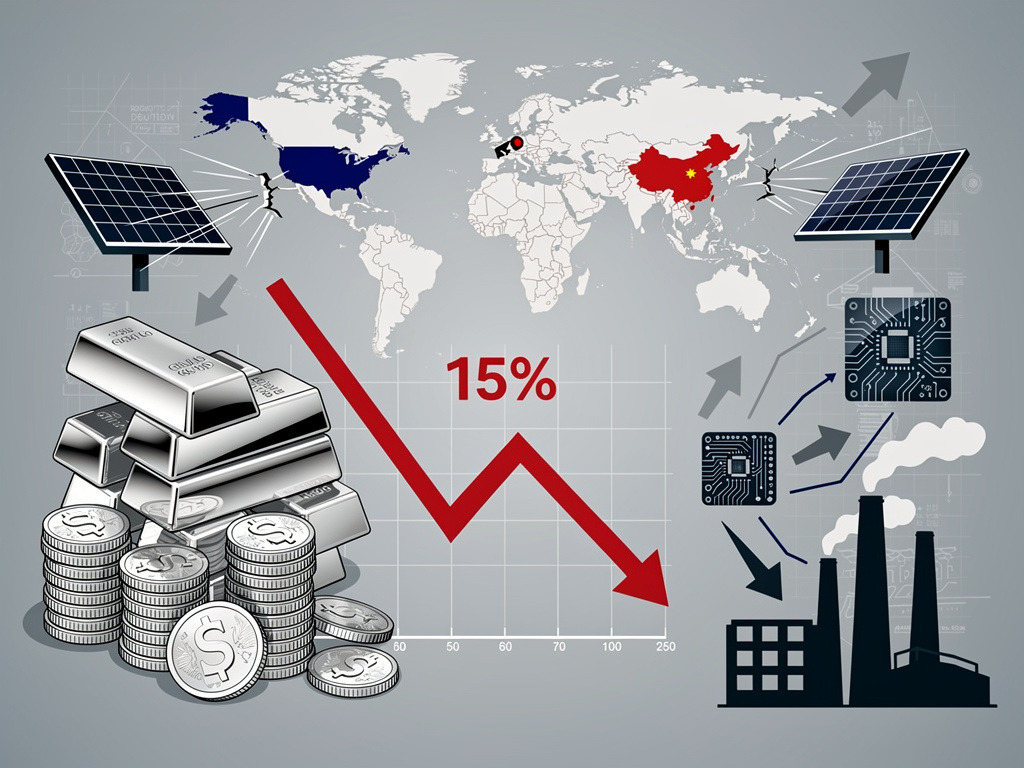
The silver market has experienced a dramatic reversal in recent weeks, with prices tumbling from multi-year highs to levels not seen since early 2024. This sharp correction, which has caught many investors off guard, reflects a complex interplay of geopolitical tensions, shifting industrial demand patterns, and speculative positioning that is fundamentally altering the precious metals sector. According to Business Insider, silver prices have declined approximately 15% from their recent peaks, raising questions about whether this represents a temporary setback or a more fundamental shift in market dynamics.
The white metal’s decline comes at a particularly inopportune moment for bullish investors who had positioned themselves for continued gains based on industrial demand projections and monetary uncertainty. Silver’s unique dual nature as both a precious metal and an industrial commodity has made it especially vulnerable to the current macroeconomic crosscurrents. While gold has maintained relative stability due to its safe-haven appeal, silver’s deeper connections to manufacturing and technology sectors have exposed it to heightened volatility as trade tensions escalate between the United States and China.
Trade War Dynamics Reshape Industrial Demand Forecasts
The escalating trade conflict between Washington and Beijing has emerged as the primary catalyst for silver’s recent weakness. New tariff implementations and retaliatory measures have created significant uncertainty around global manufacturing activity, particularly in sectors that are heavy consumers of silver, including electronics, solar panels, and automotive components. Industry analysts have begun revising downward their projections for industrial silver consumption, which accounts for more than half of total annual demand. The prospect of disrupted supply chains and reduced manufacturing output in China, the world’s largest silver consumer, has fundamentally altered the demand outlook that had previously supported higher prices.
Chinese industrial activity, which had shown signs of recovery in late 2024, now faces renewed headwinds as trade restrictions threaten to constrain exports and dampen domestic manufacturing sentiment. The solar panel industry, a major silver consumer, has been particularly affected by trade policy uncertainty. Chinese manufacturers, who dominate global solar panel production, are reassessing expansion plans amid concerns about market access in Western countries. This recalibration of industrial demand expectations has prompted commodity traders to unwind previously bullish positions, accelerating silver’s decline.
Speculative Positioning Amplifies Price Volatility
The role of speculative traders in silver’s recent price action cannot be understated. Data from commodity exchanges reveals that leveraged funds had accumulated substantial long positions in silver futures during the metal’s rally, betting on continued price appreciation. As prices began to falter, these positions became increasingly vulnerable to margin calls and forced liquidation. The resulting cascade of selling pressure amplified the downward momentum, creating a self-reinforcing cycle that pushed prices well below levels justified by fundamental supply-demand considerations alone.
Market participants note that silver’s relatively smaller market size compared to gold makes it more susceptible to sharp price swings driven by speculative flows. The concentration of trading activity in futures markets, where leverage ratios can exceed 20:1, means that even modest price declines can trigger substantial position unwinding. Technical analysts point to key support levels that have been breached during the recent selloff, suggesting that algorithmic trading systems may have exacerbated the decline as stop-loss orders were triggered in rapid succession.
Physical Market Dynamics Tell a Different Story
Despite the dramatic price decline in paper markets, physical silver demand has shown surprising resilience in certain segments. Retail investors, particularly in Western markets, have increased purchases of silver coins and bars, viewing the price drop as a buying opportunity. Mint sales data indicates robust demand for physical products, with premiums over spot prices remaining elevated despite the lower underlying metal cost. This divergence between paper and physical markets suggests that different investor constituencies are drawing contrasting conclusions from the same set of market conditions.
The mining sector’s response to lower prices will likely influence medium-term supply dynamics. Silver production, which often comes as a byproduct of base metal mining operations, has limited flexibility to adjust quickly to price changes. However, primary silver miners have already begun to reassess project economics and capital expenditure plans in light of the weaker price environment. Any sustained period of depressed prices could lead to production curtailments, potentially setting the stage for future supply constraints that would support price recovery.
Central Bank Policies and Monetary Uncertainty
The broader monetary policy environment continues to play a crucial role in precious metals valuations. While recent Federal Reserve communications have suggested a pause in interest rate adjustments, uncertainty around inflation trajectories and long-term monetary accommodation remains elevated. Silver, like gold, typically benefits from concerns about currency debasement and negative real interest rates. However, the metal’s industrial demand component means it is more sensitive to economic growth expectations than gold, creating a complex calculus for investors trying to position for various macroeconomic scenarios.
The divergence in central bank policies across major economies has added another layer of complexity to silver pricing. While the Federal Reserve has adopted a relatively hawkish stance, other central banks, particularly in emerging markets, have maintained more accommodative postures. These policy divergences create currency fluctuations that affect the relative attractiveness of dollar-denominated commodities like silver for international buyers. The strengthening dollar, which typically weighs on commodity prices, has been a persistent headwind for silver throughout the recent decline.
Technology Sector Implications and Future Demand Drivers
Looking beyond immediate trade tensions, silver’s long-term demand outlook remains tied to technological developments and the energy transition. The metal’s superior electrical conductivity makes it indispensable in numerous applications, from 5G infrastructure to electric vehicle components. While current economic uncertainty has dampened near-term demand projections, the structural drivers supporting increased silver consumption in technology applications remain intact. Industry experts suggest that any resolution of trade tensions could quickly restore confidence in these long-term demand trends.
The solar energy sector represents a particularly significant source of potential demand growth for silver. Photovoltaic cells require silver paste for electrical contacts, and the ongoing global push toward renewable energy had been expected to drive substantial increases in silver consumption. However, technological innovations aimed at reducing silver content per panel, combined with trade policy uncertainty affecting solar panel deployment, have introduced questions about the pace and magnitude of this demand growth. Researchers are actively working on alternative materials and manufacturing processes that could reduce silver intensity, though widespread adoption of such technologies remains years away.
Investment Strategies in a Volatile Environment
The recent price action has forced investors to reassess their silver investment theses and risk management approaches. Traditional safe-haven buyers who had allocated to silver as an inflation hedge have found themselves caught in a downdraft driven primarily by industrial demand concerns. This experience has highlighted the importance of understanding silver’s dual nature and the different factors that drive its price compared to gold. Portfolio managers are increasingly differentiating their precious metals allocations based on whether they are seeking monetary insurance or exposure to industrial commodity cycles.
Options market activity suggests that investors are positioning for continued volatility in silver prices, with elevated implied volatility levels indicating uncertainty about near-term direction. Some sophisticated investors are employing spread strategies that seek to profit from the relationship between gold and silver prices, betting that the gold-silver ratio will revert to historical norms once trade tensions ease and industrial demand stabilizes. The current elevated ratio, with gold trading at more than 85 times the price of silver, suggests that silver is historically cheap relative to gold, though such relationships can persist for extended periods during times of economic uncertainty.
Regional Market Variations and Global Trade Flows
The impact of silver’s price decline has varied significantly across different geographic markets. Asian markets, particularly India, have seen increased physical demand as lower prices attract buyers during the traditional wedding and festival seasons. Indian silver imports, which had declined during the period of elevated prices, have shown signs of recovery as price-sensitive consumers return to the market. This regional demand variation highlights the importance of understanding local market dynamics when analyzing global silver fundamentals.
European markets have experienced more muted responses to the price decline, with industrial consumers taking a cautious approach to inventory management amid economic uncertainty. The European Union’s green energy initiatives continue to support long-term silver demand projections, but near-term purchasing decisions are being influenced more by immediate economic conditions and trade policy developments. Market participants note that European buyers are maintaining lean inventories and adopting just-in-time purchasing strategies, reducing their willingness to build positions even at lower price levels.
The Path Forward for Silver Markets
As market participants look ahead, the trajectory of silver prices will likely depend on the resolution of several key uncertainties. Trade negotiations between the United States and China will be critical in determining whether industrial demand recovers to previously projected levels. Any signs of de-escalation in trade tensions could quickly restore confidence and trigger short-covering rallies in silver futures markets. Conversely, further deterioration in trade relations could extend the current weakness and potentially drive prices to test lower support levels.
The interplay between physical and paper markets will continue to be a key factor in price formation. If the current divergence between robust physical demand and weak futures market sentiment persists, it could eventually lead to supply tightness that forces paper market prices higher. However, the timeline for such a resolution remains uncertain, and investors must be prepared for continued volatility in the interim. The silver market’s evolution in coming months will serve as an important barometer for broader commodity market health and global economic conditions, making it a crucial indicator for investors across asset classes to monitor closely.


 WebProNews is an iEntry Publication