
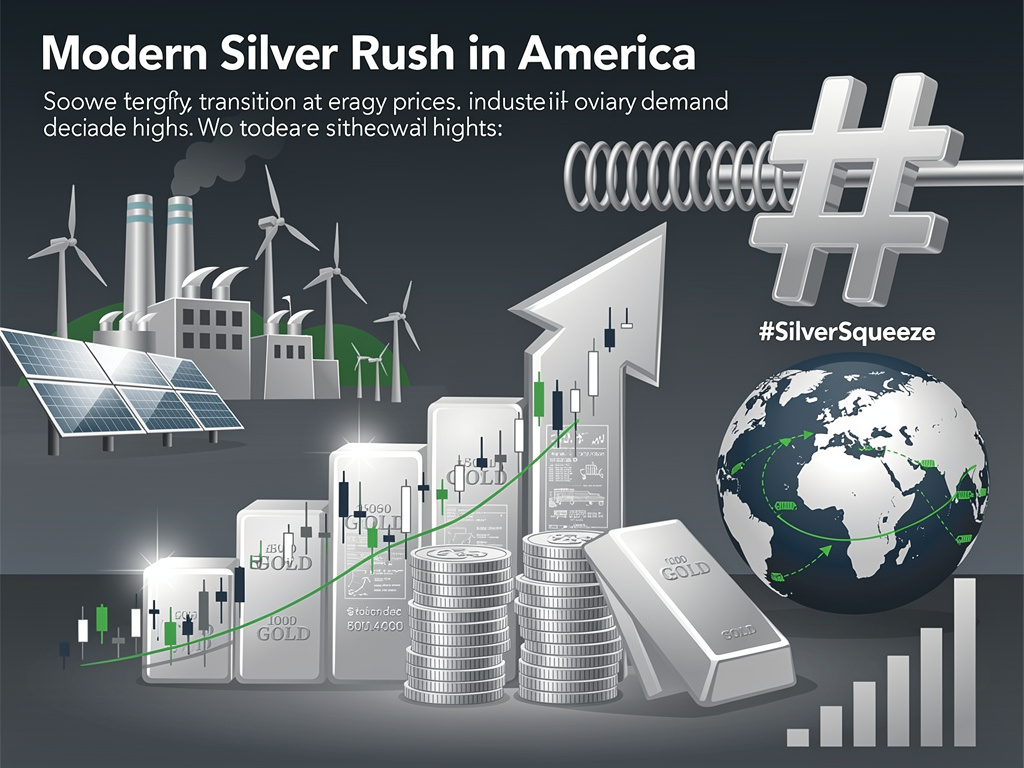
NEW YORK—In quiet suburban pawn shops and bustling online bullion exchanges, a modern-day gold rush is unfolding, but the metal of the moment isn’t gold. It’s silver. From seasoned collectors to novices spurred on by social media, Americans are stampeding into the grey metal, sometimes trading in family heirlooms and gold jewelry to acquire silver coins and bars. This fervor has pushed prices to decade-long highs and left many dealers scrambling to restock their inventories.
This isn’t just a fleeting spike; it’s a multifaceted rally built on a rare convergence of forces. A potent cocktail of persistent inflation fears, global geopolitical turmoil, and a powerful, digitally-organized retail investor movement is fueling the surge. The phenomenon has grown so intense that some market veterans are seeing unprecedented behavior. “I’ve been doing this for 35 years and I’ve never seen so many people selling their gold to buy silver,” one coin shop owner told Business Insider, a sentiment echoing across the industry as Main Street investors bet big on silver’s future.
From Reddit Rallies to a Global Flight to Safety
The seeds of the current frenzy were sown in the meme-stock era of 2021, when a movement known as #SilverSqueeze first gained traction on platforms like Reddit’s WallStreetBets. The thesis was simple: a coordinated buying campaign in the small physical silver market could overwhelm the much larger “paper” market of futures and derivatives, exposing a shortage and forcing a massive price spike. While that initial push fell short of its ambitious goals, the idea never fully dissipated. It has since evolved from a speculative raid into a more sustained investment philosophy for a growing cohort of retail buyers who remain deeply skeptical of traditional financial systems.
Simultaneously, silver’s traditional role as a safe-haven asset is reasserting itself with a vengeance. Stubborn inflation and uncertainty over the Federal Reserve’s path for interest rates have investors seeking refuge in hard assets. After the Fed’s latest meeting, officials signaled an expectation for only one rate cut this year, down from a previous projection of three, underscoring a “higher for longer” environment that erodes the value of cash, as reported by Reuters. This macroeconomic anxiety is compounded by escalating geopolitical conflicts, from Eastern Europe to the Middle East, further bolstering the appeal of precious metals as a store of value independent of any single government or currency.
The Overlooked Engine: Silver’s Indispensable Industrial Role
While the monetary and retail demand captures headlines, the rally’s most durable support may come from the factory floor. Silver is not just “poor man’s gold”; it is an indispensable industrial metal with demand profiles that are accelerating dramatically. It is a critical component in the world’s green energy transition, essential for its unparalleled conductivity and efficiency in solar panels and electric vehicles (EVs). As nations race to meet climate goals, the demand for photovoltaic cells and EV components is soaring, pulling unprecedented amounts of silver from the market.
This surging industrial consumption is creating a severe and widening supply-demand imbalance. For the third consecutive year, the silver market is facing a significant structural deficit, where total demand is far outstripping total supply from mines and recycling. The Silver Institute’s authoritative World Silver Survey 2024 projects a massive 215.3 million ounce deficit for the year, the second-largest in over two decades, according to a release from the Silver Institute. This fundamental tightness provides a solid floor for prices, operating independently of the speculative fervor that can often create volatility.
Analysts Weigh In: Is a Record High an Inevitability?
With both investment and industrial demand firing on all cylinders, Wall Street analysts are taking notice and revising their forecasts upward. Some of the more bullish projections see silver not just testing its all-time high of around $50 an ounce, but potentially surpassing it. Bank of America has set a price target of $35 per ounce over the next 12 months, citing the strong demand from both the energy transition and investors, a forecast noted by CNBC. This renewed institutional interest adds a layer of professional validation to the rally that was absent during the purely retail-driven squeezes of the past.
A key metric for precious metals investors is the gold-to-silver ratio, which tracks how many ounces of silver it takes to purchase one ounce of gold. Historically, this ratio has averaged between 40 and 60. In recent years, it has hovered well above that, often exceeding 80-to-1. Proponents of silver argue this indicates the metal is profoundly undervalued relative to its more expensive cousin. As silver prices have rallied, the ratio has begun to fall, but many investors believe it has much further to go, suggesting significant upside potential remains for silver to “catch up” to gold’s performance, a dynamic closely watched by publications like Kitco News.
Navigating the Volatility: Premiums and Potential Pitfalls
For those looking to join the rush, the path is not without its obstacles. The surge in physical demand has created a significant disconnect between the spot price quoted on financial markets and the actual price consumers pay for coins and bars. Premiums on popular products like American Silver Eagles have soared as dealers struggle with strained supply chains. This gap highlights the tension between the physical market, where buyers want to take delivery of the metal, and the paper market, which is dominated by financial derivatives.
The market’s history also offers a cautionary tale. Silver is notoriously volatile, capable of breathtaking rallies followed by punishing crashes. Veteran traders still recall the events of 1980, when the Hunt brothers’ attempt to corner the silver market sent prices to a then-record high before a spectacular collapse that became known as “Silver Thursday.” As detailed by Investopedia, the episode serves as a stark reminder of the risks involved in a market susceptible to both fundamental pressures and speculative manias. Investors drawn in by the promise of rapid gains could face steep losses if sentiment shifts or if macroeconomic conditions change unexpectedly.
A New Era for the Often-Overlooked Metal
The current silver rally is a distinctly 21st-century phenomenon, a complex event where TikTok-driven investment theses intersect with billion-dollar industrial supply chains and centuries-old fears about currency debasement. It is simultaneously a grassroots movement against a financial system many feel is rigged and a rational response to a clear supply deficit in a critical industrial commodity. This dual identity is what makes the current moment so compelling and its outcome so uncertain.
The ultimate question is whether this alignment of powerful forces can provide the sustained momentum needed to lift silver to a new, higher trading plateau, or if the speculative froth will eventually recede, leaving prices to settle back to levels dictated purely by industrial use. For now, the frenzy continues, and for the first time in a generation, the world’s attention is fixed on the “poor man’s gold” as it makes a compelling bid to reclaim its historic monetary shine.


 WebProNews is an iEntry Publication