
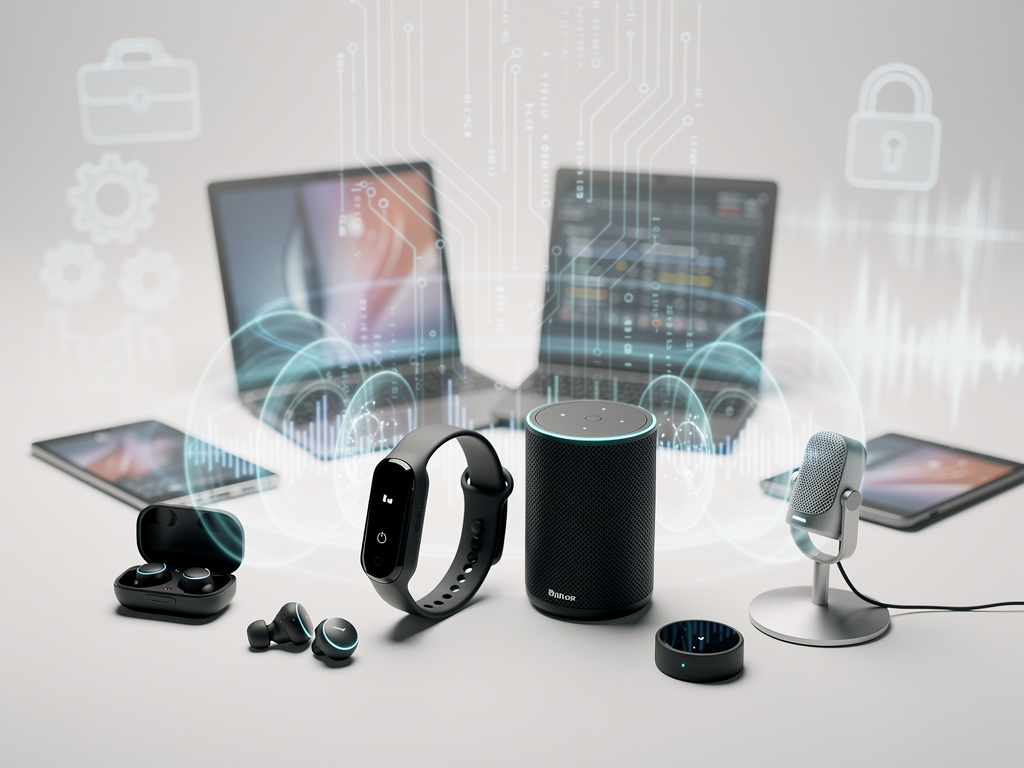
Echoes of Innovation: Silicon Valley’s Audacious Pivot from Screens to Soundscapes
In the bustling hubs of Silicon Valley, a seismic shift is underway, challenging the long-held dominance of visual interfaces in technology. OpenAI, the trailblazing artificial intelligence company, is placing a massive wager on audio technologies, positioning sound as the cornerstone of future interactions. This move aligns with a broader industry trend where tech giants are actively campaigning against the ubiquity of screens, envisioning a world where voices and ears replace taps and swipes. As we step into 2026, this evolution promises to reshape how humans engage with devices, from personal assistants to immersive environments.
The catalyst for this transformation can be traced to recent announcements and strategic investments. According to a report from TechCrunch, OpenAI is intensifying its focus on audio AI, betting that auditory interfaces will define the next era of computing. The company’s executives argue that screens, once revolutionary, now contribute to fatigue and distraction, prompting a collective industry declaration of war on pixelated displays. This sentiment echoes across boardrooms, with innovators exploring how audio can infiltrate everyday spaces like homes, vehicles, and even wearable tech.
Beyond OpenAI’s initiatives, other players are amplifying this narrative. Posts on X highlight collaborations and prototypes, such as OpenAI’s partnership with design legend Jony Ive for a screenless AI assistant slated for 2026. These developments suggest a future where devices listen, respond, and adapt through sound alone, eliminating the need for visual cues. Industry insiders note that this isn’t merely about convenience; it’s a fundamental rethinking of human-computer interaction, driven by advances in natural language processing and voice recognition.
The Audio Revolution Gains Momentum
Delving deeper, the push toward audio stems from years of incremental progress in AI capabilities. Back in 2024, OpenAI unveiled GPT-4o, a model capable of realistic voice conversations, as detailed in a Reuters article from that period. This foundation has evolved, with 2026 projections indicating audio as the primary interface for everything from smart homes to autonomous vehicles. Silicon Valley’s elite see audio as liberating users from the constraints of screens, allowing seamless integration into daily life without the constant pull of notifications.
Critics, however, question the readiness of this technology. Privacy concerns loom large, especially with always-on listening devices. A Fortune piece warns that the industry’s tone-deaf response to AI backlash could exacerbate tensions in 2026, particularly around data security and job displacement. Yet proponents argue that audio interfaces, when designed ethically, could enhance accessibility, aiding those with visual impairments or multitasking needs.
Moreover, economic incentives are fueling this trend. Venture capital flows into audio AI have surged, with startups raising record funds in 2025, as reported by the Los Angeles Times. OpenAI’s bet is part of a larger pattern where billions are poured into voice-driven innovations, anticipating a market explosion. Posts on X from influencers like Allie K. Miller emphasize how voice AI is already boosting productivity, from dictation during walks to app development while exercising, signaling real-world applications gaining traction.
From Vision to Reality: Prototypes and Challenges
Prototyping efforts reveal the tangible forms this audio-centric future might take. OpenAI’s collaboration with Jony Ive envisions a palm-sized device that relies solely on microphones, cameras, and speakers, staying perpetually active to respond to user needs. While core software and privacy features are still in development, as noted in various X discussions, the ambition is clear: to make every environment an interactive soundscape. This extends to cars, where audio could manage navigation and entertainment without diverting drivers’ eyes from the road.
Competitive pressures are accelerating these advancements. Rivals like Apple are under scrutiny to enhance Siri with AI capabilities compelling enough to drive upgrades, according to a CNBC analysis. Meanwhile, OpenAI’s forays into generative music, rivaling tools like Suno and Udio, expand audio’s role beyond conversation to creative realms. X posts from tech enthusiasts describe how these models turn text prompts into full songs, hinting at a democratization of music production through AI.
Yet, hurdles remain. A CNN Business retrospective on AI’s 2025 impact highlights surges in mental health concerns and job losses, underscoring the human cost of rapid tech adoption. For audio to succeed, companies must address these issues head-on, perhaps through transparent data practices and inclusive design. Industry observers on X predict that 2026 could see explosive growth in voice AI, with market projections for environmental audio data reaching $23 billion by 2032, growing at a 44% compound annual rate.
Industry-Wide Implications and Economic Ripples
The war on screens isn’t isolated to OpenAI; it’s a valley-wide crusade. Blogs from the Silicon Valley Innovation Center describe AI as structural in 2026, redefining industries through audio-native approaches. This shift could disrupt sectors like consumer electronics, where traditional smartphones might evolve into audio-first companions, reducing screen time and potentially alleviating digital eye strain.
Economically, the implications are profound. With AI companies securing $150 billion in funding last year, per the Los Angeles Times report referenced earlier, the influx supports ambitious projects like OpenAI’s audio model upgrades planned for Q1 2026. X users speculate on standalone audio devices that integrate advanced voice architectures, promising interactions more natural than ever. This could lead to new revenue streams, from subscription-based audio services to AI-generated content ecosystems.
Socially, the transition raises questions about equity. While audio interfaces promise inclusivity, they must navigate linguistic diversity and accents to avoid bias. A The Indian Express opinion piece warns of trends that might increase costs and blur reality, urging caution as audio AI blurs lines between human and machine voices.
Navigating the Sound Waves of Tomorrow
As Silicon Valley presses forward, the integration of audio into critical sectors demands scrutiny. In healthcare, voice AI could enable hands-free consultations, while in transportation, it might enhance safety by minimizing visual distractions. However, the Fortune analysis points to ongoing public skepticism, with demands for clarity on who benefits from these technologies amid rising costs and job automation.
OpenAI’s leadership in this arena positions it as a bellwether. Building on GPT-4o’s voice capabilities from the Reuters coverage, the company is eyeing expansions into music and beyond, as echoed in X posts about generative audio tools. This multifaceted approach could cement audio as the default interface, transforming passive spaces into active, responsive environments.
Looking ahead, the convergence of audio with other AI modalities—such as vision through integrated cameras—suggests hybrid systems that enhance rather than replace human senses. Industry sentiment on X, from figures like Peter H. Diamandis, warns of massive corporate disruptions due to AI automation, with models like GPT-5.2 potentially automating 71% of knowledge work. Yet, this also opens doors for innovation, where audio fosters creativity and efficiency.
Voices of Caution and Optimism in a Screenless Era
Amid the enthusiasm, voices of caution emerge. The CNN Business piece forecasts continued AI-induced upheavals in 2026, including mental health strains from over-reliance on tech. Balancing this, optimists on X tout productivity gains, like building apps via voice during workouts, illustrating audio’s potential to liberate users from desk-bound routines.
Regulatory frameworks will play a pivotal role. As audio devices become ubiquitous, governments may impose stricter guidelines on data collection, echoing concerns in the Fortune report. Silicon Valley must demonstrate that its war on screens benefits society broadly, not just shareholders.
Ultimately, this pivot to audio represents a bold reimagining of technology’s role in our lives. By prioritizing sound over sight, innovators like OpenAI are crafting a future where interactions are more intuitive and less intrusive. As 2026 unfolds, the success of these efforts will depend on addressing ethical dilemmas while delivering on the promise of a seamless, voice-driven world. The echoes of this revolution are just beginning to resonate, poised to redefine our technological horizons in profound ways.


 WebProNews is an iEntry Publication