
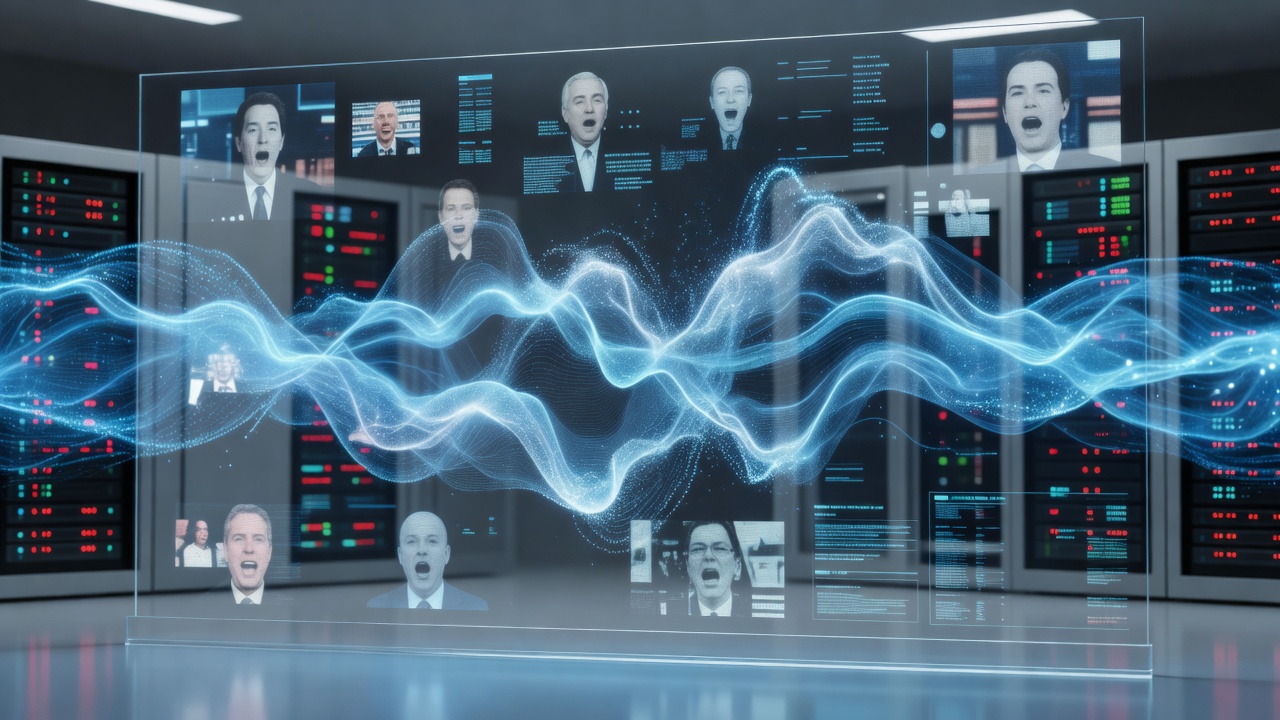
Political operatives once relied on pollsters, ad buyers and scriptwriters. Now many turn to algorithms that generate voices, faces and scripts in seconds. The result plays out across screens in races from Texas to California. Candidates mock rivals with synthetic singing. Super PACs pour in hundreds of millions. And voters struggle to separate genuine footage from fabricated spectacle.
The New York Times laid out the pattern in detail this week. Campaigns deploy generative tools for everything from targeted messaging to outright fiction. Some efforts stay inside the lines. Others test how far deception can stretch before rules catch up. But the money moves faster than the statutes.
Marc Andreessen and Greg Brockman stand at the center of one funding wave. The venture capitalist and OpenAI co-founder back efforts that have committed $275 million toward midterm races through super PACs, according to reporting from Bloomberg. Their stated aim: back candidates who favor lighter government rules on artificial intelligence. A rival PAC backed by Anthropic pushes its own slate. The dueling checks turn technology policy into a direct line item on campaign balance sheets.
Short clips grab attention first. In one Texas Senate ad, a deepfake version of Democrat James Talarico appears in a dress. He sings an altered take on “My Favorite Things,” praising transgender children. The spot comes from Citizens for Sanity, a group aligned with President Trump. Axios documented the ad and similar efforts that now pepper primary battlegrounds. Reality bends. The emotional punch lands before viewers can check sources.
But Talarico isn’t the only target. Attorney General Ken Paxton released video that showed his Republican opponent Sen. John Cornyn dancing with Democratic Rep. Jasmine Crockett. The Houston Public Media report from February captured early signs of the trend that accelerated through spring. Crockett herself later used AI to enlarge the size of a crowd in one of her own spots. The technology flows in both directions.
In Kentucky’s 4th District Republican primary, ads depicted Rep. Thomas Massie in a “throuple” with Reps. Alexandria Ocasio-Cortez and Ilhan Omar. The fabricated scenes showed the trio dining, checking into a hotel, holding hands. Opposing spots featured an AI-generated elephant wearing a MAGA hat and Trump-like hair. Another showed opponent Ed Gallrein abandoning Trump in a foxhole. The volume of synthetic content led local operatives to call the race a testing ground.
Georgia offered more examples. Secretary of State Brad Raffensperger ran spots with AI images of primary opponents firing guns into the air and battling with pugil sticks. Lt. Gov. Burt Jones backed an entirely AI-generated advertisement in which rival Rick Jackson shovels cash into a furnace and inflates a hot-air balloon with his own breath. These clips, cataloged by Axios, arrived without mandatory labels in many cases.
California primaries brought a different flavor. Influencers and AI-generated “slop” flooded feeds ahead of spring contests. Politico described the surge and warned that 2028 could amplify the pattern on a national scale. Former reality television personality Spencer Pratt benefited from fan-made AI videos attacking incumbent Los Angeles Mayor Karen Bass. His campaign gained traction on social platforms even as state disclosure rules struggled to keep pace.
Tools built specifically for campaigns have appeared. Quiller, founded by Hillary Lehr, markets itself as the first generative AI platform tailored for electoral work and nonprofits. Lehr appeared on CNN in June to explain how the systems can draft speeches, analyze voter data or create multilingual outreach. She also acknowledged the risk of misuse. The line between efficiency and manipulation remains thin.
The Money Trail and Policy Battles
Tech investors don’t hide their motives. They want fewer restrictions on model training, data centers and compute power. Local opposition to new facilities has grown in some districts, creating another front where AI money flows into races. Bloomberg noted the overlap between data-center backlash, campaign contributions and deepfake worries. The issues collide in voter minds and on donor spreadsheets.
OpenAI itself drew a boundary. In a May policy update, the company said it prohibits use of its products for scaled campaign messaging aimed at or against candidates, parties or ballot measures. OpenAI stated that campaigns may still use its tools for internal briefings, planning, translation and administrative tasks. The firm also bars political ads on its platform. The distinction matters. It signals that some industry leaders see limits even as their financial backers push boundaries elsewhere.
States have started to respond. Massachusetts passed measures requiring disclosure of AI-generated content in political ads and banning deceptive synthetic media in the 90 days before an election. The National Conference of State Legislatures maintains a running list of such statutes, updated in June. Penalties vary. Enforcement depends on stretched election offices.
Yet federal rules lag. Many campaigns disclose AI use voluntarily. Others do not. Axios reported that Democrats have signaled plans to tighten standards if they regain congressional majorities. For now the absence of uniform requirements leaves room for creativity that sometimes crosses into outright fiction.
Local races show the efficiency gains. In Washington, D.C., candidates used AI to design mailers, generate slogans, translate materials and run data analysis. The 51st News site described how the technology cut costs and sped production ahead of the June primary. Similar patterns appear in district-level contests across the country. Staffs shrink. Output rises. The strategic edge feels obvious.
Voter reaction remains harder to measure. Some clips spark outrage and media coverage that amplifies reach. Others blend into the daily scroll. A Bloomberg Television segment this week highlighted a deepfake resembling singer Billie Eilish in political context alongside the Talarico spot. Emily Birnbaum, the network’s corporate lobbying reporter, noted that the sheer volume now raises broader questions about election integrity.
The National Conference of State Legislatures points out that campaigns have always adopted new tools. Television ads changed politics in the 20th century. Cryptocurrency donations arrived more recently. Generative AI simply accelerates the pace and lowers the barrier. Anyone with a laptop and modest technical skill can now produce material that once required professional studios.
Concerns extend beyond ads. Researchers at USC found that AI agents can coordinate influence campaigns on social media with minimal human direction. Bots cluster, amplify messages and converge on single narratives. The study, referenced in recent X discussions, suggests future operations could run largely on autopilot. Campaigns that master these systems may gain decisive advantages in turnout and persuasion.
Still, limits exist. Detection tools improve. Platforms add labels in some cases. And public fatigue with obvious fakes may blunt their power. One X post from a political marketer noted that Gen Z audiences shift toward micro-formats and conversational AI to fight ad exhaustion. Authenticity, or the appearance of it, still carries weight.
The 2026 cycle offers a preview. Deepfakes grow weirder and harder to spot, as The Wall Street Journal observed in mid-June coverage of muscular Mike Rogers imagery and other altered content. Texas, Kentucky and Georgia supplied the most vivid cases. California demonstrated the influencer-AI combination. And Silicon Valley money tied the technological experiment to concrete policy demands.
Regulators, technologists and candidates will spend the next two years adjusting. Some races will turn on traditional ground games and policy substance. Others may be decided by who produces the most convincing fiction. The technology itself remains neutral. The choices campaigns make with it will shape trust in the process long after ballots are counted.


 WebProNews is an iEntry Publication