
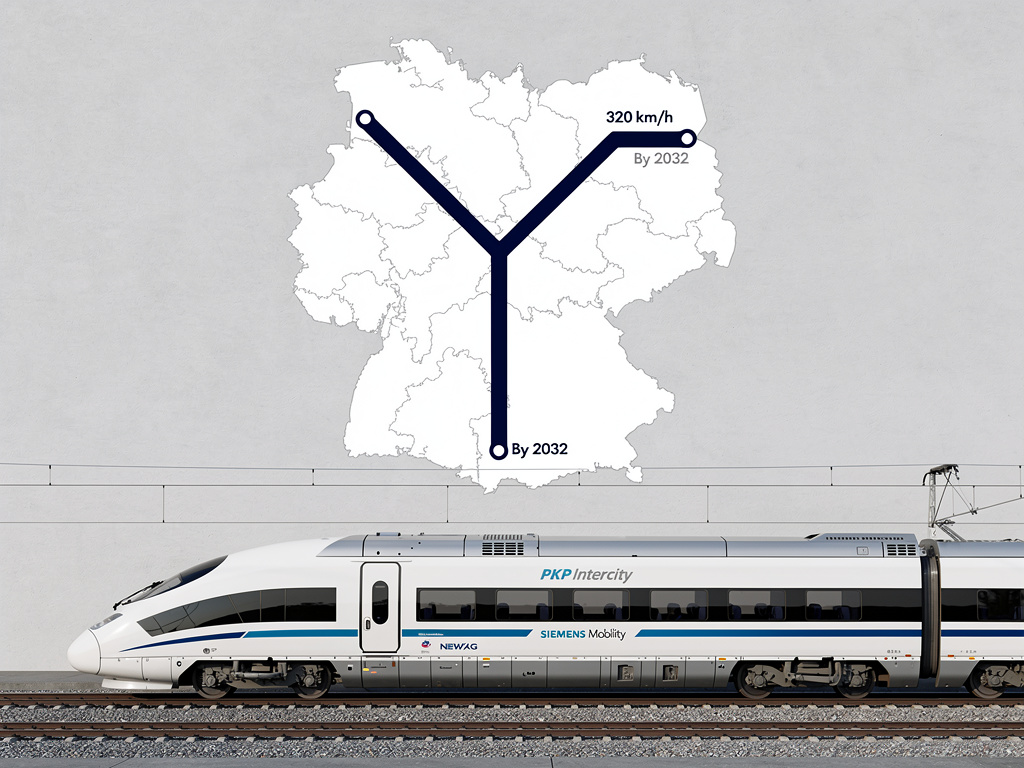
In a strategic move signaling Poland’s push into high-speed rail, Siemens Mobility and Newag have inked a Memorandum of Understanding to collaborate on developing 320 km/h trains, positioning them for a pivotal tender by state operator PKP Intercity. The pact, announced on January 26, 2026, builds on nearly 15 years of partnership and targets the burgeoning Polish market amid ambitious infrastructure plans.
“We are expanding our partnership with Newag to create a solid foundation for future collaboration in the Polish railway market. Building on our long-standing cooperation, we want to stimulate innovation, strengthen local value creation, and contribute to the next stage of development of the Polish railway,” said Michael Peter, CEO of Siemens Mobility, as quoted in Railway Pro.
The agreement emphasizes knowledge exchange, technical assessments, and merging engineering prowess, with a sharp focus on high-speed rolling stock production and advanced maintenance to boost efficiency. This comes as PKP Intercity seeks proposals by April 29, 2026, for 20 electric multiple units capable of 320 km/h, plus options for 35 more, as detailed in Railway Gazette International.
Roots of a Proven Alliance
The duo’s history traces back to metro projects, including the Simetro consortium delivering Inspiro trains to Warsaw and Sofia. Newag has long sourced Siemens drive systems, gearboxes, and ETCS onboard equipment for locomotives and trains. “The signing of this agreement is an important step in expanding our collaboration with Siemens Mobility on the Polish market in the high-speed rolling stock segment. In the field of high-speed train projects, Siemens is the natural strategic leader for us,” stated Zbigniew Konieczek, president of Newag, per Railway Pro.
This longstanding tie now pivots to high-speed ambitions, with the MoU providing a framework for joint bids. Exclusive talks until end-2026 underscore commitment, as noted in Polish media coverage amplified on X by users like @1wasatoMasao.
PKP Intercity launched the tender on December 30, 2025, requiring bidders to prove delivery of at least five 250 km/h trainsets in the EU, Switzerland, or UK within seven years. Trains must span about 200 meters, feature two classes, dining areas, and accessibility, aiming for routes like Warsaw-Łódź-Poznań-Szczecin and extensions to Berlin, according to Notes from Poland.
Tender Timelines and Stakes
Invitations to tender follow in July 2026, with contracts by late 2027 and first deliveries by 2032, syncing with the Y-shaped network’s debut section linking Warsaw, the CPK hub airport, and Łódź. This network, part of the former Centralny Port Komunikacyjny (now Port Polska), spans 480 km to Poznań and Wrocław at design speeds up to 350 km/h.
“Just as Pendolino trains changed Polish railways 10 years ago, in a few years high-speed trains will introduce a new quality of travel on domestic and international routes,” remarked Infrastructure Minister Dariusz Klimczak on the tender launch, via Notes from Poland. CPK separately eyes 40+ trainsets for leasing to operators.
The collaboration merges Siemens’ Velaro high-speed expertise—proven in Europe and beyond—with Newag’s local manufacturing at Nowy Sącz, enhancing Polish content amid EU emphasis on domestic industry. Discussions with nine manufacturers, including Polish firms, preceded the tender, per Railway-News.
Poland’s High-Speed Infrastructure Surge
Poland’s rail renaissance features booming ridership—40.4 million on PKP Intercity in H1 2025, up 31% from two years prior. Recent deals include €1.6 billion for 42 Alstom Coradia Max double-deckers and ongoing fleet renewals worth €4 billion. High-speed lines promise Warsaw to major cities in under 100 minutes, integrating with TEN-T corridors to Berlin, Prague, and beyond.
The Y-line’s Warsaw-Łódź segment, including a 4.6 km tunnel under Łódź awarded to Porr, targets 2032 completion alongside CPK Airport’s opening for 34 million passengers. This positions Poland as Central Europe’s rail nexus, with Siemens-Newag poised to supply dual-voltage (3 kV DC/25 kV AC) trains potentially upgradable to 350 km/h.
On X, reactions highlight exclusivity and timelines, with @OLogistyczny noting tender barriers exclude solo Polish bids, while @sektorkolejowy flags joint KDP pursuits. Siemens’ global high-speed portfolio, from Shanghai Maglev to Velaro Novo, bolsters credibility.
Strategic Edge in a Competitive Arena
Bidders face rigorous criteria, but Siemens-Newag’s synergy—Siemens’ signaling/traction leadership and Newag’s assembly—offers local value. Maintenance innovations promise lifecycle efficiency, critical for 30-year operations. PKP Intercity’s market sounding confirmed consortium interest.
This pact arrives amid Siemens’ expansions, like U.S. facilities for Brightline West’s 220 mph trains starting 2026, yet Poland focus underscores European priorities. For Newag, it elevates from regional EMUs to global high-speed, vital as Poland invests billions in rail.
Analysts eye contract awards by 2027, with deliveries aligning infrastructure milestones. Success could spawn hourly services Warsaw-Berlin, half-hourly domestics, reshaping mobility and freight in Central Europe.
Implications for European Rail Supply Chain
The MoU fosters innovation in ETCS Level 2, energy-efficient drives, and passenger-centric designs like family zones and Wi-Fi. Poland’s tender mandates PRM compliance, echoing EU standards. CPK’s rolling stock pool plans further opportunities.
As X posts from @RailwaySupply and @railwaygazette amplify, industry buzz centers on Polish-German tandem challenging Alstom, Hitachi. With first trains by 2032, this duo eyes not just one tender but sustained dominance in Poland’s €10 billion+ rail pipeline.


 WebProNews is an iEntry Publication