
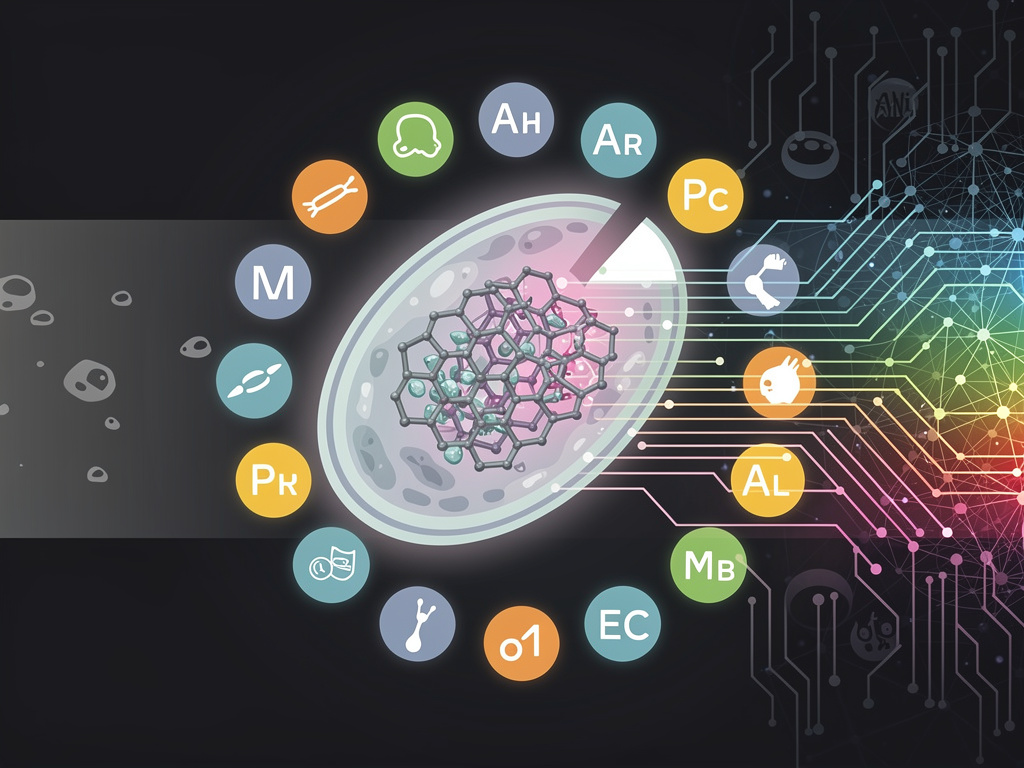
All known life builds proteins from the same 20 amino acids. No exceptions. That code, etched into DNA and RNA across bacteria, plants, animals, and humans, traces back to a shared ancestor billions of years ago. But what if one of those 20 isn’t truly essential? Researchers at Columbia University and collaborators just proved it isn’t—at least not for a bacterium’s core protein-making machine.
Harris Wang, a synthetic biologist at Columbia, led the charge. His team engineered E. coli cells where the small subunit of the ribosome runs on just 19 amino acids. Isoleucine? Gone. The cells grow at 60% the speed of normal ones. And they keep dividing for hundreds of generations without reverting.
Why isoleucine? It’s hydrophobic, like leucine and valine—branched carbon chains that hide inside proteins, away from water. Genome analysis showed it gets swapped out most often in related species. A promising target. Swapping it for valine in 36 essential genes killed cells in 22 cases. The rest survived, often slower.
The ribosome became the proving ground. This molecular factory—21 proteins in the small subunit, clustered on a 10,000-base DNA stretch—translates genetic instructions into proteins. Replace isoleucines one by one: 18 genes fine, 19 slower, 13 lethal. AI stepped in. Deep-learning tools redesigned tricky proteins, suggesting swaps no biologist would try—like charged residues for neutral isoleucine.
AlphaFold checked structures. Four software packages iterated designs. They nailed 25 of 32 proteins. For the holdout, rplW, brute force: 16 combos from AI suggestions. One worked. Swap all 21 genes. Cells live. Growth: 60% normal. Alone, that rplW kills. Context matters—the redesigned ensemble stabilizes it.
Ars Technica detailed the saga: ‘Editing all 4,500 or so genes in E. coli would be a monumental task… so the researchers started out with much smaller tests.’ (Ars Technica)
Wang paused years ago when manual swaps failed. AI matured. ‘It’s very exciting that it’s possible,’ says Julius Fredens, synthetic biologist at National University of Singapore, uninvolved. (Nature)
Eric Topol called it ‘changing the alphabet of life’ on X. (X post) The work hit Science on April 30, 2026: ‘Toward life with a 19–amino acid alphabet through generative artificial intelligence design.’ (Science)
AI’s black box frustrates. Models disagree. Outputs defy intuition—rewiring alpha helices wholesale. Humans reverse-engineer. Tools enable. Understanding lags.
This isn’t full-genome rewrite. Yet. Ribosome success hints at scaling. Imagine proteomes sans isoleucine: simpler media for biotech, novel chemistries, or minimal cells for origin-of-life tests. Early life might have run on fewer amino acids, RNA-heavy metabolisms. AI tests those ideas, protein designs compensating for missing blocks.
Challenges persist. Growth penalty. Mutations accumulate—20-30 per 400 generations, none restoring isoleucine. Stability unproven long-term. rplW’s interdependence shows redesigns entwine.
But proof of principle. Life’s code flexible. AI unlocks paths evolution might have taken—or new ones we design. Wang eyes the full E. coli proteome next. Four thousand genes. Daunting. Possible now.
Synthetic biology shifts. From adding exotic amino acids to subtracting canon ones. Simpler life forms? Custom machines? The 20-amino acid universality cracks, just a bit.


 WebProNews is an iEntry Publication