
Agentic AI: How Shopify’s CEO Turned a USB Stick into a Personal Health Revolution
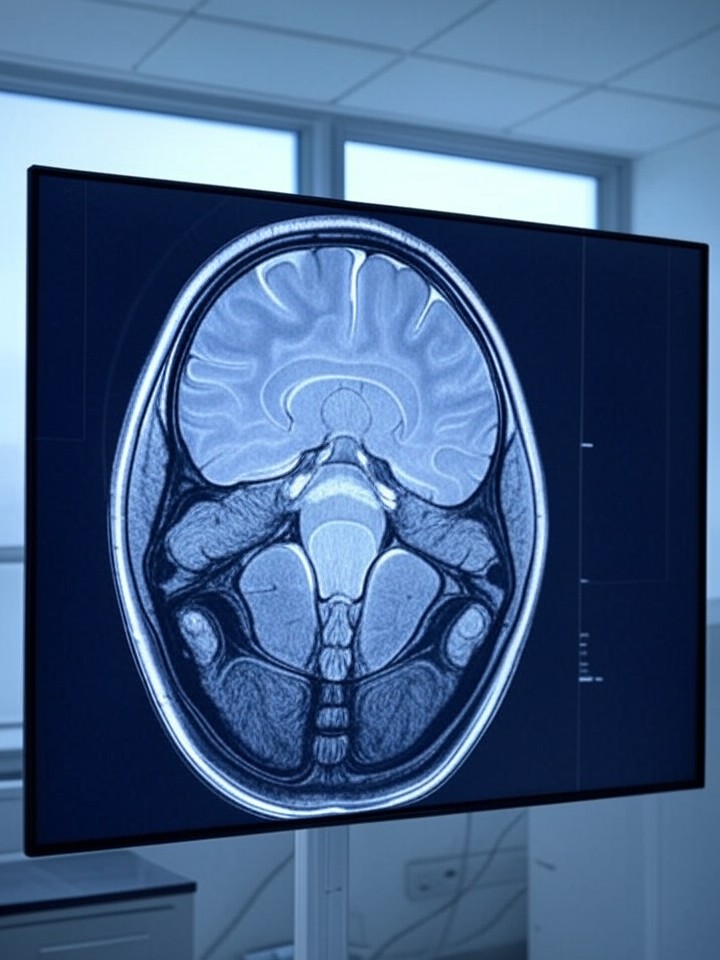
In the fast-evolving world of artificial intelligence, few demonstrations capture the imagination quite like a hands-on example from a tech leader. Tobi Lutke, the CEO of Shopify, recently shared a striking instance of AI’s practical power on X, formerly Twitter. He described feeding a simple prompt into an AI system to organize and annotate medical imaging data from a USB stick containing his MRI scans. This isn’t just a personal anecdote; it signals a broader shift toward agentic AI systems that handle complex, real-world tasks with minimal human intervention.
Lutke’s prompt was straightforward yet ambitious: instruct the AI to extract reports and images from the USB, convert them using tools like ImageMagick, structure them into directories, and generate an index.html file complete with annotations. The result? A neatly organized digital archive of his health data, annotated for easy navigation and insight. This feat, accomplished with what Lutke called “one more prompt,” underscores how advanced AI models are moving beyond chat-based interactions into actionable, agent-like behaviors.
Such capabilities are part of a larger trend where AI agents perform multi-step processes autonomously. As Lutke noted in his post, this level of functionality represents a leap from previous AI iterations, enabling users to tackle personal and professional challenges with unprecedented efficiency. For industry insiders, this example highlights the potential for AI to democratize access to sophisticated data management, particularly in sensitive areas like healthcare.
The Rise of Agentic Systems in Everyday Applications
Drawing from recent industry reports, this development aligns with predictions outlined in Capgemini’s Top Tech Trends 2026, which emphasizes AI as the digital backbone for enterprises and individuals alike. The report details how agentic AI—systems that plan, execute, and iterate on tasks—is transforming from experimental prototypes to core tools in daily life. Lutke’s MRI processing demo exemplifies this, showing how such systems can parse unstructured data, apply conversions, and even create user-friendly outputs without coding expertise.
On X, Lutke has been vocal about AI’s trajectory. In a series of posts, he discussed shipping more code recently thanks to these advanced models, pointing to a surge in productivity. This sentiment echoes broader discussions on the platform, where tech enthusiasts debate the implications of agentic AI for personal empowerment. For instance, conversations around AI’s role in handling medical data often highlight privacy concerns, but Lutke’s approach demonstrates a controlled, user-directed application.
Moreover, this ties into Shopify’s own innovations. Lutke announced the Universal Commerce Protocol (UCP), co-developed with Google, which facilitates seamless integrations for AI agents in e-commerce. While focused on commerce, the underlying principles of agentic processing could extend to health tech, suggesting a convergence of domains where AI agents manage everything from shopping to personal health records.
Bridging AI and Healthcare: Opportunities and Hurdles
The healthcare sector is ripe for such disruptions. According to insights from Deloitte’s Tech Trends 2026, organizations are accelerating AI adoption to move from experimentation to tangible impact, including in medical imaging analysis. Lutke’s DIY MRI organizer illustrates a microcosm of this: an individual using off-the-shelf AI to make sense of complex diagnostic files, potentially bypassing traditional, cumbersome software used by medical professionals.
However, this personalization raises questions about accuracy and ethics. AI systems like the one Lutke employed must handle sensitive data with precision to avoid misinterpretations that could lead to health risks. Recent news from the Financial Times, in an article titled UK’s Ofcom investigates X over Grok’s sexualised AI images of women and children, highlights regulatory scrutiny on AI outputs, underscoring the need for safeguards in all applications, including non-controversial ones like medical data processing.
Industry experts, as reported in The New York Times’ The Tech That Will Invade Our Lives in 2026, predict that self-driving AI agents will become commonplace, extending to personal health management. Lutke’s example could inspire a wave of consumer-facing tools that empower patients to interact directly with their data, fostering a more informed dialogue with healthcare providers.
Technical Underpinnings: From Prompts to Processed Outputs
Delving deeper into the mechanics, Lutke’s process involved AI leveraging tools like ImageMagick for image conversion—a nod to how agentic systems integrate existing software ecosystems. This integration is key, as noted in TechRadar’s coverage of Forget AI – these will be the 11 biggest gadget trends of 2026, which discusses the fusion of AI with traditional computing tools at events like CES 2026. Such hybrids allow for robust handling of diverse file types, from DICOM images in MRIs to textual reports.
In Lutke’s shared output, the AI not only organized files but annotated them, potentially identifying anomalies or key findings based on the data. This capability draws parallels to emerging intelligent apps described in Capgemini’s trends report, where AI builds and refines its own workflows. For tech insiders, this means rethinking development paradigms: instead of writing code, users craft high-level instructions, letting AI fill in the gaps.
Furthermore, posts on X from tech leaders like Lutke reveal a community excited about these advancements. Discussions often revolve around scaling such agents for enterprise use, such as in Shopify’s ecosystem, where similar tech powers commerce agents in platforms like Microsoft Copilot and Google’s Gemini.
Broader Implications for Industry and Innovation
Extending beyond healthcare, Lutke’s demonstration has ripple effects in e-commerce and beyond. Shopify’s recent Black Friday success, with merchants achieving $6.2 billion in sales, was bolstered by AI-driven infrastructure handling massive request volumes. As Lutke posted on X, peaks of 489 million requests per minute showcase the scalability of these systems, which could similarly support health data platforms processing vast amounts of patient information.
Challenges persist, though. Security in AI-driven data handling is paramount, especially amid rising supply chain attacks Lutke has warned about in earlier X posts. Reuters’ Tech News frequently covers such threats, emphasizing the need for robust defenses in agentic AI to prevent vulnerabilities in personal applications like medical file management.
Innovation in this space is accelerating. Wired’s latest coverage on technology and culture explores how AI agents are reshaping business, aligning with Lutke’s vision of agentic commerce. By open-sourcing protocols like UCP, Shopify is fostering an ecosystem where AI can transact and manage data across domains, potentially including health tech integrations.
Personal Empowerment Through AI: A Case Study in Action
Lutke’s MRI project serves as a compelling case study. Starting with a USB stick—a common medium for medical data delivery—the AI transformed raw files into an accessible web page. This process, detailed in his X thread, involved extracting, converting, structuring, and annotating, all via iterative prompts. It’s a testament to how far AI has come since earlier models, as Lutke himself noted in a post about shipping more code recently than in the past decade.
For industry professionals, this highlights a shift toward no-code solutions in complex fields. Global Media Insight’s 50 Latest Web Development Trends [Jan 2026 Updated] points to AI-powered progressive web apps (PWAs) that could host such personalized health dashboards, making Lutke’s index.html a precursor to more sophisticated tools.
Privacy and control are central themes. Unlike centralized health apps, this approach keeps data local, under user control—a point echoed in The Verge’s Highlighting the tech trends of CES 2026, which discussed user-centric AI at the forefront of gadget innovations.
Future Horizons: AI’s Role in Democratizing Expertise
Looking ahead, Lutke’s experiment could inspire widespread adoption. Imagine AI agents routinely analyzing personal health data, flagging issues for doctors, or even integrating with wearables for real-time insights. PCMag’s From Exoskeletons to Ultra-Vivid TVs, These Are the Trends That Stole the Show at CES 2026 highlights similar trends in health-focused tech, suggesting a future where such agents are embedded in everyday devices.
Challenges like regulatory compliance remain. CNN Business’ Tech section often reports on AI ethics, reminding us that while empowering, these tools must navigate legal frameworks to avoid misuse.
Yet, the optimism is palpable. Lutke’s broader posts on X about fusion energy and AI as transformative inventions paint a picture of converging technologies. In commerce, Shopify’s tools like Checkout Kit enable AI-driven shopping; extending this to health could revolutionize patient empowerment.
Integrating AI into Professional Workflows
For businesses, adopting agentic AI means rethinking workflows. GeekWire’s Breaking News in Technology & Business covers how companies like Shopify are leading this charge, with Lutke’s personal projects informing enterprise strategies.
In healthcare specifically, Tech Xplore’s Technology and Engineering news details advances in AI for medical engineering, where agentic systems could automate diagnostics, much like Lutke’s annotation process.
Ultimately, this deep dive into Lutke’s AI-powered MRI handling reveals a pivotal moment. As AI agents become more capable, they promise to bridge gaps between complex data and human understanding, fostering innovation across industries while demanding careful stewardship.


 WebProNews is an iEntry Publication