
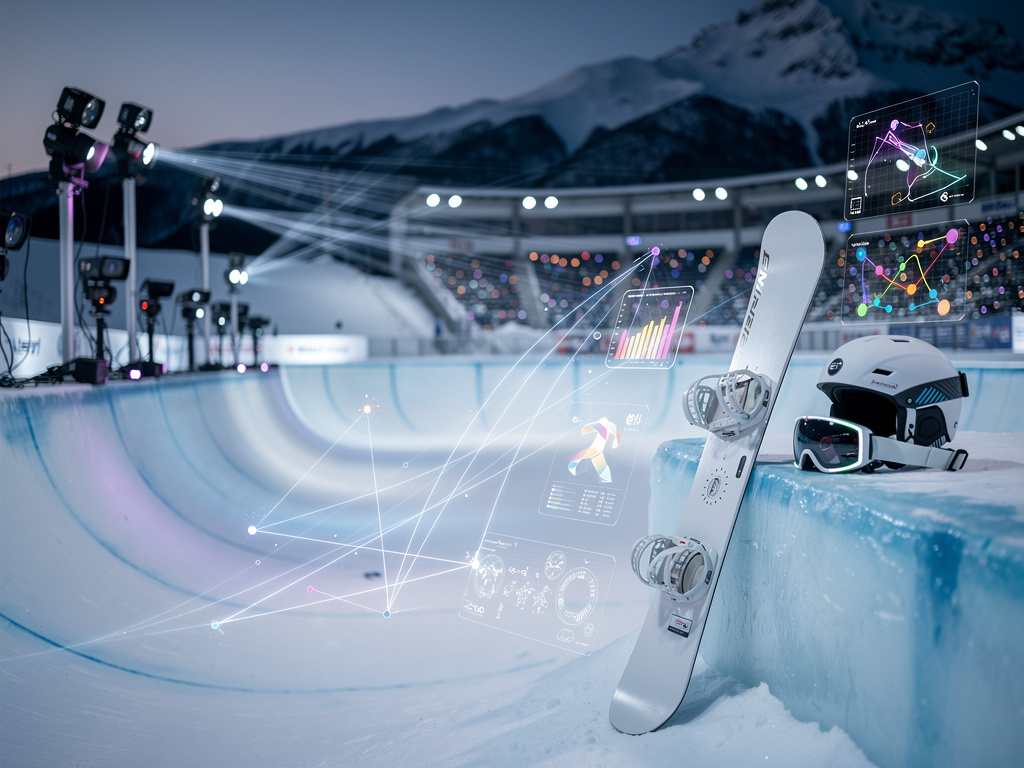
Shaun White, the Olympic snowboard champion with three gold medals, recently sat down with Fortune magazine to discuss how artificial intelligence is reshaping athletic performance and fan engagement across competitive sports. In the interview published by Fortune, White shared his observations from years of high-level competition and his current work with technology startups that apply data analytics to training regimens. His perspective carries weight because he experienced the transition from analog coaching methods to sensor-driven feedback systems during the final decade of his career.
White described watching younger athletes adopt motion-capture systems that record every twist and rotation in three dimensions. These tools generate thousands of data points per run, allowing coaches to identify patterns that remain invisible to the naked eye. He recalled his own early training sessions where feedback came mainly from coaches shouting observations from the bottom of the halfpipe. The difference today is striking. Algorithms can now compare an athlete’s body position at the exact moment of takeoff against thousands of previous jumps performed by medal winners. This comparison produces specific recommendations about hip rotation speed or shoulder alignment that can shave fractions of a point off a score.
The conversation turned to injury prevention, an area where White suffered multiple setbacks during his career. Modern systems use wearable sensors to track fatigue markers in real time. Machine learning models process heart rate variability, muscle activation patterns, and even sleep quality data to predict when an athlete’s risk of ligament tears or stress fractures begins to rise. White mentioned a snowboard cross athlete he knows who avoided a season-ending knee injury after an AI system flagged abnormal loading patterns on her left leg during practice. The coach adjusted the training schedule based on that alert, and the athlete competed injury-free through the following World Cup season.
Fan experiences have also changed because of these same technologies. Broadcast partners now overlay performance metrics directly onto video feeds during major events. Viewers can see an athlete’s air time, rotation speed, and landing force displayed in graphics that update instantly. White pointed out that these visualizations help casual audiences understand why one run scores higher than another. What once required years of watching competitions to appreciate now becomes accessible within a single broadcast. He believes this transparency strengthens emotional connections between spectators and competitors.
The discussion highlighted how AI assists in scouting and talent identification. National sports federations scan video from regional competitions and feed it into neural networks trained to recognize biomechanical efficiency. These systems flag young athletes whose movement signatures match those of past champions. White expressed measured enthusiasm about this approach. While the technology accelerates discovery of promising talent, he stressed that human coaches must still evaluate character, work ethic, and ability to handle pressure. Data can reveal physical potential but cannot measure determination when an athlete falls on the first run of an Olympic final.
Training personalization stands out as one of the most promising applications according to White. Rather than following standardized programs, athletes now receive daily schedules adjusted by algorithms that account for their recovery status, competition calendar, and even weather conditions at upcoming venues. A halfpipe specialist might receive extra balance drills if the model predicts icy conditions in Beijing, while a slopestyle rider could focus on rail tricks when the forecast calls for softer snow. This level of customization would have seemed like science fiction when White won his first Olympic gold in 2006.
The Fortune article also explored ethical questions surrounding data ownership and privacy. Athletes generate enormous amounts of personal information through their training devices. White advocated for clear policies that give competitors control over who accesses their biometric records. He shared an example of a federation that wanted to sell aggregated performance data to equipment manufacturers. The athletes pushed back, insisting on transparency about how their information would be used and compensation when it contributed to product development. These negotiations reflect broader conversations happening across professional leagues about balancing innovation with individual rights.
White described his involvement with a company developing virtual reality training environments. The system recreates competition venues with remarkable accuracy, allowing athletes to practice their routines mentally before traveling. During his own career, he would visualize courses by studying videos and diagrams. The new tools let athletes step into a digital version of the Olympic halfpipe in Milan-Cortina years before the Games begin. They can experiment with different lines and trick combinations while the AI analyzes which approaches produce the highest technical scores. This preparation method reduces the physical toll of repetitive practice while increasing the quality of each actual training session.
Coaching relationships have evolved alongside these tools. White observed that successful coaches now combine traditional mentoring skills with data literacy. They must interpret complex analytics reports and translate them into instructions athletes can follow. A coach who only relies on gut feelings may miss opportunities to optimize performance, while one who focuses exclusively on numbers might overlook the human elements that inspire peak performance. The most effective mentors blend both approaches, using AI as a sophisticated assistant rather than a replacement for experience and empathy.
The interview touched on how AI might influence judging in judged sports like snowboarding and figure skating. Current systems already provide reference scores that judges can consult, though they retain final authority. White suggested that fully automated judging could eliminate bias but might also miss subtle artistic elements that algorithms struggle to quantify. He proposed hybrid models where AI handles technical scoring while human judges evaluate creativity and style. This combination could produce more consistent results while preserving the subjective beauty that draws audiences to these events.
Investment in sports technology has grown substantially in recent years. Venture capital firms now back startups that develop everything from smart helmets that detect concussions to AI-powered nutrition plans based on genetic profiles. White has invested in several of these companies, drawn by their potential to extend athletic careers and improve safety. He mentioned a startup creating flexible sensors that integrate directly into competition clothing without affecting movement. The data collected during actual events provides more accurate information than laboratory tests because it captures performance under real competitive stress.
Education represents another frontier. Sports science programs at universities increasingly include courses on machine learning and statistical analysis. Young coaches learn to work with large datasets and understand the limitations of predictive models. White expressed hope that this new generation will avoid over-reliance on technology while taking full advantage of its capabilities. He recalled moments in his career when he ignored conventional wisdom and followed his instincts to land groundbreaking tricks. Technology should expand possibilities rather than constrain them within algorithmic recommendations.
The conversation concluded with White’s thoughts on accessibility. Advanced training tools have historically been available only to athletes with significant resources. Cloud-based AI platforms now allow smaller national teams and even individual competitors to access sophisticated analysis through subscription services. A talented rider from a developing snow sports nation can upload video from a local mountain and receive feedback comparable to what top professionals receive. This democratization could broaden the talent pool and raise overall standards of competition.
White emphasized that artificial intelligence serves as a tool rather than a magic solution. The athletes who succeed will still need dedication, creativity, and the ability to perform when the cameras are rolling and the pressure is highest. Technology can optimize training and reduce injuries, but it cannot replace the fundamental human drive to push boundaries and achieve excellence. His own career demonstrated that combination of physical talent, mental resilience, and willingness to innovate. As AI becomes more integrated into sports at every level, that essential human element remains irreplaceable.
The insights White shared in the Fortune interview reflect a balanced perspective shaped by decades at the highest level of competition. He welcomes the benefits of data-driven approaches while maintaining healthy skepticism about their limitations. His message to athletes, coaches, and technology developers centers on thoughtful integration that enhances rather than replaces the core experiences that make sports compelling. As these systems grow more sophisticated, the athletes who understand both their sport and the capabilities of artificial intelligence will likely gain the greatest advantage. The future of athletic achievement will belong to those who master this partnership between human potential and machine intelligence.


 WebProNews is an iEntry Publication