
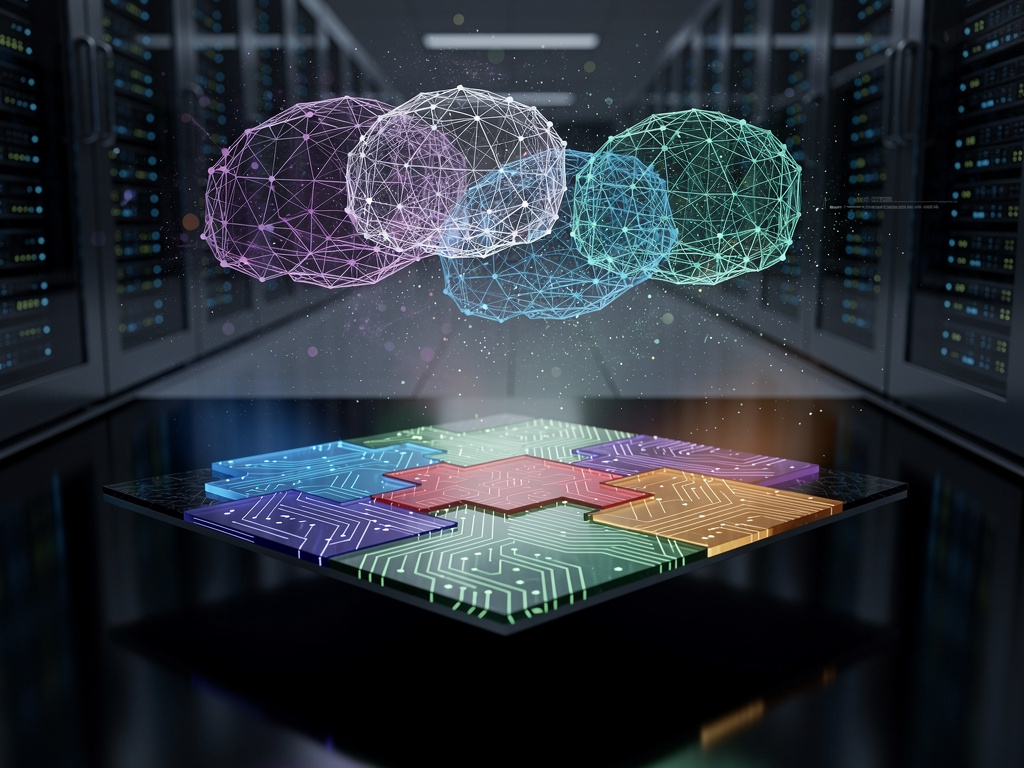
ServiceNow’s announcement of a strategic partnership with Anthropic marks a significant evolution in the enterprise software giant’s artificial intelligence strategy, demonstrating how major technology companies are hedging their bets across multiple AI providers rather than committing to a single platform. The collaboration, revealed in late January 2025, represents ServiceNow’s latest move in an increasingly complex chess game of AI partnerships that includes existing relationships with Microsoft, Nvidia, and other major players in the generative AI space.
According to TechCrunch, the partnership will integrate Anthropic’s Claude AI models into ServiceNow’s workflow automation platform, enabling customers to leverage advanced natural language processing capabilities for IT service management, customer service operations, and employee workflow applications. This multi-vendor approach reflects a broader industry trend where enterprises are increasingly wary of vendor lock-in and seeking flexibility in their AI infrastructure investments.
The timing of this partnership is particularly noteworthy given the competitive dynamics reshaping the enterprise software market. ServiceNow, which has built its reputation on workflow automation and IT service management, has been aggressively expanding its AI capabilities to maintain its competitive edge against rivals like Salesforce, Oracle, and SAP, all of whom are racing to embed generative AI throughout their product portfolios. The company’s willingness to work with multiple AI providers suggests a pragmatic recognition that no single model or platform can address all enterprise use cases effectively.
The Economics of AI Partnership Proliferation
ServiceNow’s multi-partnership strategy carries significant financial and operational implications for both the company and its customers. By integrating Claude alongside existing AI capabilities powered by Microsoft’s Azure OpenAI Service, ServiceNow is essentially building an AI orchestration layer that can route different types of queries and tasks to the most appropriate model. This approach, while technically complex, offers customers the theoretical advantage of best-in-class performance across different use cases while potentially reducing costs through optimized model selection.
Industry analysts suggest that this partnership model represents a departure from the traditional enterprise software playbook, where companies typically committed to a single technology stack to maximize integration efficiency and minimize complexity. The shift reflects the unique characteristics of the generative AI market, where model capabilities are evolving rapidly, and no single provider has established clear dominance across all enterprise applications. For ServiceNow, maintaining relationships with multiple AI providers provides insurance against technological obsolescence and negotiating leverage in commercial discussions.
Anthropic’s Enterprise Ambitions Take Shape
From Anthropic’s perspective, the ServiceNow partnership represents a crucial validation of its enterprise strategy and a significant distribution channel for Claude. While Anthropic has positioned itself as a safety-focused AI company with a strong emphasis on constitutional AI principles, it has also been working systematically to build enterprise credibility and customer relationships. Partnerships with established enterprise software vendors like ServiceNow provide Anthropic with immediate access to thousands of potential customers who might otherwise default to more established providers like OpenAI or Google.
The partnership also highlights Anthropic’s competitive positioning relative to OpenAI, which has focused heavily on consumer applications and developer tools while sometimes appearing less attuned to enterprise requirements around security, compliance, and integration with existing business systems. By emphasizing Claude’s capabilities in understanding context, following complex instructions, and maintaining conversation coherence over extended interactions, Anthropic is targeting specific enterprise pain points where its technology may offer advantages over competitors.
Technical Integration and Customer Implementation Challenges
The practical implementation of multiple AI models within ServiceNow’s platform presents significant technical challenges that will test the company’s engineering capabilities and customer success organization. Customers will need guidance on which AI models to use for specific workflows, how to manage data governance across different AI providers, and how to optimize costs when multiple models are available for similar tasks. ServiceNow’s ability to abstract this complexity away from end users while still providing flexibility for sophisticated customers will be crucial to the partnership’s success.
Security and data privacy considerations add another layer of complexity to multi-model AI implementations. Enterprise customers must ensure that sensitive data is handled appropriately regardless of which AI model processes it, requiring consistent security controls and audit capabilities across all integrated AI providers. ServiceNow will need to provide unified governance frameworks that work across its various AI partnerships, a non-trivial engineering challenge that could become a competitive differentiator if executed well.
Market Implications for the Enterprise AI Ecosystem
The ServiceNow-Anthropic partnership signals a broader market evolution where enterprise software platforms are becoming AI orchestration layers rather than committing exclusively to any single AI provider. This trend has significant implications for companies like Microsoft, Google, and Amazon, whose cloud platforms have been positioning themselves as the primary infrastructure for enterprise AI deployments. If major enterprise software vendors adopt multi-model strategies, the competitive dynamics shift from winning exclusive partnerships to ensuring that your models perform well enough to be selected for specific use cases within these orchestration frameworks.
For enterprise customers, this evolution potentially offers more flexibility and better performance but also introduces new complexity in vendor management, contract negotiation, and technical architecture decisions. CIOs and IT leaders will need to develop new competencies in AI model evaluation and selection, understanding the trade-offs between different providers’ offerings in terms of performance, cost, security, and compliance. The emergence of AI orchestration platforms may also create opportunities for new categories of software tools focused on managing, monitoring, and optimizing multi-model AI deployments.
Competitive Response and Industry Consolidation Pressures
ServiceNow’s multi-partnership approach is likely to prompt competitive responses from other enterprise software vendors, potentially accelerating a broader industry shift toward AI platform-agnosticism. Salesforce, which has announced its own Einstein GPT platform with multiple model options, appears to be pursuing a similar strategy. Oracle and SAP, with their massive installed bases of ERP and business application customers, will face pressure to offer comparable flexibility or risk appearing technologically inflexible to customers evaluating their AI strategies.
The partnership dynamics also raise questions about the long-term sustainability of independent AI model providers like Anthropic. While partnerships with enterprise software vendors provide crucial distribution and revenue, they also create dependency relationships that could limit strategic flexibility. If enterprise software platforms become the primary distribution channel for AI capabilities, model providers may find themselves in a position similar to component suppliers in other industries, with limited ability to capture value directly from end customers and facing constant pressure on pricing and terms.
The Road Ahead for Enterprise AI Integration
As ServiceNow and Anthropic move from partnership announcement to actual customer deployments, the true test of their collaboration will be measured in customer adoption rates, use case success stories, and demonstrated business value. Early implementations will likely focus on well-defined use cases like automating IT ticket resolution, generating knowledge base articles, and providing conversational interfaces for employee self-service applications. Success in these initial deployments will be crucial for building momentum and justifying the technical complexity of multi-model AI integration.
The partnership also raises interesting questions about the future evolution of enterprise software itself. As AI capabilities become more sophisticated and widely integrated, the distinction between workflow automation platforms, AI model providers, and business applications may blur significantly. ServiceNow’s strategy suggests a future where enterprise software platforms primarily provide data integration, security, governance, and user experience layers while orchestrating AI capabilities from multiple providers. This architectural vision, if successful, could reshape the enterprise software industry as fundamentally as the shift to cloud computing did over the past fifteen years.
For now, ServiceNow’s multi-partnership approach represents a pragmatic response to an uncertain and rapidly evolving AI market. By maintaining flexibility and avoiding exclusive commitments, the company is positioning itself to adapt as AI technology matures and customer requirements become clearer. Whether this strategy proves superior to more integrated approaches pursued by competitors like Microsoft remains to be seen, but it undoubtedly reflects the complex calculus facing enterprise software vendors navigating the generative AI revolution. The coming months will reveal whether ServiceNow’s bet on AI orchestration across multiple providers delivers the promised benefits of flexibility and best-in-class performance, or whether the added complexity undermines the user experience and slows enterprise adoption.


 WebProNews is an iEntry Publication