
Sergey Brin wants more from Google’s AI engineers. A lot more.
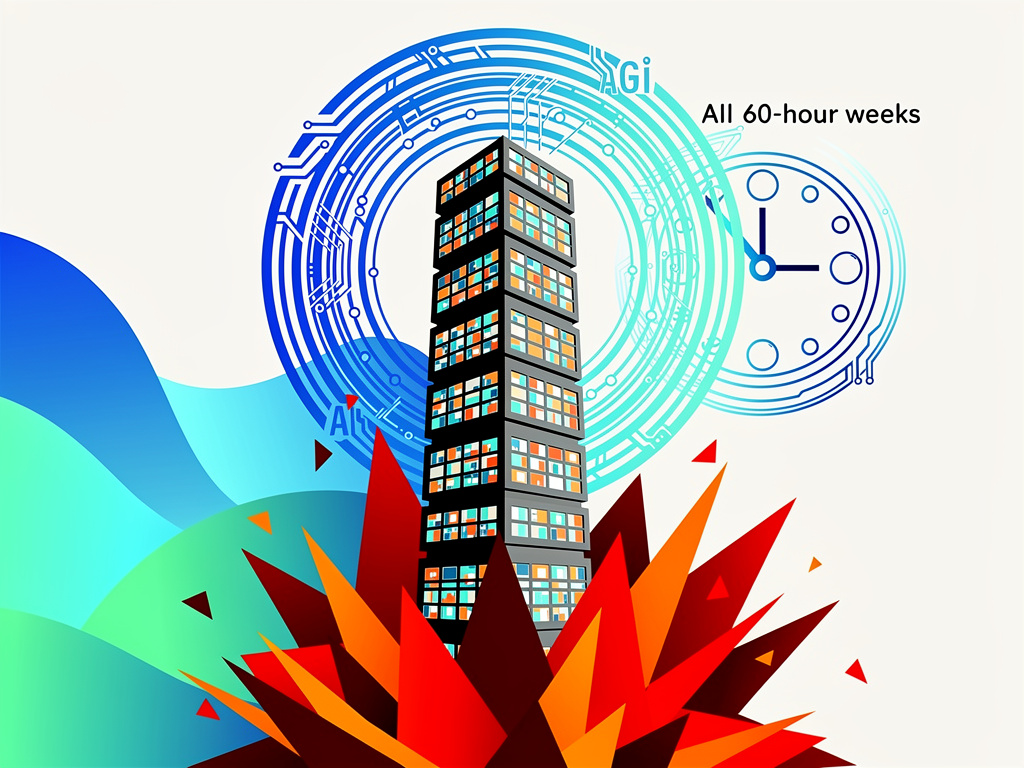
In a memo sent to staff working on Gemini late last winter, the Google co-founder laid out a simple formula for victory in the race toward artificial general intelligence. Show up at the office every weekday. Clock 60 hours a week. That, he declared, hits the sweet spot for output. Anything less drags the team down. Anything more courts burnout.
“Competition has accelerated immensely and the final race to A.G.I. is afoot,” Brin wrote, according to The New York Times. “I think we have all the ingredients to win this race, but we are going to have to turbocharge our efforts.”
The message landed like a splash of cold water across a company still adjusting to hybrid schedules. Google’s official policy calls for three days in the office each week. Brin pushed for five. No formal rule change followed. Yet the note signaled his growing impatience with the pace of progress. And it revealed how one of tech’s most consequential figures views the human side of building machines that might one day surpass their creators.
Brin had stepped back from day-to-day operations years earlier. The launch of ChatGPT changed that. He began visiting DeepMind and Google’s offices more often. By 2023 he was in three or four days a week, talking with researchers and weighing in on hires, the Yahoo Finance report drawn from earlier Wall Street Journal coverage noted. He admitted later that staying fully retired would have been a mistake. The trajectory of AI proved too compelling.
Now he’s hands-on again. Reports from late 2025 describe him reviewing training runs, staring at loss curves on big screens, and pressing for faster iteration. His February 2025 memo captured that intensity. He criticized a small group of employees who “put in the bare minimum.” Such efforts, he argued, not only produce little but also sap morale for everyone else. The fix? More time together in Mountain View. More focused hours on the hardest problems.
Sixty hours a week works out to 12-hour days, Monday through Friday. Brin drew from personal experience. “In my experience, about 60 hours a week is the sweet spot of productivity,” he wrote. The advice carried weight. This was the man who co-built Google. Yet it also sparked immediate pushback from engineers already logging long hours under deadline pressure.
Critics inside and outside the company pointed to the irony. The very AI systems Google is racing to perfect promise to automate large parts of coding and analysis. Why demand sweat equity from humans building tools that could replace them? Discussions on Hacker News and Reddit forums filled with skepticism. Some engineers noted that sustained 60-hour weeks often lead to diminishing returns after a certain point. Fatigue sets in. Creativity suffers.
Brin anticipated part of that critique. He explicitly warned against exceeding 60 hours. Push harder, he suggested, and exhaustion follows. The goal was sustainable high output, not endless crunch. Still, the bar sat well above the traditional 40-hour standard. And for parents, caregivers, or anyone with commitments outside work, it felt punishing.
The memo arrived at a moment of heightened tension across the industry. OpenAI, Anthropic, Meta and xAI were all pouring resources into ever-larger models. Chinese labs added pressure. Google had invested billions in compute and talent. Yet some insiders worried the company’s scale had bred bureaucracy that slowed decisions. Brin’s call for startup-like urgency reflected that concern.
By late 2025, signs suggested the message resonated at the top. Sundar Pichai described Brin as deeply engaged, spending regular time in the office on technical details. Internal experiments with autonomous coding agents like Agent Smith gained momentum. Some teams reported productivity lifts from AI-assisted workflows. Brin himself had told students in a December 2025 talk that he turns to AI tools constantly for idea generation and refinement, according to Inc.
Yet the broader debate refuses to settle. A Fortune article published in October 2025 captured the divide. Entrepreneurs like the CEO of Cerebras urged founders to work every waking minute. Brin’s 60-hour benchmark looked almost moderate by comparison. Workplace experts pushed back hard. They cited studies linking chronic overwork to health problems, disengagement and, ultimately, lower quality output. Gen Z workers, in particular, questioned the model. Many watched older generations burn out and decided different trade-offs made sense.
Brin’s own history offers nuance. In Google’s early days, he and Larry Page blurred lines between work and life. The company grew famous for perks that softened the edges of demanding roles. Free meals, on-site gyms, laundry service. Those benefits persist in some form. But the intensity Brin now prescribes harks back to the startup phase when everything felt urgent.
AI development adds new variables. Training runs can last weeks. Breakthroughs often come from sustained focus across large teams. Serendipitous conversations in the office still matter, advocates say. Video calls miss body language and whiteboard energy. Brin clearly believes physical presence accelerates the feedback loops that matter most in model improvement.
But is 60 hours the right number? Evidence remains mixed. Software engineering studies have long shown that productivity doesn’t scale linearly with hours. After about 50 or 55 hours, error rates climb. Complex cognitive work suffers first. AI research, which blends mathematics, experimentation and creative insight, may follow similar patterns.
Google has not updated its formal policy in response to the memo. Some teams already require more than three office days. The company continues to hire aggressively in AI while managing attrition. Employee surveys reflect ongoing frustration with return-to-office rules across Big Tech. Brin’s intervention personalized the pressure for one critical group: those closest to building Gemini.
Months later the conversation continues. Recent posts on X still reference the 60-hour target when discussing AGI timelines or work culture in AI labs. One April 2026 thread contrasted Brin’s grind message with new governance tools from Microsoft, noting the industry’s split between regulation and raw effort.
Brin has never shied from bold bets. He backed moonshot projects at Google X and maintained optimism about technology’s potential even during periods of skepticism. His return to active AI work suggests he sees the current window as decisive. The ingredients are there, he believes. Talent. Data. Compute. What remains is execution at a level few organizations have sustained.
Whether 60 hours in the office delivers that execution is the open question. For Google’s AI staff, the experiment is underway. Success could validate Brin’s instincts and set a new standard for the field. Failure might force a reckoning with the limits of human endurance in an age of increasingly capable machines. Either outcome will shape how the next chapter of artificial intelligence gets written.
And the clock keeps ticking.


 WebProNews is an iEntry Publication