
Brin’s Unconventional Commute: Chatting with AI on the Road to Data Center Dominance
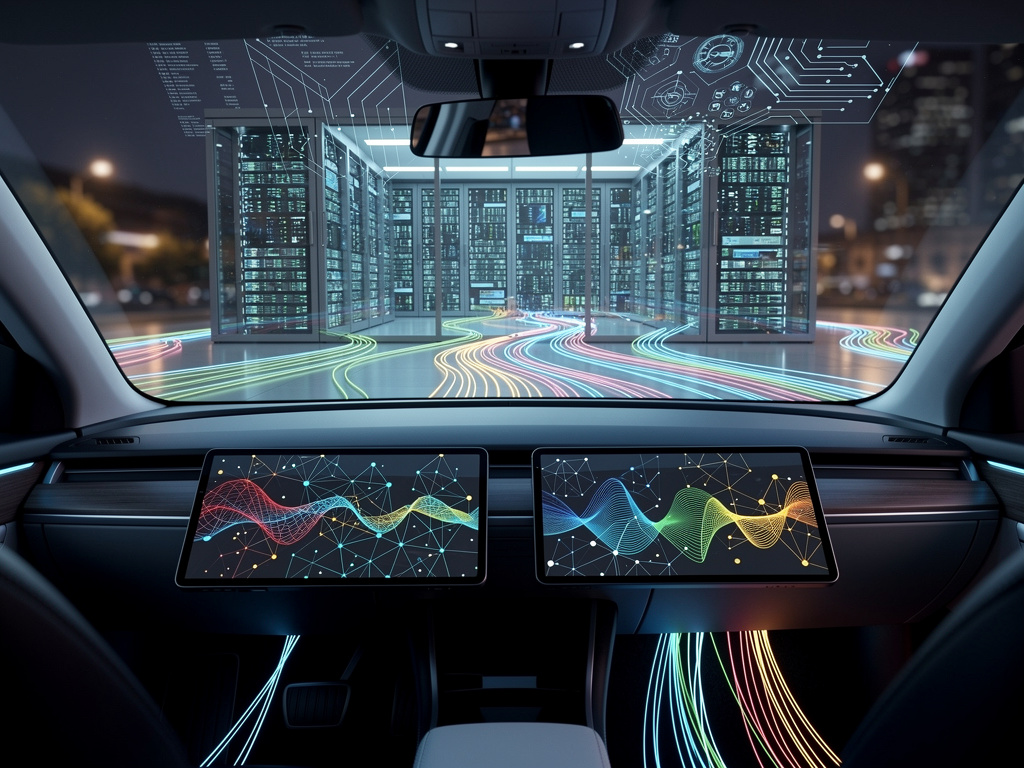
In the fast-evolving world of artificial intelligence, few figures cast as long a shadow as Sergey Brin, the co-founder of Google who stepped away from daily operations in 2019 only to return amid the AI boom. Recently, Brin revealed a glimpse into his routine that underscores just how deeply he’s immersed in Google’s AI ambitions. During a conversation at Stanford University, as reported by Business Insider, Brin described using an unreleased version of Google’s Gemini Live AI during his commutes. Far from casual chit-chat, these sessions delve into complex topics like constructing massive data centers—critical infrastructure for powering the next generation of AI models.
This practice, known in tech circles as “dogfooding”—where company insiders use pre-release products to test and refine them—highlights Brin’s hands-on approach. He isn’t just overseeing from afar; he’s actively engaging with the technology, querying it on everything from energy requirements to logistical challenges in building facilities that can handle the immense computational demands of advanced AI. According to the report, Brin mentioned that the version he’s using isn’t yet available to the public, teasing that it might ship in a few weeks. This personal involvement signals Google’s aggressive push to stay ahead in AI, especially as competitors like OpenAI and Microsoft ramp up their efforts.
Brin’s return to Google wasn’t planned. After retiring to pursue personal interests, including studying physics in cafes, the Covid-19 pandemic disrupted his plans and led to a period of restlessness. As detailed in another piece from Business Insider, Brin described feeling like he was “spiraling” during retirement. The emergence of transformative AI technologies pulled him back, and he now views staying retired as what would have been a “big mistake.” His re-engagement has been pivotal, with Brin diving into coding and analyzing training data for Gemini, Google’s flagship AI model.
The AI Founder’s Second Act and Google’s Strategic Pivot
This isn’t merely a story of a billionaire’s boredom; it’s a testament to how foundational figures like Brin are reshaping their companies in response to technological shifts. Posts on X, formerly Twitter, have buzzed with speculation about Google’s AI trajectory, with users noting Brin’s unannounced appearances at events like Google I/O, where he boldly stated intentions for Gemini to achieve artificial general intelligence (AGI). Such sentiments reflect a broader enthusiasm in the tech community, amplified by recent announcements from Google executives about turbocharging the Gemini app in 2025.
Delving deeper, Brin’s commute conversations with Gemini Live reveal the intertwined challenges of AI development and infrastructure. Data centers are the unsung heroes of the AI era, housing the servers and cooling systems needed to train models on vast datasets. Brin’s queries—about megawatt requirements, energy sources, and costs—point to the real-world hurdles Google faces. As AI models grow more sophisticated, their energy consumption skyrockets, prompting companies to explore renewable sources and innovative cooling methods to mitigate environmental impact.
Google’s CEO Sundar Pichai has echoed this focus, emphasizing in recent strategy meetings that AI, particularly Gemini, will be the company’s top priority in 2025. News from Fortune elaborates on Brin’s post-retirement plans, which initially involved leisurely pursuits but evolved into a full-throated return to the fray. Pichai has credited Brin’s involvement with accelerating Google’s AI progress, including hands-on work like scrutinizing loss curves in model training—a level of detail unusual for a co-founder of his stature.
Dogfooding as a Catalyst for Innovation
The concept of dogfooding isn’t new to Google; it’s embedded in the company’s culture, encouraging employees to live with their creations to uncover flaws early. Brin’s application of this to an unreleased Gemini Live model takes it to an executive level, potentially influencing product decisions directly. In his Stanford talk, he shared how these AI interactions help him brainstorm solutions for scaling data centers, a necessity as Google aims to double its compute capacity every six months to keep pace with demand.
This urgency is evident in industry reports. A post on the DEV Community blog, as seen in web searches, highlights Brin’s “intense personal testing” of Gemini Live, which has contributed to its rapid iterations. Such testing has helped Gemini achieve benchmark leadership, with versions like 2.5 Pro and 3.0 outperforming rivals in key metrics. Brin’s approach contrasts with more bureaucratic layers at large tech firms, where he reportedly swapped endless approvals for 60-hour coding sprints, injecting startup-like agility into Google’s operations.
Moreover, Brin’s candid admissions about Google’s past missteps add layers to this narrative. In discussions covered by Search Engine Land, he acknowledged that Google underinvested in AI initially and was overly cautious about chatbots due to their propensity for errors. This self-reflection underscores a strategic pivot, with Brin now championing bolder moves to reclaim ground lost to upstarts like OpenAI.
Infrastructure Challenges in the AI Arms Race
Building data centers isn’t just about bricks and servers; it’s a geopolitical and economic puzzle. Google’s partnerships, such as colocation deals with firms like CIFR for massive sites, reflect the scale involved—think 1.4 gigawatts of power, enough to light up small cities. Brin’s AI-assisted musings on these topics during commutes illustrate how technology is blurring lines between human insight and machine assistance, potentially speeding up decision-making in high-stakes areas.
Web news from The Times of India explores whether Brin’s return “saved” Google in the AI race, with Pichai praising his contributions to recent advancements. This includes embedding Gemini across Google’s ecosystem—Search, Android, YouTube—driving a reported 70% growth in user base to 400 million by late 2025. Such integration positions Google to dominate not just in search but in everyday AI applications.
Yet, challenges loom. The energy demands of AI have sparked debates on sustainability, with critics pointing to the carbon footprint of data centers. Brin’s queries to Gemini about cost-effective energy mixes—renewables versus traditional sources—suggest Google is grappling with these issues head-on. Industry insiders note that without addressing power constraints, even the most advanced models like Gemini could falter in deployment.
From Retirement Regrets to AI Leadership
Brin’s journey from retirement to AI evangelist also touches on personal themes. In a piece from India Today, he reflects on attempting the “FIRE” lifestyle—financial independence, retire early—only to deem it his worst decision. The pandemic’s isolation amplified his need for purpose, drawing him back to Google’s labs where he’s now pivotal in AGI pursuits.
This return has ripple effects. X posts capture public sentiment, with tech enthusiasts hailing Google’s resurgence, from Gemini’s market share gains to its multimodal capabilities rivaling GPT models. Brin’s unscripted I/O appearance, declaring Gemini’s AGI ambitions, fueled optimism, as users speculated on 2025 features like enhanced live interactions.
Looking ahead, Brin’s dogfooding of Gemini Live could preview broader trends. As AI becomes conversational and context-aware, executives like him using it for strategic planning might normalize AI as a co-pilot in business. For Google, this means fortifying its position against competitors, with data centers as the battleground.
Pushing Boundaries: Gemini’s Path Forward
The implications extend beyond Google. Brin’s commute chats symbolize a fusion of human ingenuity and machine learning, potentially accelerating innovations in infrastructure design. Web updates indicate Google’s compute demands are straining supplies, prompting deals for new facilities to support Gemini’s growth.
Critics, however, question if this haste overlooks ethical concerns, like AI’s energy inequities or bias in training data. Brin has addressed some of these, advocating for responsible scaling, but the pressure to lead in AGI raises stakes.
Ultimately, Brin’s story is one of reinvention. From spiraling in retirement to steering Google’s AI charge, his involvement underscores the human element in technological progress. As Gemini evolves, these personal touches may define its success, blending founder vision with cutting-edge computation.
Sustaining Momentum in a Competitive Field
Google’s broader strategy, informed by Brin’s insights, includes aggressive hiring and R&D investments. Recent news on X highlights executive pledges for first-half 2025 features, aiming to “turbocharge” user experiences.
This momentum contrasts with earlier stumbles, as Brin noted Google’s caution around “dumb” chatbot outputs. Now, with refined models, Gemini is embedded in daily tools, boosting adoption.
For industry watchers, Brin’s routine offers a window into the future: AI not just as a product, but as an integral thinking partner. As data centers expand to meet demands, Google’s path, guided by its co-founder, promises to shape the next era of innovation.


 WebProNews is an iEntry Publication