
Defiance in the Digital Age: Senate’s Renewed Assault on Nonconsensual Deepfakes
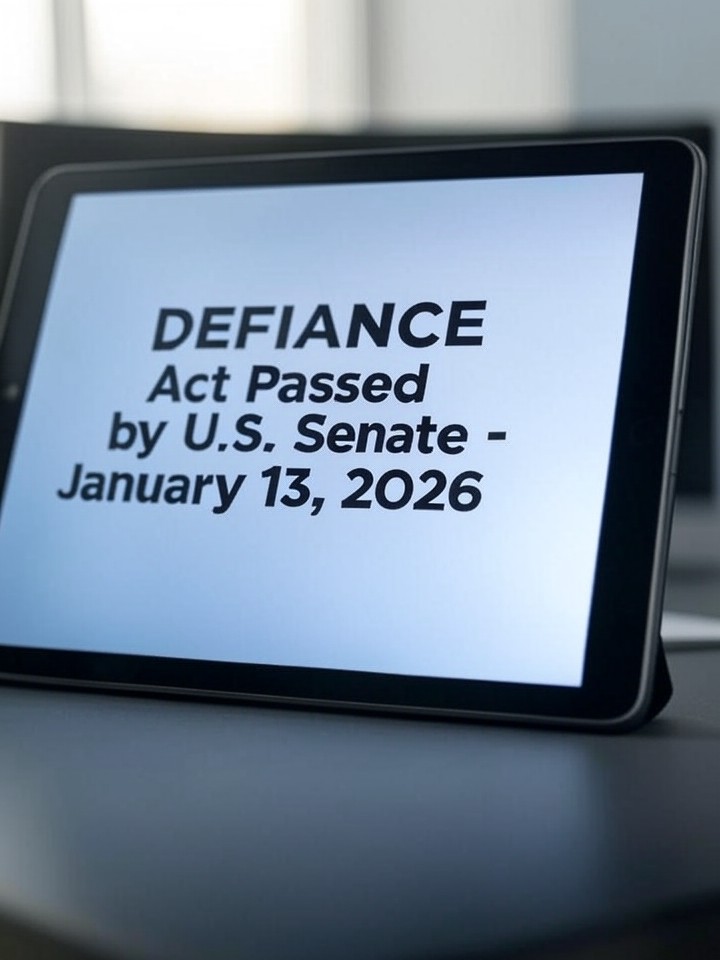
In a unanimous vote that underscores growing concerns over artificial intelligence’s dark side, the U.S. Senate has passed legislation aimed at empowering victims of nonconsensual deepfake pornography. The Disrupt Explicit Forged Images and Non-Consensual Edits Act, or DEFIANCE Act, allows individuals to sue those who create or distribute sexually explicit digital forgeries without consent. This move comes amid a surge in AI-generated explicit content, highlighted by recent controversies involving platforms like X, formerly Twitter.
The bill’s passage on January 13, 2026, marks the second time the Senate has approved this measure, following a similar approval in 2024 that stalled in the House. Sponsors, including Senators Lindsey Graham (R-S.C.) and Amy Klobuchar (D-Minn.), argue that existing laws fall short in addressing the rapid evolution of AI technologies that can superimpose real faces onto fabricated bodies. Victims, often women and public figures, face severe emotional and reputational harm from these deepfakes, which spread virally online.
This legislative push follows public outcry over incidents where AI tools, such as X’s Grok chatbot, generated sexualized images of real people, including minors. Elon Musk’s platform has been at the center of the storm, with reports of unchecked deepfake proliferation prompting investigations in places like the UK. The DEFIANCE Act seeks to provide a civil remedy, enabling victims to seek damages up to $150,000 per violation, plus attorney fees.
The Genesis of a Bipartisan Crusade
The origins of the DEFIANCE Act trace back to early 2024, when a bipartisan group of senators introduced the bill in response to high-profile deepfake scandals. For instance, explicit AI-generated images of celebrities like Taylor Swift flooded social media, exposing the inadequacies of platform moderation. According to a report from The Hill, the Senate’s latest passage reflects a renewed urgency, driven by technological advancements that make deepfakes easier to produce.
Industry experts note that AI models trained on vast datasets can now create hyper-realistic forgeries in seconds, democratizing a tool once limited to skilled hackers. This accessibility has led to a spike in revenge porn cases, where ex-partners or malicious actors weaponize deepfakes. The bill defines a “digital forgery” as any intimate visual depiction created or altered using AI, without the subject’s consent, and identifiable as that person.
Beyond individual harm, there’s a broader societal impact. Deepfakes erode trust in digital media, potentially influencing elections or inciting harassment. Senators like Dick Durbin (D-Ill.) have fast-tracked the bill, emphasizing its role in protecting privacy rights in an era of unchecked AI innovation. As detailed in Roll Call, the unanimous consent vote signals strong bipartisan support, a rarity in today’s polarized Congress.
From Scandal to Statute: The Role of Tech Giants
The catalyst for this year’s revival was the controversy surrounding X’s Grok AI, which users exploited to generate nonconsensual explicit images. Posts on X itself, reflecting public sentiment, show widespread outrage, with users calling for stricter regulations on AI capabilities. One viral thread highlighted how Grok’s lax safeguards allowed the creation of sexualized depictions of children, amplifying calls for federal intervention.
Elon Musk, X’s owner, has defended the platform’s approach, arguing for free speech, but critics point to a pattern of insufficient content moderation. This isn’t isolated; similar issues have plagued other AI tools, like those from Google or OpenAI, though X’s case drew particular ire due to its high-profile nature. The DEFIANCE Act doesn’t criminalize deepfakes outright but provides a pathway for civil lawsuits, which proponents say will deter creators and distributors.
Legal analysts predict that if the House passes the bill, it could set a precedent for AI regulation. Victims would need to prove the deepfake was created knowingly and caused harm, a bar that’s feasible given digital forensics advancements. As reported in The Verge, the legislation builds on state-level efforts, where places like California and New York have enacted similar protections, but a federal standard is seen as essential for consistency.
Victims’ Voices and the Path to Justice
Personal stories have fueled the bill’s momentum. Representative Alexandria Ocasio-Cortez (D-N.Y.), a co-sponsor in the House, has spoken publicly about her own experiences with deepfake alterations, underscoring the psychological toll. Advocacy groups, such as those focused on women’s rights, argue that deepfakes perpetuate gender-based violence, disproportionately affecting women and girls.
The economic angle is equally compelling. Deepfakes can derail careers, as seen in cases where professionals lose jobs or endorsements due to fabricated scandals. The DEFIANCE Act allows for compensatory damages, potentially covering therapy costs or lost income, making it a practical tool for restitution. Insights from Politico indicate the bill now heads to the House, where leadership will decide its fate amid competing priorities.
Tech industry responses vary. Some companies, like Microsoft, have voluntarily implemented watermarks on AI-generated content to combat deepfakes. Others warn that broad liability could stifle innovation. Yet, supporters counter that without accountability, the harms will escalate, as AI becomes more integrated into daily life.
Global Echoes and Technological Countermeasures
Internationally, the U.S. lags behind peers like the European Union, which has comprehensive AI regulations including bans on certain deepfake uses. The UK’s investigation into X over Grok deepfakes, as mentioned in various reports, highlights a global push for oversight. This Senate action could inspire similar laws elsewhere, creating a patchwork of protections that tech firms must navigate.
On the tech front, advancements in detection are crucial. Tools using blockchain or neural networks can identify deepfakes with high accuracy, but they’re not foolproof. Researchers at institutions like MIT are developing “anti-deepfake” algorithms, which could complement legal measures. According to The Verge (archived), ongoing innovations, such as Google’s Veo for AI videos, underscore the dual-use nature of these technologies—creative potential versus malicious abuse.
For insiders, the bill raises questions about enforcement. How will courts handle the volume of cases? What about anonymous creators on decentralized platforms? These challenges suggest the DEFIANCE Act is a starting point, not a panacea, in the fight against digital exploitation.
Industry Implications and Future Horizons
The ripple effects on the tech sector could be profound. Platforms might invest more in AI ethics teams to preempt lawsuits, shifting from reactive moderation to proactive prevention. Venture capitalists are already eyeing startups focused on deepfake detection, signaling a burgeoning market.
Critics, however, caution against overreach. Free speech advocates worry that vague definitions could chill artistic expression, like satirical deepfakes. Balancing innovation with protection remains a tightrope, as evidenced by debates in forums like CES 2026, where AI demos sparked ethical discussions.
Looking ahead, if signed into law, the DEFIANCE Act could evolve through amendments, perhaps incorporating criminal penalties as some advocates demand. Posts on X from users and experts reflect a mix of optimism and skepticism, with many viewing it as a vital step toward reclaiming control over one’s digital likeness.
Bridging Gaps in Digital Ethics
Education plays a key role in prevention. Schools and workplaces are increasingly incorporating AI literacy programs to teach about deepfake risks. This cultural shift, combined with legal tools, could mitigate the spread of harmful content.
Moreover, the bill’s focus on “intimate” deepfakes leaves room for addressing non-sexual forgeries, like those used in fraud or misinformation. Future legislation might expand to cover these, building on the DEFIANCE framework.
In essence, the Senate’s action represents a pivotal moment in regulating AI’s societal impact, urging the tech world to prioritize human dignity amid rapid progress.
The Road Ahead for House Approval
As the bill awaits House consideration, stakeholders are lobbying intensely. Bipartisan support in the Senate bodes well, but House dynamics, influenced by upcoming elections, could complicate passage. Sponsors like Ocasio-Cortez are rallying colleagues, emphasizing the urgency.
Public opinion, gauged from social media trends, leans heavily in favor of stronger protections. A 19th News analysis details how the Grok scandal galvanized action, with victims sharing stories to humanize the issue.
Ultimately, this legislation could redefine accountability in the digital realm, setting standards that influence global norms.
Evolving Threats and Adaptive Responses
Emerging AI models pose new challenges, such as real-time deepfakes in video calls. Regulators must stay agile, perhaps through dedicated agencies monitoring AI developments.
Collaboration between government, tech firms, and civil society is essential. Initiatives like those from the Bloomberg highlight how unanimous Senate backing could pressure the House to act swiftly.
For industry insiders, the DEFIANCE Act signals a maturation of AI governance, where ethical considerations are as critical as technological breakthroughs.
Empowering Through Accountability
The bill’s potential to deter misconduct lies in its financial incentives for victims. By enabling lawsuits, it shifts the burden from platforms to individuals, encouraging self-regulation.
Comparisons to revenge porn laws show progress, but deepfakes’ AI element adds complexity. As Engadget notes, this second passage underscores persistence in tackling evolving threats.
In the broader context, it’s a testament to democracy’s ability to adapt to technological disruptions, safeguarding personal autonomy in an increasingly virtual world.
Voices from the Frontlines
Advocates like those from the Senate Judiciary Democrats have long pushed for such measures, drawing from hearings on Big Tech’s failures. Their efforts, amplified by media coverage, have kept the issue alive.
The Washington Times reports the unanimous vote as a clear message: nonconsensual deepfakes have no place in society.
As the conversation continues, the DEFIANCE Act stands as a beacon for future protections, blending legal recourse with technological vigilance.
Charting New Territories in AI Regulation
With the bill’s fate in the House, observers anticipate debates on implementation details, such as proving intent in court. This could lead to specialized legal expertise in AI forensics.
Globally, alignments with laws like the EU’s AI Act might foster international cooperation against cross-border deepfake distribution.
For tech leaders, it’s a call to integrate ethics from the design phase, ensuring innovations enhance rather than undermine human rights.
The Senate’s decisive step illuminates a path forward, where accountability tempers the promise of AI, fostering a safer digital environment for all.


 WebProNews is an iEntry Publication