
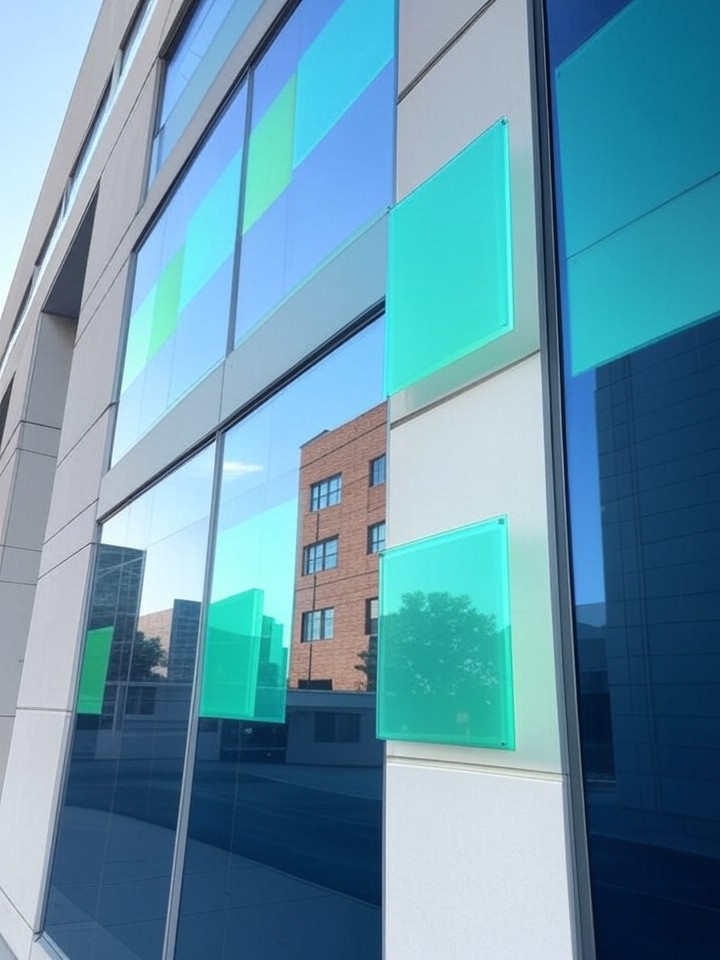
In the evolving world of renewable energy, a breakthrough in solar cell technology is poised to blend aesthetics with functionality, allowing homeowners and architects to integrate power generation into everyday structures without sacrificing visual appeal. Researchers at the Hebrew University of Jerusalem have unveiled semi-transparent, color-tunable perovskite solar cells that could transform windows, facades, and even flexible surfaces into energy-harvesting elements. This innovation, detailed in a recent study published in TechXplore, uses 3D-printed pillar structures to achieve both high efficiency and customizable hues, marking a significant step forward for architectural integration.
These cells aren’t just about adding color; they address a long-standing challenge in solar adoption: the stark, uniform appearance of traditional panels that often clash with design preferences. By employing perovskite materials, which are known for their excellent light-absorbing properties, the team has created devices that can be tuned to various colors while maintaining semi-transparency. This means buildings could generate electricity through vibrant glass panels that double as artistic features, potentially reducing reliance on rooftop installations that dominate current setups.
The process involves 3D printing to form micro-pillar arrays, which enhance light trapping and allow for color adjustment without compromising power output. Initial tests show these cells achieving efficiencies around 10-15%, with room for improvement as the technology scales. For industry professionals, this represents an opportunity to rethink building-integrated photovoltaics (BIPV), where energy production becomes an invisible yet integral part of construction materials.
Pushing Boundaries with Perovskite Innovations
Building on this, the broader field of solar advancements in 2026 highlights perovskite-silicon tandem cells as a complementary trend. As reported by GreenLancer, companies like LONGi Solar have pushed tandem efficiencies beyond 26%, combining perovskite’s ability to capture shorter wavelengths with silicon’s prowess in longer ones. When merged with color-tunable designs, these hybrids could offer not only higher output but also aesthetic versatility, appealing to urban planners seeking sustainable yet stylish solutions.
Posts on X from users like those discussing flexible solar applications underscore public excitement, with mentions of perovskite cells being printed onto surfaces like car roofs or windows, hinting at widespread adoption. This sentiment aligns with CES 2026 showcases, where sun-powered innovations emphasized new materials that make solar less obtrusive. For insiders, the key metric here is the potential for mass production: perovskite’s low-cost fabrication could drive down prices, making colorful solar options viable for residential and commercial markets.
However, challenges remain. Perovskite materials have historically suffered from stability issues, degrading under moisture or heat. The Hebrew University’s approach mitigates this through protective 3D structures, but scaling to commercial levels will require further R&D. Industry analysts note that integrating these into existing manufacturing lines could accelerate deployment, especially in regions with strict building codes favoring energy-efficient designs.
From Lab to Living Spaces
A deeper look reveals how this technology draws from earlier experiments in flexible and transparent solar cells. For instance, innovations like Sphelar from Japan, which uses spherical silicon cells to capture light from all angles, have paved the way for non-traditional formats. X posts highlighting such spherical designs emphasize their ability to blend into home improvement projects, turning ordinary objects into power sources.
In a similar vein, the 3D-printed solar cells promise to jazz up homes by offering color options that match interior decor or architectural themes. According to Digital Trends, this could eliminate the need for bulky rooftop arrays, instead embedding generation into windows or walls. Imagine a skyscraper’s facade generating gigawatts while displaying a spectrum of blues and greens, enhancing both energy independence and curb appeal.
For energy sector insiders, the economic implications are profound. With global solar installations projected to surge in 2026, colorful cells could capture a niche in the BIPV market, estimated to grow by 20% annually. Companies investing in this space, such as those previewed at CES via Interesting Engineering, are focusing on automation and recycling to make production sustainable, ensuring that aesthetic enhancements don’t come at an environmental cost.
Efficiency Meets Elegance in Design
Delving into the technical specifics, the color tunability stems from adjusting the perovskite layer’s composition and the pillar geometry, which scatters light to produce desired hues. This is a leap from conventional dye-sensitized cells, offering better control and durability. Research from the University of Colorado Boulder, as mentioned in broader solar trend reports, has achieved nearly 30% efficiency in flexible tandem designs, suggesting a pathway to combine color with top-tier performance.
X discussions around home improvement often feature ideas like solar-integrated roof tiles that mimic traditional materials, allowing seamless integration. One popular post described ceramic-coated panels that appear opaque but transmit sunlight, a concept that resonates with the new colorful cells. This convergence points to a future where solar isn’t an add-on but a core design element, potentially boosting adoption rates in aesthetics-conscious markets like Europe and Asia.
Moreover, the semi-transparency factor opens doors for applications in greenhouses or vehicles, where partial light transmission is crucial. Insiders should note the regulatory angle: certifications for building safety and energy standards will be key, with bodies like the International Energy Agency likely to update guidelines to accommodate these innovations.
Scaling Up for Market Impact
As we examine commercialization prospects, startups and established firms are racing to bring these to market. Rayzon Solar’s work on flexible perovskite-silicon tandems, highlighted in industry blogs, aims for ultra-lightweight panels suitable for curved surfaces. This could revolutionize sectors like transportation, where colorful solar wraps on electric vehicles enhance range without altering appearance.
Recent news from Perovskite-Info confirms the Hebrew team’s plans for further optimization, targeting commercial prototypes by late 2026. For investors, this signals high potential returns, especially as governments incentivize green building through subsidies. In Australia, for example, trends reported by Energy Matters emphasize grid-smart systems that integrate such technologies, maximizing value beyond mere generation.
Yet, supply chain hurdles loom. Sourcing rare materials for perovskites could strain resources, prompting calls for recycled inputs. X posts from energy enthusiasts often debate these issues, reflecting a mix of optimism and caution about rapid scaling.
Broader Implications for Energy Shifts
Integrating colorful solar cells into daily life extends beyond homes to urban planning. Facades that generate power while providing shade or insulation could reduce citywide energy demands, aligning with net-zero goals. Innovations like self-cleaning sunflower-inspired panels, echoed in design-focused X content, add layers of functionality, such as dust resistance for longevity.
From an insider perspective, the data is compelling: lab efficiencies approaching 33% in tandems, per Services Hub, suggest these colorful variants could soon match or exceed traditional panels. This might disrupt markets dominated by silicon, fostering competition that drives down costs overall.
Environmental benefits are equally noteworthy. By embedding solar into existing structures, we minimize land use for large farms, preserving natural areas. Posts on X praising breakthroughs in flexible materials underscore this, with users envisioning a world where every building contributes to the grid.
Future Horizons in Solar Aesthetics
Looking ahead, collaborations between tech firms and architects will be crucial. Events like CES 2026, as covered in various outlets, showcased how AI optimization pairs with these cells for smarter energy management. Imagine homes where window colors shift based on sunlight, dynamically boosting efficiency.
For industry leaders, the strategic play involves patents and partnerships. The Hebrew University’s 3D pillar tech, with its open potential for licensing, could spawn a wave of derivatives. X sentiment around sustainable tall buildings, including solar-integrated facades, indicates growing demand in high-density areas.
Ultimately, this fusion of form and function heralds a new era where solar energy isn’t hidden away but celebrated as part of our built environment. As efficiencies climb and costs fall, colorful cells stand to redefine how we harness the sun, blending innovation with everyday elegance.


 WebProNews is an iEntry Publication