
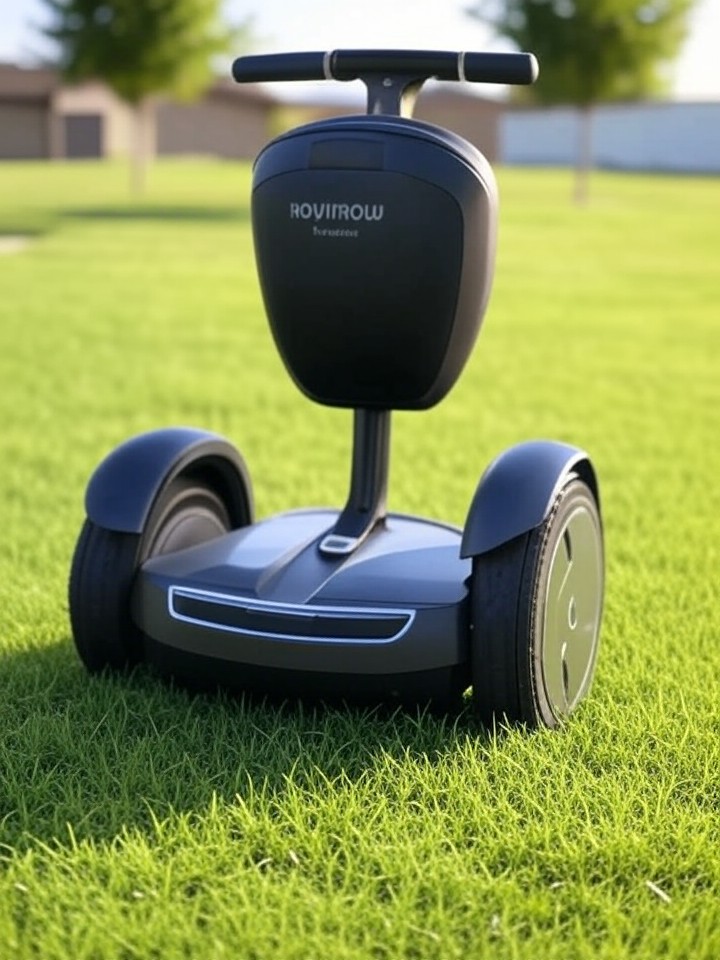
Revolutionizing Yard Upkeep: Segway’s Navimow Compact Mower Redefines Precision Turf Management
In the rapidly evolving world of smart home automation, robotic devices are increasingly taking over mundane chores, and lawn maintenance is no exception. Segway, a company long associated with personal mobility solutions, has expanded its portfolio into autonomous outdoor equipment with the Navimow series. The latest addition, a compact robot mower unveiled at CES 2026, promises to deliver meticulous care to smaller yards without the common pitfalls of earlier models. This innovation comes at a time when consumers are demanding more efficient, eco-friendly alternatives to traditional gas-powered tools, driven by advancements in AI and sensor technology.
The Navimow compact model stands out for its ability to create perfect stripes on grass surfaces, mimicking the aesthetic of professional groundskeeping while avoiding turf damage. According to a recent review, this mower employs advanced navigation systems that ensure it doesn’t get stuck or churn up the soil, even in irregularly shaped areas. Segway’s engineers have integrated features like intelligent path planning and obstacle avoidance, making it suitable for urban dwellers with limited outdoor space. This development reflects broader trends in the industry, where companies are pushing boundaries to make robotic solutions more accessible and user-friendly.
Industry analysts note that the market for automated lawn care devices is projected to grow significantly, fueled by rising labor costs and environmental concerns. Segway’s entry into this space builds on its expertise in electric propulsion, originally honed through scooters and hoverboards. The compact Navimow is designed for yards up to a certain size, offering a balance of power and portability that appeals to homeowners seeking hands-off maintenance. Early adopters have praised its quiet operation and app-based controls, which allow scheduling and monitoring from smartphones.
Innovations in Navigation and Setup
One of the key selling points of the new Navimow is its wire-free installation, eliminating the need for perimeter boundaries that plagued older robotic mowers. This “drop and mow” approach, as highlighted in coverage from Tom’s Guide, allows users to simply place the device and let it map the area using RTK (Real-Time Kinematic) positioning and visual sensors. The system achieves centimeter-level accuracy, ensuring precise cutting without overlapping or missing spots. This technology not only simplifies setup but also adapts to changes in the yard, such as moved furniture or seasonal growth.
Segway has expanded its lineup with multiple models, including the X4 Series and i2 variants, each tailored to different yard complexities. For instance, the i2 LiDAR model incorporates laser-based detection for enhanced obstacle avoidance, capable of navigating around toys, pets, or garden features seamlessly. Reviews indicate that these mowers can handle slopes up to 45 degrees, making them versatile for varied terrains. The integration of AI allows the device to learn from its environment, optimizing mowing patterns over time to improve efficiency and battery life.
Battery performance is another area where the compact Navimow excels, with lithium-ion cells providing extended runtime on a single charge. Unlike competitors that require frequent docking, this model can cover substantial areas before needing a recharge, thanks to efficient energy management. Segway claims reduced noise levels, operating at under 54 decibels, which is quieter than a typical conversation, addressing noise pollution concerns in residential neighborhoods. This focus on user comfort positions the product as a premium option in the smart home ecosystem.
Market Impact and Competitive Positioning
The unveiling at CES 2026 generated significant buzz, with Segway introducing nine new models across various series, as reported by T3. This expansion targets everything from small residential plots to larger commercial properties, broadening the appeal beyond hobbyists. Analysts from industry reports suggest that such innovations could capture a larger share of the $5 billion global market for robotic lawn equipment, especially as sustainability becomes a priority. Segway’s wire-free approach contrasts with brands like Husqvarna or Worx, which often rely on buried wires, potentially giving Navimow an edge in ease of use.
Consumer feedback on social platforms, including posts found on X, highlights enthusiasm for the mower’s ability to avoid common pitfalls like getting tangled in debris or failing on uneven ground. One viral post described a similar autonomous device as a “game-changer for yard work,” echoing sentiments about time savings and reduced physical effort. However, some users express concerns about initial costs, with prices starting around $1,000 for entry-level models, though long-term savings on manual labor and fuel could offset this.
From a technical standpoint, the compact Navimow’s blade system is engineered for minimal turf stress, using a floating deck that adjusts to contours and prevents scalping. This is particularly beneficial for maintaining healthy grass, as uneven cutting can lead to disease or weed invasion. Segway’s press release details how the mower’s algorithms prioritize edge trimming, ensuring a polished look without manual intervention. Integration with smart home platforms like Google Home or Amazon Alexa further enhances its appeal, allowing voice commands for starting sessions or checking status.
Sustainability and Future Prospects
Environmental considerations are at the forefront of Segway’s design philosophy. The electric-powered Navimow produces zero emissions during operation, aligning with global efforts to reduce carbon footprints in household chores. A report from PRNewswire emphasizes the company’s commitment to sustainable materials and recyclable components, appealing to eco-conscious consumers. By automating grass cutting, these devices also minimize water usage through efficient patterns that promote even growth, potentially reducing overall yard care resources.
Looking ahead, experts predict that advancements in AI will enable even smarter features, such as predictive maintenance based on weather data or integration with irrigation systems for holistic yard management. Segway’s ongoing R&D, as mentioned in various tech outlets, includes exploring solar charging options to further enhance autonomy. This could position the Navimow as a cornerstone in the Internet of Things for outdoor spaces, where devices communicate to optimize home environments.
Challenges remain, including regulatory hurdles in some regions regarding autonomous outdoor robots and potential cybersecurity risks with app-connected devices. Industry insiders advise that while the technology is robust, users should ensure firmware updates to mitigate vulnerabilities. Nonetheless, the compact model’s debut has been met with optimism, with pre-orders reportedly strong following the CES showcase.
Deep Dive into User Experience and Technical Specs
Diving deeper into the user experience, the Navimow app provides detailed analytics, such as mowing history and battery health, empowering owners to fine-tune operations. For instance, users can set no-go zones virtually, preventing the mower from entering flower beds or pools. Reviews praise the intuitive interface, which contrasts with more complex setups from rivals. In testing scenarios described in tech analyses, the compact version completed a 500-square-meter area in under two hours, demonstrating impressive speed without compromising quality.
Technically, the mower boasts a cutting width of 18 centimeters, ideal for intricate patterns like stripes, achieved through bidirectional mowing. Its sensors include ultrasonic and vision cameras for real-time mapping, reducing errors in dynamic environments. Battery capacity stands at 5.2 Ah, offering up to 120 minutes of runtime, with automatic return-to-base charging. Weighting in at around 12 kilograms, it’s maneuverable yet stable, with all-wheel drive options in higher-end models for better traction.
Comparisons with predecessors reveal significant upgrades; earlier Navimow iterations required base stations, but the 2026 lineup ditches them entirely, as noted in coverage from Android Authority. This evolution stems from feedback loops where user data informs iterative improvements, a strategy Segway employs to stay competitive.
Economic and Societal Implications
Economically, the rise of such robotic solutions could disrupt traditional lawn care services, potentially affecting jobs in manual sectors. However, it also creates opportunities in tech support, manufacturing, and software development. A broader societal shift towards automation in homes may free up time for leisure or productivity, aligning with work-life balance trends post-pandemic.
In Europe, where Segway has a strong presence via its dedicated site, adoption rates are high due to compact living spaces. The company’s global strategy includes region-specific adaptations, like weather-resistant builds for rainy climates. Partnerships with retailers are expanding availability, making the technology more mainstream.
As the industry matures, expect consolidations and innovations that blend robotics with augmented reality for virtual yard planning. Segway’s compact Navimow, with its focus on precision and ease, exemplifies this progression, setting a benchmark for future developments.
Expert Insights and Long-Term Vision
Industry experts, including those from WebProNews, forecast that AI-driven mowers like Navimow will incorporate machine learning to predict grass growth rates, adjusting schedules accordingly. This proactive approach could minimize over-mowing and conserve energy. Long-term, integration with smart grids might allow these devices to charge during off-peak hours, enhancing efficiency.
User testimonials shared on platforms underscore reliability in real-world use, with minimal interventions needed after initial setup. For insiders, the key takeaway is Segway’s pivot from mobility to home automation, leveraging core competencies in navigation and power systems.
Ultimately, the compact Navimow represents a leap forward in making advanced lawn care accessible, blending cutting-edge tech with practical benefits for everyday users. As adoption grows, it could redefine how we interact with our outdoor spaces, ushering in an era of effortless, intelligent maintenance.


 WebProNews is an iEntry Publication