
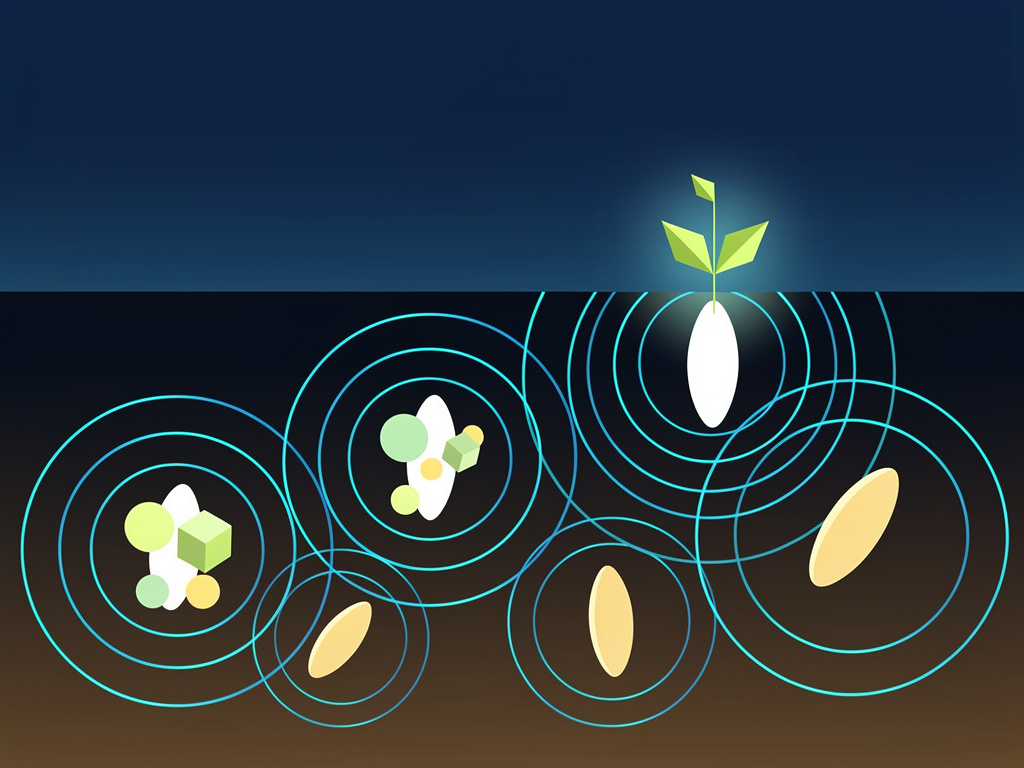
Rice seeds submerged in shallow water don’t just wait for moisture. They listen. A new study from MIT engineers reveals these seeds detect the acoustic punch of raindrops slamming nearby surfaces, jolting them into germination up to 40% faster than silent controls. Boom. First direct proof plants sense natural sounds for survival.
Picture thousands of seeds at the bottom of a lab tub. Droplets fall from varying heights—mimicking light drizzle to downpours. Researchers position seeds just beyond splash range, so only vibrations arrive. Hydrophones capture the underwater roar, matching field recordings from Massachusetts puddles and wetlands. Results? Exposed seeds sprout quicker, especially the shallower ones. MIT News detailed the April 22, 2026, experiments with nearly 8,000 rice seeds.
The mechanism hinges on statoliths. These dense, micron-sized particles settle in seed cells to signal gravity—and “down.” Rain-generated pressure waves pack enough force to shake them loose, mimicking the chaos of reorientation. Calculations in the paper confirm displacements from 10 to 600 nanometers, exceeding the 30-nanometer gap between statoliths and cell membranes. That disruption fires growth signals via gravitropism pathways. “The energy of the rain sound is enough to accelerate a seed’s growth,” says lead author Nicholas Makris, MIT mechanical engineering professor.
Depth matters. Vibrations fade fast underwater or in soil, limiting the effect to about 5 centimeters—precisely the sweet spot for seedlings to snag oxygen, nutrients, and surface light without drowning. Deeper seeds stay dormant. Evolution at work: sprout too soon or too deep, and you’re done. The Scientific Reports paper, co-authored by former grad student Cadine Navarro, quantifies this with damped oscillator models and drop-impact acoustics.
And the pressures? Massive. A raindrop’s underwater boom rivals a jet engine meters away, thanks to water’s density amplifying waves. Makris notes: “If you’re a seed that’s within a few centimeters of a raindrop’s impact… the kind of sound pressures… are equivalent to what you’d be subject to within a few meters of a jet engine in the air.” Scientific American highlighted this amplification on April 22, 2026.
This acoustic cue expands plants’ sensory toolkit, with rice pointing to broader applications in flooded fields worldwide.
Rice feeds half the planet, much from direct-seeded paddies prone to uneven emergence. Farmers battle variable rains, depths, and dormancy. If sound speeds sprouting at optimal spots, planting strategies could shift—shallower rows in irrigated zones, or even simulated drips for dry spells? The paper flags relevance for water deficits and post-flood oxygen needs. NewsNation quoted Makris on survival benefits, echoing the study’s call for tests in other grains.
But it’s not just rice. Gravitropic statoliths appear across angiosperms. Wind shakes? Herbivore buzz? The door opens. Makris ties it to a Japanese microseason: “Falling rain awakens the soil.” Indeed. X users buzzed too—posts from @MacrinePhD and @is_OwenLewis amplified the 30-40% boost, sparking ag-tech chatter.
Prior hints existed. Roots chase water-pipe buzzes; flowers nod to bee wings. Yet proving natural sound’s role dodged scientists—until now. Experiments ruled out water contact or chemistry; pure acoustics drove the surge. By day four, fewer exposed seeds lagged behind, gaining a growth edge. Statolith kinetics even boosted diffusion, like auxin flows in roots.
Challenges ahead. Scale to fields. Test wheat, corn. Quantify yields. Noise pollution? Urban rain differs. Still, this rewires botany. Plants aren’t passive. They thrum to rain’s rhythm, timing life amid chaos. Farmers take note: your paddies sing.
Deeper implications ripple to ecology. In wetlands, seeds sync to storms, dodging floods. Climate volatility? Sound-sensing seeds adapt faster. Makris’s team, backed by MIT Bose and Koch funds, modeled energy thresholds—enough to flip mechanosensors. Viscous cytosol damps motion, but pile-ups in cells amplify force.
So next storm, listen closer. That patter isn’t random. It’s a wake-up call, buried inches deep. Seeds hear it. And grow.


 WebProNews is an iEntry Publication