
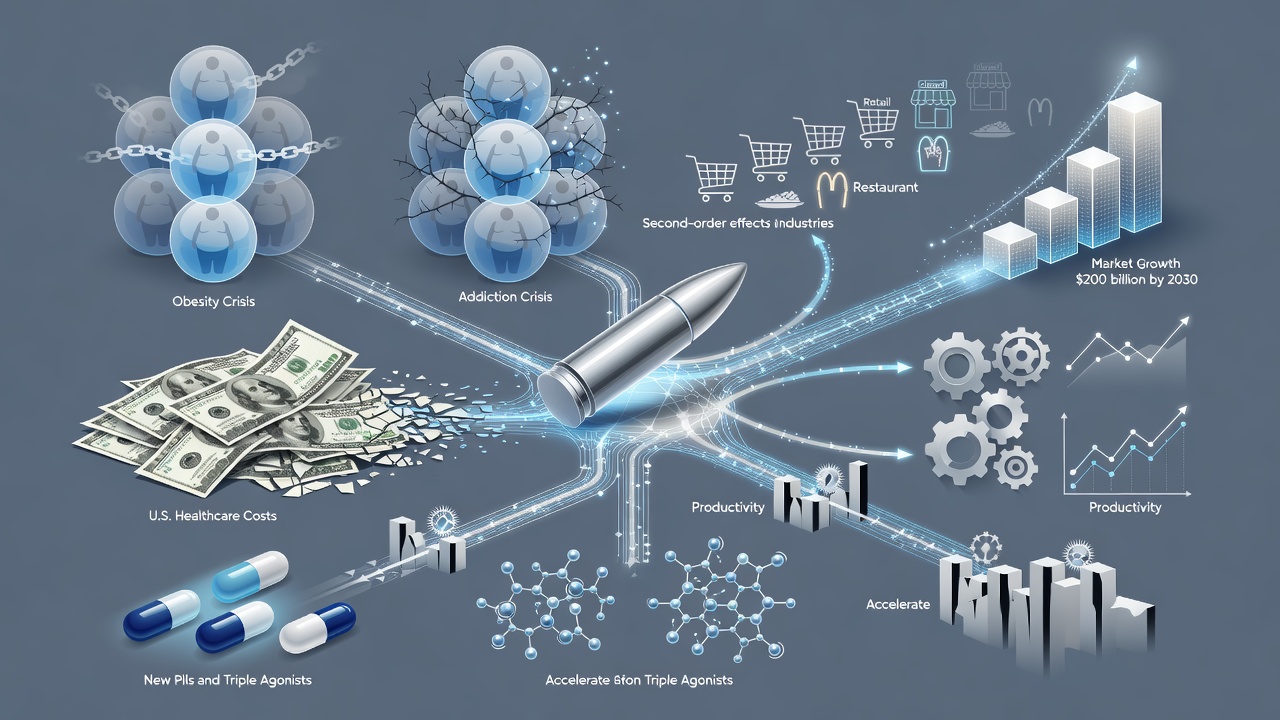
Scott Galloway doesn’t mince words. GLP-1 drugs represent one of the most powerful tools ever developed to tackle some of America’s heaviest burdens. The New York University marketing professor and serial entrepreneur calls them a “fully loaded magazine of silver bullets” aimed at obesity, addiction, cancer risk, sleep apnea and more.
Galloway Sees Broader Societal Fixes
In his June 12, 2026 newsletter on ProfGMedia.com, Galloway lays out the scale. Obesity rates in the U.S. have tripled over six decades. Healthcare spending hit $5.3 trillion. By 2033, one-fifth of the entire economy could go to medical costs if trends hold. (ProfGMedia, https://www.profgmedia.com/p/the-weight)
Yet something shifted. One in eight American adults now takes a GLP-1 medication. Prescriptions for weight loss doubled between 2024 and 2025. Obesity rates, which peaked near 40 percent, have started to fall. The drugs work. They suppress appetite. They slow gastric emptying. They deliver average weight loss of 15 to 21 percent in clinical trials. Newer candidates push those numbers higher. Eli Lilly’s retatrutide, a triple agonist, produced 19 percent, 26 percent and 29 percent loss at increasing doses in phase 3 testing. Its daily pill Foundayo, approved in April 2026, delivered 12 percent loss over 72 weeks. (Yahoo Finance, https://finance.yahoo.com/healthcare/articles/scott-galloway-says-glp-1-104000091.html)
Galloway goes further. He argues these compounds don’t just reduce food intake. They dampen other hedonic drives. Clinical observations show declines in smoking, gambling, compulsive shopping and even alcohol consumption. One study of veterans noted reduced addiction-related behaviors. Users report less “food noise.” Some describe quieter minds overall. But the professor warns against overhyping. Long-term data remains limited. Muscle loss concerns persist, though Galloway remains bullish in podcast appearances. “GLP-1s are the most underhyped technology,” he has said repeatedly. He picks them as technology of the year for the second straight cycle. AI gets too much attention, in his view.
And the economic ripples already show. Victoria’s Secret reported 47 percent revenue growth in some categories. Fast-food chains face pressure. More than 500 locations closed or filed for bankruptcy amid changing demand. Alcohol sales dropped 15 percent in certain segments. Grocery bills for users fell by one-third as calorie intake declined 21 percent. Restaurants now test GLP-1-friendly menu items. The drugs don’t just change bodies. They reshape spending patterns across entire industries.
Wall Street noticed first. Eli Lilly shares surged 418 percent since late 2021, climbing from $276 to over $1,074 by the end of 2025. Novo Nordisk posted far more modest gains. Galloway attributes part of the gap to superior direct-to-consumer marketing by Lilly. Its CEO David Ricks captured the dynamic simply. “In the GLP-1 category, we observe prices are elastic. The more we lower the price, the more users we get. That’s the path we’re on.”
Prices have indeed fallen. List prices once topped $1,300 monthly. Savings cards and new programs brought costs to $25 for some insured patients. Medicare Part D began covering select GLP-1 treatments in July 2026 with a $50 monthly copay for seniors. Medicaid spending on the class exploded from $1 billion in 2019 to $8.6 billion in 2024. Yet barriers remain. Nearly half of discontinuations stem from cost or coverage gaps. Gastrointestinal side effects such as nausea and vomiting drive another 14 percent to stop. Over half of obesity patients quit within a year. Many restart after weight returns. (Forbes, https://www.forbes.com/health/weight-loss/glp-1-statistics/)
The market keeps expanding anyway. Global sales of GLP-1 receptor agonists stood at $66.4 billion in 2025. Analysts project $82 billion this year and up to $200 billion by 2030, according to J.P. Morgan. U.S. users could reach 25 million by decade’s end, up from roughly 10 million in 2025. Some estimates point toward 30 million. One in eight adults already reports current or past use. Women adopt at nearly twice the rate of men. Younger patients and those with diabetes show especially sharp uptake. Shortages that plagued earlier years have largely eased as production scaled.
Competition intensifies. Eli Lilly and Novo Nordisk still dominate. But Pfizer, Amgen, Structure Therapeutics, Zealand Pharma and AstraZeneca chase the next generation. Oral formulations gain traction. Novo Nordisk plans broader rollout of its semaglutide pill in 2026. Lilly’s orforglipron and others target needle-averse patients. Next-wave candidates include monthly injections and amylin-based therapies that could improve tolerability. Mid-stage data presented at the 2026 American Diabetes Association meeting highlighted up to 28 percent weight loss with some triple agonists and lower dropout rates. Executives speak of an “iPhone moment” for patient experience. The current duopoly may face pressure on price and access as volume grows. Two and a half billion people worldwide carry excess weight. The addressable population is enormous.
Yet questions linger. Long-term safety profiles need more years of data. Muscle preservation strategies remain works in progress. Some observers worry about reduced romantic desire or other unintended dampening of drives. Insurance pushback continues in pockets. Employers add prior authorization hurdles. Private plans scale back in response to high costs. Galloway acknowledges the risks. He insists the upside outweighs them if policymakers and industry avoid self-inflicted obstacles. “If we’re not stupid enough to get in the way,” he says, these drugs could bend the healthcare cost curve, lift productivity, ease depression linked to obesity and deliver broader societal gains.
Recent reporting reinforces the momentum. A June 13 CNBC article details how drugmakers race toward differentiated obesity treatments beyond basic GLP-1 mechanisms, with several candidates aiming for 2029 launches. (CNBC, https://www.cnbc.com/2026/06/13/glp-1s-lilly-novo-pfizer-look-to-new-weight-loss-drugs.html) Analysts at IQVIA forecast the obesity medicines market could hit $92 billion in 2026 alone before climbing higher as orals and generics enter.
The professor paints an optimistic picture. America has struggled with declining life expectancy and rising chronic disease. These medications offer a rare chance to add years to lives rather than simply generate more pharmaceutical revenue. They won’t solve every problem. They do not replace diet, exercise or personal responsibility. But their impact already stretches far beyond the scale. Consumer behavior shifts. Corporate balance sheets adjust. Healthcare forecasts bend. The data keeps coming in. The early evidence suggests Galloway may prove right. The bullets are loaded. The question now is how accurately the country aims.


 WebProNews is an iEntry Publication