
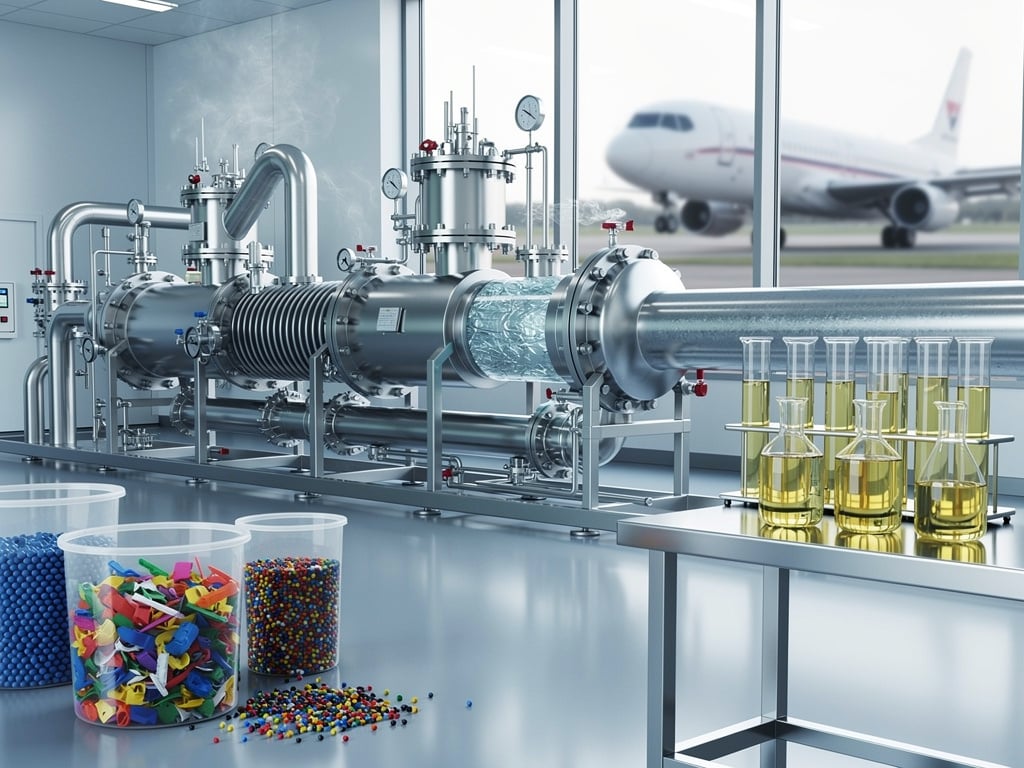
Scientists have developed a new chemical reactor system that turns plastic waste into jet fuel with costs potentially low enough to compete with traditional petroleum-based kerosene. The process, detailed in a recent TechRadar report, addresses two major environmental problems at once: the growing mountains of discarded plastic and the aviation industry’s heavy carbon footprint.
The system relies on a technique called hydrothermal liquefaction combined with catalytic upgrading. Researchers feed mixed plastic waste, the kind that typically ends up in landfills or the ocean, into a high-pressure reactor filled with water heated to around 400 degrees Celsius. Under these conditions, the plastic breaks down into smaller hydrocarbon chains without requiring oxygen, which prevents the formation of dioxins and other harmful combustion byproducts common in incineration methods.
What sets this approach apart from previous plastic-to-fuel efforts is the economic modeling that accompanies the technical description. The team calculated production costs at approximately 89 cents per liter for the resulting fuel blend, a figure that comes surprisingly close to current wholesale prices for conventional jet fuel. Previous attempts at chemical recycling have often produced fuels at double or triple the market rate, limiting their appeal to all but the most determined sustainability programs.
The reactor design incorporates several engineering improvements that drive down expenses. First, the system operates continuously rather than in batches, allowing steady throughput and better heat recovery. Engineers recover and reuse the hot water and gases produced during the reaction, which reduces both energy input and wastewater treatment needs. The catalyst used in the upgrading stage employs abundant metals rather than expensive platinum-group materials, further trimming material costs.
From a chemical perspective, the output closely resembles standard Jet A-1 fuel. Analysis shows the liquid contains primarily alkanes and cycloalkanes in the correct carbon chain lengths for aircraft engines. Importantly, the fuel meets key specifications for freeze point, flash point, and energy density. Aviation authorities require jet fuel to perform reliably at temperatures as low as minus 47 degrees Celsius, and early tests indicate this plastic-derived product satisfies those demands.
The environmental benefits extend beyond simply diverting plastic from landfills. Traditional jet fuel production from crude oil releases substantial greenhouse gases during extraction, refining, and combustion. By contrast, fuel made from waste plastic can achieve significant carbon savings when the full lifecycle is considered. The plastic itself was originally produced from fossil fuels, so burning it as jet fuel essentially accelerates the release of stored carbon. However, preventing that same plastic from decomposing in landfills or oceans avoids methane emissions and ecosystem damage that would otherwise occur.
Aviation currently accounts for roughly 2.5 percent of global carbon dioxide emissions, a share expected to grow as air travel expands in developing regions. Many airlines have committed to ambitious net-zero targets by 2050, but sustainable aviation fuel currently represents less than 0.1 percent of total jet fuel consumption. The primary barrier remains cost. Most sustainable options rely on agricultural feedstocks like used cooking oil or plant-based oils, which compete with food production and still carry price premiums of 50 to 200 percent over conventional fuel.
This new plastic conversion method could supplement those biological pathways. The global supply of waste plastic exceeds 350 million tons annually, with only about 9 percent currently recycled. Even if a fraction of that waste stream could be converted to jet fuel, the volumes would be substantial. A single large reactor facility processing 100,000 tons of plastic per year could produce roughly 70 million liters of fuel, enough to power several transatlantic flights daily.
Challenges remain before widespread adoption becomes possible. Collection and sorting of plastic waste still presents logistical difficulties, particularly in regions lacking strong recycling infrastructure. The reactor performs best with mixed polyolefins such as polyethylene and polypropylene, which constitute the majority of packaging waste. However, polyvinyl chloride and polyethylene terephthalate require either separate processing or additional pretreatment steps to avoid contaminating the fuel with chlorine or oxygen compounds.
Scaling the technology from laboratory demonstrations to commercial facilities will require significant investment. The research team has focused on modular reactor designs that could be deployed near major waste collection points or airports, minimizing transportation costs. Each module measures roughly the size of a shipping container, allowing manufacturers to produce them in factories and ship them to various locations.
Engine compatibility testing represents another critical step. While the chemical composition appears suitable, aircraft fuel systems must handle long-term exposure to the new fuel without degradation of seals, pumps, or fuel lines. Additive packages may need adjustment to maintain the thermal stability and lubricity properties that modern jet engines demand. Major manufacturers including Boeing and Airbus have established certification pathways for new fuels, but the process typically requires thousands of hours of testing.
Economic projections in the study assume access to low-cost waste plastic, ideally with a tipping fee paid by municipalities for accepting the material. In many parts of Europe and parts of North America, waste management companies already charge for landfill disposal. Redirecting that material to fuel production could transform a cost center into a revenue stream. The model also factors in potential carbon credits under emerging emissions trading schemes that increasingly include aviation.
Beyond jet fuel, the process generates other valuable byproducts. The gaseous fraction contains hydrogen and light hydrocarbons that can power the reactor itself or be sold for industrial use. Solid residues, primarily carbon char, might find applications in water filtration or as a soil amendment after further processing. These additional revenue streams help improve the overall project economics.
The research builds upon earlier work in hydrothermal processing of biomass but adapts the chemistry specifically for synthetic polymers. Water at high temperature and pressure acts as both solvent and reactant, breaking carbon-carbon bonds through hydrolysis and pyrolysis mechanisms. The absence of oxygen prevents complete oxidation to carbon dioxide, preserving the energy content in liquid form.
Public interest in plastic pollution has grown substantially in recent years, creating political momentum for solutions that go beyond mechanical recycling. Chemical recycling technologies like this one can handle contaminated or mixed plastics that traditional mechanical methods cannot process. This capability could significantly increase overall recycling rates if deployed at scale.
Critics of chemical recycling sometimes argue that these processes simply delay the inevitable release of fossil carbon into the atmosphere. While true from a strict carbon accounting perspective, the approach offers several advantages over direct incineration. The fuel displaces petroleum that would otherwise be extracted, and the concentrated carbon dioxide from aircraft engines could theoretically be captured at airports in the future. More immediately, preventing plastic from entering marine environments protects biodiversity and reduces microplastic contamination of the food chain.
Investment in this sector has increased noticeably. Several startups have raised substantial funding to commercialize similar technologies, though many focus on producing naphtha or diesel rather than aviation fuel. The specificity of this reactor system for jet fuel addresses a market with fewer alternatives and higher willingness to pay for sustainable options.
Regulatory frameworks will play a decisive role in determining commercial success. The International Civil Aviation Organization has established sustainability criteria for alternative fuels, including requirements for genuine carbon reduction and avoidance of competition with food crops. Waste plastic satisfies many of these criteria, though detailed lifecycle assessments must still be completed for specific implementations.
As airports and airlines face increasing pressure to reduce emissions, fuel made from plastic waste could provide a pragmatic bridge solution while longer-term technologies like hydrogen or electric propulsion mature. The infrastructure for storing and distributing jet fuel already exists, requiring no major changes to aircraft or airport operations.
The research team continues refining the catalyst formulations to increase yield and reduce the formation of unwanted byproducts. They also explore co-processing plastic with other organic wastes such as food scraps or sewage sludge, which could improve the economics further by increasing throughput and providing additional hydrogen from the biomass fraction.
For communities struggling with plastic waste management, this technology offers a potential alternative to landfilling or exporting waste to countries with lax environmental standards. When combined with improved collection systems and consumer education about proper disposal, chemical conversion could form part of a comprehensive strategy to address the plastic crisis.
The promise of affordable sustainable jet fuel from plastic waste represents a convergence of waste management and energy production that could benefit both sectors. While technical and economic hurdles remain, the fundamental chemistry works, the numbers look increasingly favorable, and the environmental case grows stronger each year as plastic pollution and climate impacts intensify. Continued development and strategic deployment of these reactor systems may help airlines meet their climate commitments while simultaneously cleaning up the world’s waste streams.


 WebProNews is an iEntry Publication