
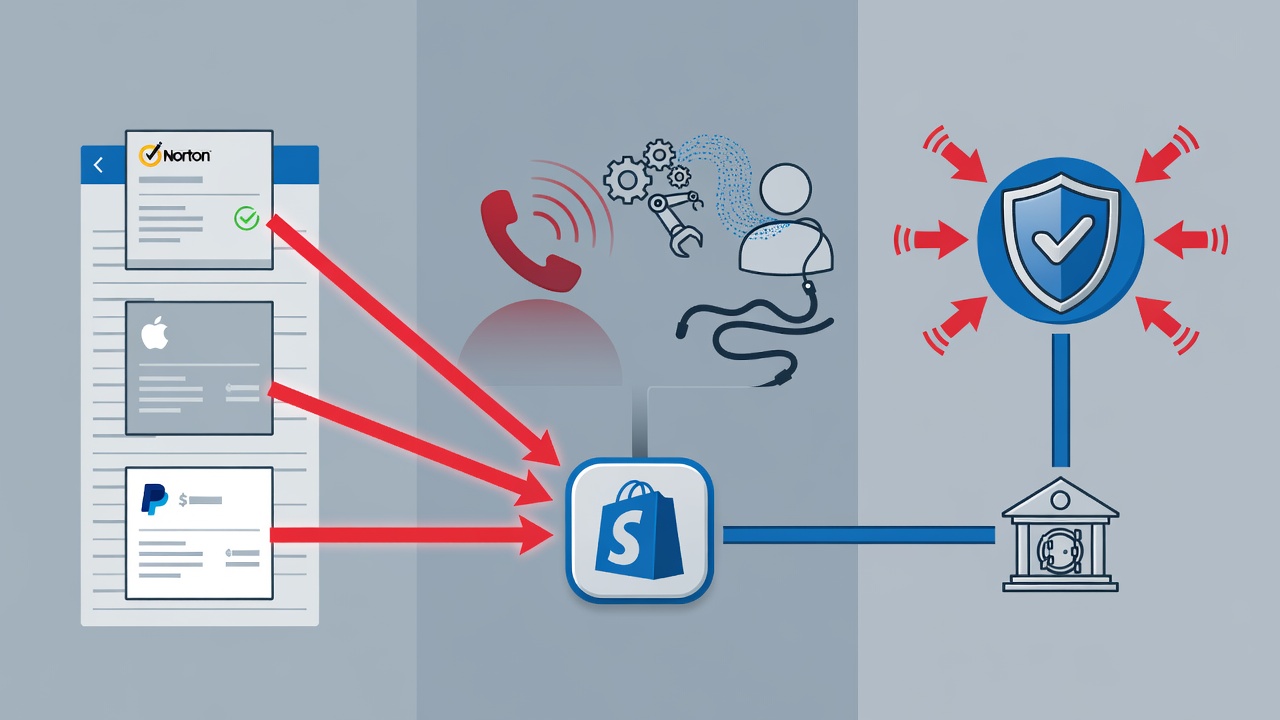
Users of the popular Shop app from Shopify started noticing something odd in their order histories this month. Receipts for expensive purchases they never made. A Norton subscription renewal for hundreds of dollars. An iPhone order from a store called “My Store.” A PayPal charge that never hit their accounts. Each one carried a phone number to call if the buyer didn’t recognize it. Those who dialed soon learned the hard way. They weren’t reaching customer service.
The tactic represents a twist on callback phishing. Instead of landing in an email inbox where suspicion runs high, the fake documents appear right next to legitimate orders inside a trusted shopping application. Lifehacker first highlighted the pattern in an article published today, drawing directly from earlier reporting. (Lifehacker)
Researchers at Gen Digital spotted the campaign in mid-June. They documented how scammers insert these fabricated receipts into the Shop app’s order tracking. The app, which boasts more than 50 million downloads on Google Play alone, pulls in data from Shop Pay transactions, linked email accounts at checkout, and even scans Gmail or Outlook for shipping keywords. That broad reach gives fraudsters an opening. A fake order can blend in. Push notifications arrive. The user checks the app out of habit. And the trap springs. (Gen Digital)
But why does this work better than traditional email lures? Context. “A fake invoice in your email is easy to ignore. A fake invoice inside your order history feels different,” explained Luis, a security evangelist at Gen Digital. The surrounding real receipts and delivery updates lend credibility. Even when the language stumbles — phrases like “If Order Not Place By You” or “If Need Help” — many overlook the errors in the moment of panic over a large unauthorized charge.
Examples have proliferated across forums and security reports. One Reddit user described a $399 Geek Squad receipt that suddenly appeared with instructions to call a specific number within hours. Others reported fake McAfee renewals, Apple gift cards, and PayPal disputes. In each case the listed support line connected to operators in overseas call centers who posed as representatives from the brand. Their goal? Extract login credentials, credit card details, one-time codes, or convince the victim to install remote access tools that hand over full device control. (Bleeping Computer)
Gen Digital researchers emphasized the shift in tactics. Scammers have moved from email to calendar invites and now to order-tracking apps. “Scammers keep testing new places to put old tricks,” their report noted. “For years, fake invoices were mostly an email problem. Then similar subscription notices appeared in calendar invites. Now we are seeing fake receipts inside shopping app order histories and push notification flows.” The technique proves more effective because users treat the app as authoritative. They rarely question its contents the way they might a random message.
Shopify responded quickly. A spokesperson told Bleeping Computer the company identified the abuse of its platform and rolled out new controls. “We identified bad actors misusing our platform to generate fake order notifications and rolled out new controls that have significantly reduced this activity and improved our ability to detect it going forward.” No evidence exists that the Shop app, Shopify’s systems, or the impersonated brands suffered any breach. The insertion method remains unclear. It may involve clever manipulation of email parsing features, account associations, or gaps in how the app validates third-party orders.
Official guidance from Shopify’s help center stresses caution. If an order looks unfamiliar, users should not call any number provided in the receipt. Instead they must verify charges directly through their bank or credit card issuer and check official accounts with the brand. Reporting the suspicious store or message happens inside the app itself. Those steps limit the damage. Yet many victims act first and verify later. They call. They share information. Then they scramble to contain the fallout.
The consequences can mount fast. Financial losses from drained accounts. Identity theft from exposed personal data. Devices compromised by remote access software that allows scammers to watch keystrokes or install additional malware. Security experts advise immediate password resets from a clean device, monitoring for unusual login attempts, contacting card issuers to cancel compromised numbers, and running malware scans. But prevention beats recovery.
So what should users do the moment they spot an unrecognized receipt? Stop. Don’t tap. Don’t dial. Open your banking app instead and search for matching transactions. Visit the official Norton site or PayPal account directly rather than follow any embedded link or number. If nothing appears, the receipt is fake. Report it through the Shop app’s built-in tools and delete the notification. Simple actions. Yet they break the scammers’ chain before it tightens.
This episode exposes a broader vulnerability in how consumers interact with shopping platforms. The same features that make apps convenient — automatic order aggregation, push alerts, seamless history — also create new attack surfaces. Gen Digital’s analysis shows scammers adapt faster than platforms can patch. They exploit trust in the interface itself. And with millions of active Shop users across North America, the pool of potential targets runs deep.
Recent discussions on X reflect growing awareness. Users shared screenshots of suspicious orders and warned others not to engage. One post from late June highlighted a fake Norton receipt that appeared without any corresponding bank charge. Another thread linked back to the Gen Digital research, urging people to treat every unexpected app notification as suspect until proven otherwise. The conversation has spread beyond tech circles into consumer advice groups.
Industry observers note that Shopify’s new controls have already cut down visible incidents. Still, the underlying method could migrate to other order-tracking services. Similar apps that aggregate receipts from multiple retailers face the same risks. Consumers, meanwhile, must adjust their instincts. That means ignoring the path of least resistance — the convenient “call now” button — and taking the longer route of independent verification every time.
The receipts keep appearing for some. A second or third fake order in the same month, as one Reddit user described. No actual charge hits the card. Yet the anxiety does real work. It pushes people toward the scammers’ line. And once the conversation starts, the social engineering often succeeds. Operators sound professional. They reference details from the fake receipt. They create urgency. “Your account will be charged in 12 hours unless we cancel now.” The victim, rattled, complies.
But compliance isn’t inevitable. Banks have grown quicker at reversing fraudulent transactions when reported promptly. Credit cards offer strong dispute rights. Password managers and two-factor apps limit the blast radius of stolen credentials. The tools exist. The knowledge gap is closing thanks to coverage from outlets like Bleeping Computer and Gen Digital’s public warnings.
Shopify continues to refine detection. Gen Digital and similar firms track the evolution. Users who stay alert and verify independently stand the best chance of avoiding harm. The fake receipt in your Shop app isn’t a billing error. It’s a calculated lure. Recognize it as such. Act accordingly. Your data and finances will thank you.


 WebProNews is an iEntry Publication