
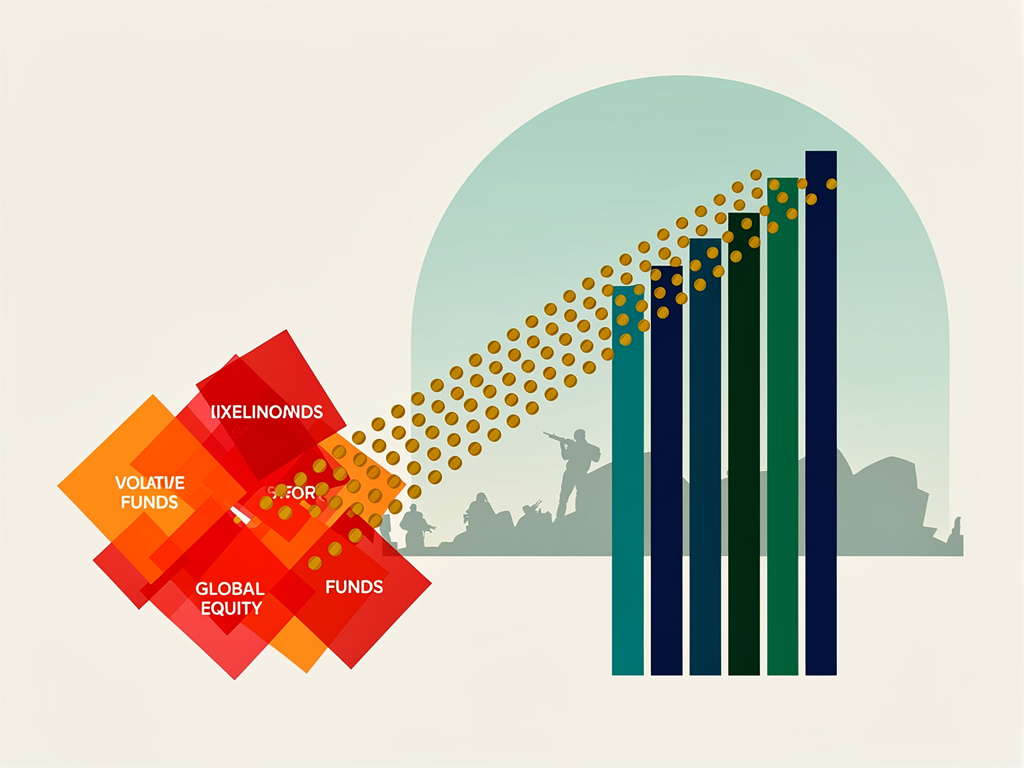
Saudi Arabia’s monetary authority has yanked billions of dollars from at least two major global asset managers. The moves signal a sharper focus on performance and liquidity. They come as the kingdom balances record reserves with new regional risks.
The Saudi Arabian Monetary Authority, or SAMA, oversees one of the largest pools of official capital anywhere. Its foreign reserves topped $496 billion earlier this year. Yet in recent months it has redeemed substantial sums from external managers. Bloomberg reported the redemptions began before the latest flare-up with Iran. One withdrawal alone reached multiple billions from passive index-tracking funds at a single firm.
Short. Direct. No fanfare.
Some of that money has moved to strategies showing stronger results. Part went into fixed-income products that offer easier access to cash. The shifts reflect routine portfolio reviews, according to a SAMA spokesperson. “Where mandates have been reallocated, they reflect outcomes from SAMA’s periodic portfolio review process, conducted in line with conventional investment management practices,” the spokesperson told Bloomberg.
But the scale stands out. SAMA’s approach has long emphasized safety, diversification and capital preservation to support the riyal’s peg to the dollar. Unlike the more aggressive Public Investment Fund, the central bank sticks to low-risk international assets. Now it appears even more selective. Managers who once counted on steady Saudi inflows must adjust.
Reserves Climb Even as Funds Move
Official data tell a story of strength amid tension. Reserve assets hit 1.86 trillion riyals, about $496 billion, in March 2026. That marked the highest level in six years, according to Asharq Al-Awsat. Foreign securities made up the biggest share and grew 9.2 percent from a year earlier. Higher oil prices and alternative export routes helped lift reserves during the regional conflict.
Yet domestic pressures linger. Saudi banks posted a loan-to-deposit ratio of 101.8 percent at the end of March. Total credit reached 3.4 trillion riyals by February, up 10 percent. Diversification projects continue to absorb liquidity. In that setting, SAMA’s preference for liquid holdings makes sense. Cash can be deployed at home if needed or parked safely abroad.
And the timing matters. Redemptions started before the Iran conflict intensified. They do not appear to stem from immediate war fears. Instead they point to a longer-term reassessment. Passive equity exposure, long a staple for many reserve managers, evidently fell short of expectations in at least one mandate. Better-performing active or fixed-income options gained favor.
This isn’t the first time SAMA has pulled money. Back in 2015, amid an oil-price crash, the central bank withdrew tens of billions to cover budget gaps. Estimates then ranged from $50 billion to $70 billion over six months. Today the context differs. Reserves sit near multi-year highs. The kingdom runs a more diversified economy. Oil revenues have rebounded.
Still, the message to global managers lands clearly. Even the largest sovereign clients now demand results. They review mandates regularly. They redeem without hesitation when performance lags or liquidity needs change.
Industry watchers see broader implications. Asset managers built substantial Saudi allocations over the past decade. Those flows helped fuel growth in index funds and other products. A reversal, even if partial, forces recalibration. Some firms may see assets under management drop. Others will compete harder on fees, tracking error or liquidity terms.
But SAMA isn’t exiting markets. It continues to hold hundreds of billions in foreign securities. The central bank simply allocates them differently. More in short-duration bonds. Less in broad equity benchmarks. Greater emphasis on direct control and daily liquidity.
Regional tensions add another layer. A Council on Foreign Relations analysis from May noted that Gulf capital flows could shift homeward if conflict drags on. Saudi Arabia’s PIF already cut planned international exposure. SAMA’s moves, though framed as routine, fit a pattern of caution. Reserves provide a buffer. Liquid assets make that buffer usable.
So what comes next? SAMA publishes reserve data monthly. Fresh figures for May appeared in early June. Any sustained drop in foreign securities would confirm a broader rotation. For now the overall pool grows. The composition changes.
Global asset managers face a new reality. The Saudi central bank no longer acts as a passive source of sticky capital. It behaves like a demanding institutional investor. One with deep pockets, clear priorities and zero tolerance for underperformance. Billions have already moved. More reviews lie ahead. The flow of Saudi money just became less predictable. And far more performance-driven.


 WebProNews is an iEntry Publication