
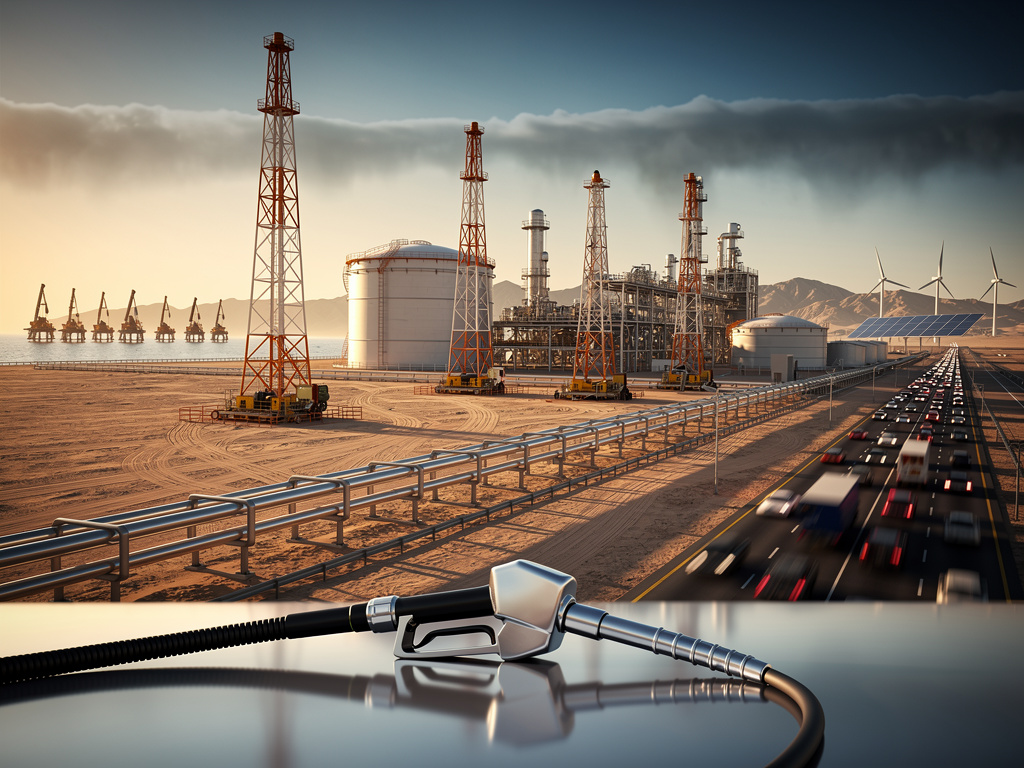
The recent announcement from Saudi Aramco regarding its plans to maintain high levels of oil production has generated considerable attention among motorists and industry observers alike. According to a report published by Yahoo Finance, the decision stems from comments made by Mohamed El-Erian, the prominent economist and advisor, who described the development as positive for consumers facing pump prices. This move comes at a time when global energy markets continue to show signs of volatility, influenced by geopolitical tensions, shifting demand patterns, and efforts to balance supply with environmental considerations.
Mohamed El-Erian, known for his insightful market analysis, highlighted how Aramco’s commitment to keeping output elevated could help stabilize fuel costs for everyday drivers. The company, which ranks among the world’s largest oil producers, signaled its intention to sustain production levels near current capacities rather than implementing sharp reductions. Such a stance contrasts with some expectations that producers might tighten supply to support higher prices amid economic uncertainties. For American drivers, who have seen gasoline prices fluctuate significantly over the past few years, this approach offers a measure of relief by potentially limiting upward pressure on costs at the fuel station.
The context surrounding this development involves several interconnected factors. Global oil demand has recovered from pandemic-era lows but faces headwinds from slower economic growth in major economies, including China. At the same time, supply disruptions from various regions have kept markets on edge. OPEC and its allies, including Russia, have coordinated production cuts in recent periods to manage inventory levels. Aramco’s position as a key player within this framework carries substantial weight. By indicating a willingness to keep barrels flowing, the producer may counteract some of those restrictive measures and contribute to a more balanced market environment.
El-Erian’s assessment, as conveyed through the Yahoo Finance article, emphasizes the benefits for consumers who rely on affordable transportation fuel. Lower or stable gasoline prices can support household budgets, encourage consumer spending in other sectors, and reduce inflationary pressures related to energy. For businesses that depend on logistics and transportation, predictable fuel costs translate into better planning and potentially improved profit margins. These effects ripple through the broader economy, influencing everything from retail sales to manufacturing output.
Yet the picture remains complex. While sustained production from Saudi Arabia provides one form of reassurance, other elements could still drive prices higher. Geopolitical events in the Middle East, including ongoing conflicts that threaten shipping routes, have already caused temporary spikes in crude values. Additionally, decisions by other major producers and the pace of economic recovery will shape future trends. Analysts point out that inventory levels in key consuming regions, such as the United States and Europe, will play a determining role in whether pump prices trend downward or remain elevated through the coming months.
The energy transition adds another layer to these dynamics. Many governments have set ambitious targets for reducing carbon emissions and expanding renewable sources. This long-term shift creates uncertainty for traditional oil producers, who must balance current revenue needs with investments in lower-carbon technologies. Saudi Aramco has responded by expanding its portfolio to include natural gas, petrochemicals, and even some renewable projects, while maintaining its core crude oil operations. The company’s scale allows it to pursue multiple strategies simultaneously, which may help smooth the path toward a lower-emission future without sudden supply shocks.
Drivers in the United States have particular reasons to follow these developments closely. Gasoline prices here are influenced by both domestic refining capacity and international crude benchmarks. The U.S. Energy Information Administration regularly tracks these relationships, showing how changes in global supply can quickly affect local markets. When major producers like Aramco signal steady output, it often translates into more moderate wholesale prices that eventually reach consumers. Of course, seasonal factors such as summer driving demand or winter heating needs can still cause short-term variations that override broader trends.
Mohamed El-Erian has built a reputation for connecting macroeconomic signals with their practical impacts on individuals. His observation that this news qualifies as beneficial for drivers aligns with a view that prioritizes market stability over sharp price swings. Excessive volatility tends to create economic distortions, making it harder for families and companies to budget effectively. By advocating for measured production policies, figures like El-Erian encourage an approach that supports steady growth rather than boom-and-bust cycles that have characterized oil markets in previous decades.
Market participants have responded to the news with measured optimism. Crude futures showed limited movement immediately following the reports, suggesting that traders had already priced in expectations of continued Saudi output. Refining margins, which determine the difference between crude costs and finished gasoline prices, remain an important indicator to watch. If those margins stay healthy, drivers could see more consistent pricing at retail outlets across different states. Regional differences in taxation and distribution costs mean that the exact savings will vary, with some areas experiencing more noticeable relief than others.
The broader implications extend beyond immediate fuel prices. Stable energy costs can support industrial activity, particularly in sectors such as chemicals, plastics manufacturing, and agriculture that rely heavily on petroleum derivatives. Farmers, for instance, depend on diesel for machinery and transportation of goods to market. When those costs remain predictable, food prices tend to avoid sharp increases that might otherwise occur. Similarly, airlines and shipping companies benefit from more reliable jet fuel and bunker fuel expenses, which can translate into steadier ticket prices and freight rates for consumers.
Environmental advocates have expressed mixed reactions to sustained high production levels. While acknowledging the short-term economic benefits, some argue that prolonged reliance on fossil fuels delays necessary investments in clean energy infrastructure. They point to accelerating deployment of electric vehicles and battery storage as evidence that demand for oil could peak sooner than many expect. Producers like Aramco counter that their output helps meet current needs while they simultaneously develop carbon capture projects and hydrogen initiatives. The tension between these perspectives will likely shape policy debates in the years ahead.
Looking forward, several variables will determine whether this positive development for drivers persists. The effectiveness of OPEC+ coordination remains a central question, as member countries sometimes diverge in their actual production from agreed targets. Economic data from major consuming nations will also prove influential. Stronger-than-expected growth could boost demand and push prices higher, while recessionary signals might reduce consumption and create downward pressure. Weather patterns that affect both heating and cooling demand add yet another unpredictable element to the equation.
Industry experts suggest that motorists can take practical steps to maximize any potential savings. Maintaining proper tire pressure, avoiding aggressive acceleration, and combining errands to reduce total miles driven all contribute to better fuel economy. Choosing vehicles with higher efficiency ratings or considering hybrid and electric options can provide longer-term protection against price fluctuations. For those who must drive conventional vehicles, timing purchases around periods of lower seasonal demand sometimes yields modest savings at the pump.
The role of financial markets in energy pricing has grown substantially over time. Speculative trading in futures contracts can amplify or dampen the effects of fundamental supply and demand factors. When major announcements like Aramco’s production stance emerge, they often trigger position adjustments by hedge funds and other large players. Understanding these market mechanics helps explain why news that appears straightforward can sometimes produce unexpected price movements in the short term.
Mohamed El-Erian’s commentary, as featured in the Yahoo Finance piece, serves as a reminder that energy markets affect virtually every aspect of modern life. From the cost of commuting to the price of consumer goods, oil remains embedded in economic activity even as alternatives gain ground. The decision by one of the world’s most important producers to sustain output therefore carries significance that extends well beyond the immediate reaction in trading pits.
As global energy systems continue their gradual transformation, developments like this one illustrate the persistent influence of traditional suppliers. Their choices will help determine the speed and smoothness of the shift toward different power sources. For drivers filling up their tanks in the coming weeks and months, the message from Saudi Arabia offers a degree of reassurance that prices may not escalate as rapidly as some had feared. While no single announcement can eliminate all uncertainties, it contributes to a more balanced outlook that many consumers will welcome. The coming quarters will reveal whether this stance translates into tangible benefits at gas stations nationwide or whether other forces ultimately dominate the direction of fuel costs.


 WebProNews is an iEntry Publication