
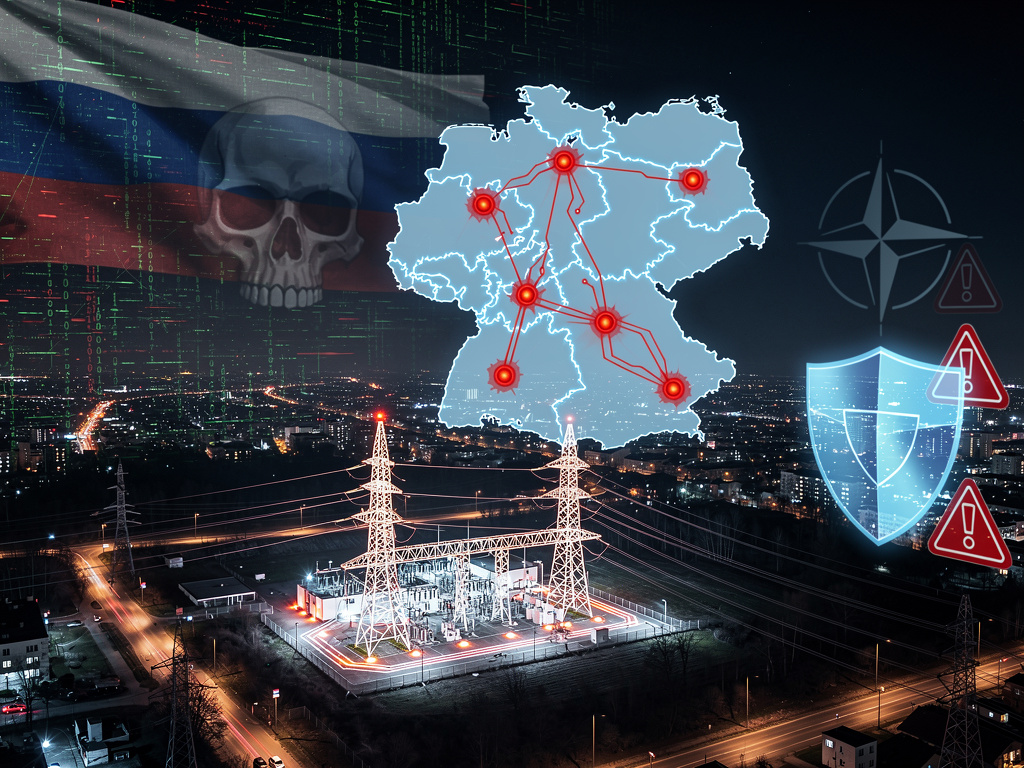
In the early hours of December 2024, a sophisticated cyberattack struck Poland’s electricity distribution network, sending tremors through European security establishments and raising urgent questions about critical infrastructure vulnerability. Security researchers at ESET have now definitively linked the intrusion to Sandworm, a notorious Russian state-sponsored advanced persistent threat group with a documented history of targeting energy systems across multiple continents. The attribution marks a significant escalation in cyber-offensive operations against NATO member states and underscores the fragility of Europe’s energy security posture as the continent navigates its most precarious geopolitical moment since the Cold War.
According to CSO Online, ESET’s research team employed advanced behavioral analysis and malware fingerprinting techniques to trace the December attacks directly to Sandworm, also tracked as APT44, Voodoo Bear, and IRIDIUM by various intelligence agencies. The group operates under the auspices of Russia’s Main Intelligence Directorate (GRU), specifically Unit 74455, and has been implicated in some of the most destructive cyberattacks in history, including the 2015 and 2016 blackouts in Ukraine, the NotPetya ransomware outbreak that caused an estimated $10 billion in global damages, and the disruption of the 2018 Winter Olympics opening ceremony.
Technical Fingerprints Point to Moscow’s Elite Cyber Unit
The technical indicators connecting the Poland attack to Sandworm are multifaceted and compelling. ESET researchers identified distinctive malware components and infrastructure patterns consistent with previous Sandworm operations, including custom-developed tools designed specifically for industrial control system environments. The attackers demonstrated intimate knowledge of SCADA protocols and operational technology networks, capabilities that require substantial investment in reconnaissance and specialized expertise. These characteristics align precisely with Sandworm’s established modus operandi and distinguish the operation from financially-motivated cybercriminal activity or less sophisticated state actors.
The timing of the attack carries particular significance. Poland has emerged as a critical logistics hub for Western military aid to Ukraine and hosts substantial NATO forces along its eastern border. The country’s electricity grid supports not only civilian populations but also military installations, transportation networks, and communication systems essential to the alliance’s eastern flank deterrence posture. A successful disruption of Poland’s energy infrastructure could cascade across multiple domains, potentially compromising military readiness and undermining public confidence in government institutions during a period of heightened regional tensions.
Sandworm’s Evolution as Russia’s Premier Cyber Weapon
Sandworm’s operational history reveals a group that has consistently pushed the boundaries of destructive cyber capabilities. The unit first gained international notoriety following the December 2015 attack on Ukraine’s power grid, which left approximately 225,000 customers without electricity in the middle of winter. That operation represented the first confirmed instance of a cyberattack causing a power outage, establishing a dangerous precedent that has shaped strategic thinking about critical infrastructure protection ever since. The group returned in December 2016 with an even more sophisticated assault, deploying the Industroyer malware framework specifically engineered to manipulate industrial control systems.
The NotPetya campaign of June 2017 demonstrated Sandworm’s willingness to accept massive collateral damage in pursuit of strategic objectives. Initially disguised as ransomware, the malware was actually a wiper designed to cause maximum disruption to Ukrainian businesses and government agencies. However, the malware spread far beyond its intended targets, crippling multinational corporations including Maersk, Merck, and FedEx. The U.S. government later attributed NotPetya to the Russian military and characterized it as the most destructive and costly cyberattack in history. Despite the global economic fallout, Russian leadership has never faced meaningful consequences for the operation, a reality that has likely emboldened subsequent offensive activities.
Poland’s Strategic Importance in NATO’s Eastern Defense Architecture
Poland’s position as a frontline NATO state makes it an attractive target for Russian hybrid warfare operations. The country has consistently advocated for robust collective defense measures and maintains one of the alliance’s highest defense spending ratios relative to GDP. Polish territory serves as the primary transit route for military equipment and humanitarian assistance flowing to Ukraine, a role that has generated considerable friction with Moscow. By targeting Poland’s electricity infrastructure, Russian operators can signal their capability to impose costs on countries supporting Ukraine while testing NATO’s willingness and ability to respond to attacks that fall below the threshold of armed conflict.
The attack also occurs against a backdrop of increasing Russian aggression across multiple domains. European security services have documented a surge in sabotage operations, disinformation campaigns, and cyber intrusions targeting alliance members throughout 2024. These activities form part of a coordinated strategy to undermine Western unity and degrade support for Ukraine’s defense against Russian invasion. Energy infrastructure represents a particularly attractive target because disruptions can generate immediate public pressure on governments while maintaining a degree of plausible deniability that complicates political and military responses.
Industrial Control Systems Remain Vulnerable Despite Known Threats
The successful penetration of Poland’s electricity network highlights persistent vulnerabilities in industrial control systems that have defied years of security improvements. Many operational technology environments were designed decades ago with no consideration for cybersecurity, prioritizing reliability and efficiency over protection against sophisticated adversaries. Legacy systems often run outdated software that cannot be easily patched without risking operational stability, creating permanent vulnerabilities that skilled attackers can exploit. The air-gap theory—the assumption that physical separation from the internet provides adequate protection—has been thoroughly debunked by successive intrusions, yet many critical infrastructure operators continue to rely on insufficient security measures.
The challenge is compounded by the convergence of information technology and operational technology networks. Organizations increasingly connect industrial systems to corporate networks for monitoring, efficiency optimization, and data analytics, inadvertently creating pathways that attackers can traverse from easily compromised IT systems to sensitive OT environments. Sandworm and similar groups have demonstrated exceptional skill at moving laterally through complex networks, identifying the specific systems that control physical processes, and deploying specialized malware capable of manipulating industrial equipment. The technical sophistication required for such operations was once considered prohibitively difficult, but Sandworm’s track record suggests these capabilities are now firmly established within Russia’s cyber arsenal.
Attribution Challenges and the Intelligence Community’s Response
ESET’s attribution of the Poland attack to Sandworm represents the culmination of extensive forensic analysis, but public attribution of state-sponsored cyberattacks remains fraught with challenges. Sophisticated actors employ elaborate deception techniques, including false flag operations designed to implicate other countries, the use of compromised infrastructure in third countries, and the deliberate planting of misleading technical indicators. Intelligence agencies typically possess classified sources and methods that provide high-confidence attribution but cannot be publicly disclosed without compromising future collection capabilities. Private sector researchers like those at ESET must therefore rely on technical forensics, behavioral patterns, and circumstantial evidence to build their cases.
The willingness of commercial security firms to publicly attribute attacks to specific state actors has increased dramatically in recent years, driven by a recognition that sunlight serves as a powerful deterrent and enables coordinated defensive responses. ESET, headquartered in Slovakia and with extensive experience monitoring threats in Eastern Europe, has established particular credibility in tracking Russian cyber operations. The firm’s researchers maintain deep visibility into regional threat activity and have published groundbreaking research on Sandworm’s evolving tactics, techniques, and procedures. Their attribution carries substantial weight within the cybersecurity community and provides governments with independent confirmation that can support diplomatic and economic responses.
Implications for NATO’s Collective Defense Doctrine
The Poland attack forces uncomfortable questions about how NATO should interpret Article 5, the collective defense provision that forms the bedrock of the alliance. The article states that an armed attack against one member shall be considered an attack against all, but its application to cyberattacks remains ambiguous. Alliance members have affirmed that cyber operations could trigger Article 5, but have deliberately avoided establishing clear thresholds that would automatically invoke collective defense obligations. This ambiguity serves strategic purposes, preserving flexibility and avoiding automatic escalation, but it also creates uncertainty that adversaries can exploit.
Russia appears to be systematically probing these gray zones, conducting operations that cause disruption and demonstrate capability without crossing into territory that would compel a unified military response. The calculus depends on the severity and consequences of each attack. A brief power outage that is quickly restored generates different political dynamics than a sustained blackout that causes casualties or cripples military operations. Sandworm’s attack on Poland, as currently understood, appears calibrated to send a message and gather intelligence about defensive capabilities rather than cause catastrophic damage. This restraint may reflect Russian awareness of escalation risks or simply indicate that the operation was detected and disrupted before achieving its full objectives.
The Energy Security Nexus in Hybrid Warfare
Energy infrastructure has emerged as the central battlefield in contemporary hybrid warfare, where kinetic military operations, cyber intrusions, economic coercion, and information operations blend into integrated campaigns. Russia has demonstrated consistent willingness to weaponize energy dependencies, from natural gas supply manipulation to physical attacks on pipelines and electrical facilities. Cyber operations against energy systems offer particular advantages: they can be conducted remotely with minimal risk to personnel, they create immediate public impact, and they can be calibrated across a spectrum from temporary nuisance to catastrophic destruction.
Poland has worked systematically to reduce its vulnerability to Russian energy coercion, diversifying away from Russian natural gas and investing heavily in renewable energy and nuclear power. These efforts have reduced but not eliminated exposure. The electricity grid remains interconnected with neighboring countries, creating potential cascading failure scenarios. Moreover, the distributed nature of modern power systems, with numerous substations, transmission nodes, and control centers, creates a large attack surface that is difficult to defend comprehensively. Sandworm’s apparent success in penetrating Polish defenses suggests that even well-resourced, security-conscious nations face substantial challenges in protecting complex industrial systems against determined state actors.
International Response and Deterrence Deficit
The international community’s response to previous Sandworm operations has been characterized by public condemnation, diplomatic protests, and limited economic sanctions—measures that have manifestly failed to deter continued aggression. Following the NotPetya attack, the United States, United Kingdom, and other allies issued formal attributions and imposed sanctions on Russian individuals and entities, but these actions produced no discernible change in Russian behavior. The disconnect between the severity of the attacks and the mildness of consequences reflects fundamental challenges in crafting effective deterrence in the cyber domain.
Traditional deterrence theory relies on the threat of proportional or escalatory retaliation to dissuade adversary actions. In cyberspace, this calculus is complicated by attribution difficulties, the challenge of demonstrating capability without revealing methods, and the risk that retaliation could spiral into broader conflict. Western governments have generally opted for restraint, concerned that aggressive cyber responses could normalize offensive operations and invite further escalation. This cautious approach may preserve stability in the short term but appears to have convinced Russian leadership that the benefits of continued cyber aggression outweigh the costs. The Poland attack suggests that recalibration of Western deterrence strategy may be necessary if further escalation is to be prevented.
Private Sector’s Expanding Role in Cyber Conflict
ESET’s investigation exemplifies the increasingly central role that private cybersecurity firms play in modern geopolitical conflicts. Commercial threat intelligence providers often possess visibility into global network traffic and malware distribution that rivals or exceeds government capabilities. These firms employ world-class researchers who can rapidly analyze novel threats and disseminate findings to affected organizations and the broader security community. The public-private partnership model has become essential to effective cyber defense, with government agencies relying on commercial partners for early warning, technical analysis, and incident response support.
This arrangement creates complex dynamics around information sharing, attribution standards, and the appropriate boundaries between commercial activity and national security operations. Private firms must balance their business interests, including maintaining customer trust and avoiding retaliation, against broader societal obligations to expose threats and support defensive efforts. ESET’s decision to publicly attribute the Poland attack to Sandworm reflects a judgment that the severity of the threat and the importance of warning potential targets outweigh any commercial risks associated with directly confronting a state actor. Such decisions are never taken lightly and typically involve extensive internal deliberation and coordination with government partners.
Looking Forward: The Imperative for Enhanced Resilience
The Sandworm attack on Poland’s electricity grid should serve as a catalyst for accelerated investment in critical infrastructure protection across the alliance. Technical improvements must include network segmentation to limit lateral movement, enhanced monitoring to detect anomalous activity, and robust backup systems that can maintain essential services during attacks. However, technology alone cannot solve the problem. Organizations must cultivate cybersecurity-aware cultures, conduct realistic exercises that test response capabilities under stress, and develop detailed contingency plans for operating in degraded conditions.
International cooperation represents another essential element of effective defense. Cyber threats respect no borders, and attackers routinely leverage infrastructure in multiple countries to obscure their origins and complicate response efforts. Information sharing arrangements, coordinated vulnerability disclosure, and joint exercises can enhance collective security, but they require trust and institutional mechanisms that take years to develop. The European Union’s NIS2 Directive and similar regulatory frameworks establish baseline security requirements, but implementation remains uneven and enforcement mechanisms are often weak. The gap between policy aspirations and operational reality creates opportunities that sophisticated actors like Sandworm are well-positioned to exploit.
The Poland incident ultimately represents more than a single cyberattack—it exemplifies the new normal of persistent, low-intensity conflict that characterizes great power competition in the 21st century. Russia has demonstrated both capability and intent to target critical infrastructure in NATO countries, testing defenses and gathering intelligence while calibrating operations to avoid triggering responses that could fundamentally alter the strategic equation. Western nations face the difficult task of strengthening resilience, improving attribution capabilities, and developing credible deterrent threats while managing escalation risks in an already volatile security environment. The technical sophistication of groups like Sandworm, combined with apparent political willingness to employ these capabilities against alliance members, suggests that critical infrastructure operators must prepare for sustained campaigns rather than isolated incidents. The electricity that powers modern civilization has become a weapon, and the battles for control are only beginning.


 WebProNews is an iEntry Publication