
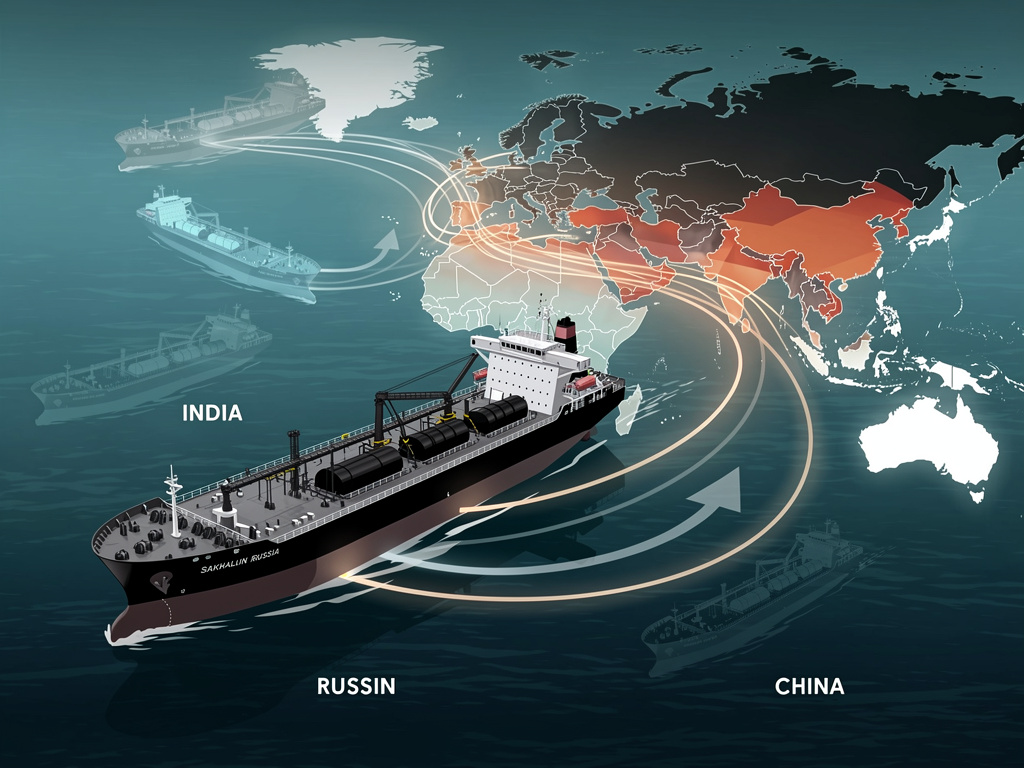
A Russian tanker loaded with crude from Sakhalin Island pulled into a Japanese port on May 4, 2026. Energy-hungry importers, squeezed by Middle East chaos, grabbed whatever supply they could—even from Moscow.
Japan relies on the Middle East for 95% of its oil. Disruptions hit hard. The government tapped national reserves, released 80 million barrels as part of the IEA’s 400-million-barrel dump. Fuel subsidies kicked in too. And now, Sakhalin crude.
This shipment went to Taiyo Oil. The company’s first Sakhalin buy since 2023 came at Tokyo’s urging, per Yahoo Finance citing Reuters. Sakhalin-2 escapes sanctions. Why? Japan owns pieces—Mitsui at 12.5%, Mitsubishi at 10%. Gazprom runs it, churning out oil and LNG.
Prime Minister Sanae Takaichi thanked Saudi Crown Prince Mohammed for steady Yanbu flows. She asked for more. Saudi shipments continue despite the mess. But Russia fills gaps.
Sanctions Bend, But Don’t Break
Asia’s Russian oil dance predates Japan’s move. India and China lead. In March, tankers U-turned from China to India. The Aqua Titan, loaded with Urals from the Baltic, ditched Rizhao for New Mangalore. Ship trackers caught it reversing in the South China Sea, Bloomberg reported.
Seven such vessels switched course that week. Odune hit Paradip with 730,000 barrels. Matari aimed for Vadinar. U.S. waivers helped—OFAC’s GL 133 and 134 let pre-loaded Russian crude land in India through April, Torres Trade Law detailed.
India’s imports surged 94% to 2.06 million bpd in March. April saw a 20% dip to 1.57 million bpd, blamed on refinery shutdowns and floating storage, per Discovery Alert. China resumed after a four-month pause. State giants Sinopec and PetroChina inquired on Urals, Reuters said.
Trump’s team granted India a 30-day waiver in March. Scott Bessent called it a stopgap. Cargoes loaded before cutoffs—145 million barrels at sea—rushed to ports. But waivers lapsed April 11. Flows persist via shadow fleets. Kpler tracked four unloading Urals at Chennai, Paradip, Vadinar.
Recent X chatter shows 3.26 million bpd headed Asia-bound, 114 million barrels afloat. China takes 890,000 bpd, India 730,000. Some tankers linger destination-free, per @Sputnik_India.
Japan’s Sakhalin play fits the pattern. Exemptions hold. Tokyo secures supply without full sanction breach.
Shadow Fleets and Strait Skirts
Dark pool tankers dodge rules. They hug coasts—Iran, Pakistan, India—to evade U.S. Navy. At least 34 reached India lately, X users noted. An Iranian supertanker with 1.9 million barrels hit China via Indonesia, skirting blockades.
Hormuz closure amplified urgency. Japan released stocks end-March. India scrambled post-waiver. China doubled Urals imports in January to record highs, Centre for Research on Energy and Clean Air found. Russia rerouted west-to-east seamlessly.
Buyers discount risks. Prices stay below caps sometimes. Refiners process, blend, re-export. India ships California-spec fuel from Russian crude.
U.S. pressure falters. Trump claimed Modi pledged no Russian energy. Deliveries continue. Sanctions suppress volumes—February loadings hit 1.3 million bpd—but waivers and detours restore flow.
Japan’s tanker arrival signals more to come. Asia prioritizes barrels over politics. Middle East woes ensure Russian crude’s welcome. Moscow revenues hold. Global markets tighten anyway.
Energy security trumps ideology. Importers adapt. Sanctions evolve into cat-and-mouse. Today’s Sakhalin dock? Just one move in the game.


 WebProNews is an iEntry Publication