
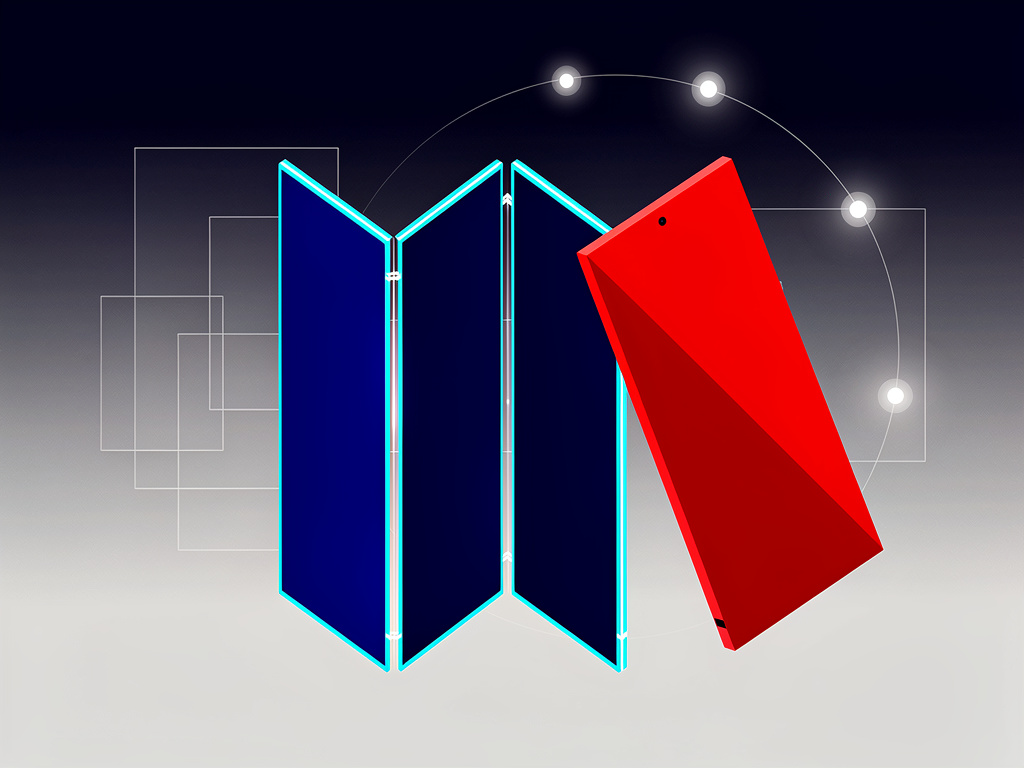
Samsung’s foldable ambitions have never been modest. The company essentially created the modern foldable phone market with its Galaxy Z Fold series, and it’s dominated that category since. But a new form factor — a phone that folds twice, creating a triple-screen experience — has been the subject of persistent leaks, denials, and now fresh evidence that the project is very much alive.
The latest signal came from a Korean certification database. As Android Authority reported, a Samsung device bearing the model number SM-F966B appeared in a Safety Korea filing, a regulatory step that typically precedes commercial launch by several months. The filing itself is sparse — just a model number and a battery rating — but the designation matters. Samsung’s foldable lineup follows a predictable naming convention: the Galaxy Z Flip uses the F7xx series, the Galaxy Z Fold uses the F9xx series. An F966B sits squarely in new territory, and the “B” suffix indicates a global variant rather than a Korea-only test unit.
This isn’t the first time this model number has surfaced. It appeared briefly in a Bureau of Indian Standards (BIS) certification earlier this year before being pulled. That removal fueled speculation that Samsung had shelved the project entirely. Clearly not.
The tri-fold concept isn’t theoretical. Huawei launched the Mate XT in September 2024, becoming the first major manufacturer to ship a phone with two hinges and three screen panels. At roughly $2,800, the Mate XT was aimed squarely at the ultra-premium segment in China, and it sold out almost immediately. The device unfolds into something approaching a small tablet — around 10 inches of continuous display — then folds down into a form factor not dramatically thicker than a standard foldable. It proved the engineering was possible. It also proved there was demand, at least among early adopters willing to pay a steep premium.
Samsung has watched this closely. The company showed a tri-fold concept device at CES 2025 in January, a move widely interpreted as a signal that development was well underway. Display prototypes from Samsung Display, the company’s panel-making subsidiary, have demonstrated flexible OLED screens capable of surviving multiple fold points without degradation. The hardware challenge isn’t whether the screen can bend twice — it can — but whether Samsung can deliver the durability, thinness, and software optimization that would justify the price.
And the price will be significant. Industry analysts expect a Samsung tri-fold to land somewhere between $2,000 and $2,500, positioning it above the Galaxy Z Fold series, which already starts at $1,799. That’s a narrow market. But Samsung has consistently shown willingness to push into ultra-premium territory to establish category leadership, even if initial volumes are modest.
The software question is arguably more complex than the hardware one. Android doesn’t natively handle three-panel layouts with particular grace. Samsung’s One UI has gotten progressively better at managing split-screen and flex-mode interactions on its existing foldables, but a tri-fold introduces new complications: three distinct screen states (fully folded, partially unfolded, fully open), app continuity across transitions, and the question of what the outer display looks like when the device is completely closed. Google’s recent Android updates have improved large-screen support substantially, but Samsung would likely need to build significant custom software layers to make the experience feel polished rather than gimmicky.
There’s also the weight problem. The Galaxy Z Fold 6 weighs 239 grams — already heavier than most conventional smartphones. Adding a third panel and second hinge inevitably adds mass. Huawei’s Mate XT comes in at 298 grams, which is manageable but noticeable. Samsung’s engineering teams will be working to shave every possible gram, likely through thinner glass, lighter hinge mechanisms, and potentially a carbon fiber or advanced composite frame.
Battery architecture presents its own puzzle. A tri-fold device effectively has three segments that need power distribution. Samsung could use a split-cell battery design similar to what it already employs in the Z Fold series, but with three compartments instead of two. The Safety Korea filing listed a battery, though specific capacity details weren’t disclosed in the initial documentation. For context, a device with a 10-inch unfolded display would need at least 5,000 mAh to deliver acceptable battery life, and ideally more.
Timing remains uncertain. The certification filings suggest Samsung is moving through the regulatory process required before a commercial launch, but that process can take months. The most likely window, based on Samsung’s historical product cadence, would be either alongside the Galaxy Z Fold 7 and Z Flip 7 — expected in the second half of 2025 — or as a separate launch event designed to give the tri-fold its own spotlight. Samsung has occasionally used standalone events for marquee products, and a new form factor would justify that treatment.
Competition won’t wait. Beyond Huawei, other Chinese manufacturers are developing their own multi-fold devices. Reports from supply chain analysts indicate that both Xiaomi and OPPO have tri-fold prototypes in advanced testing stages. If Samsung delays too long, it risks ceding the narrative around multi-fold innovation to competitors who are already shipping or close to it.
But Samsung has a structural advantage that shouldn’t be overlooked. It makes its own displays. Samsung Display is the world’s largest producer of flexible OLED panels, and it supplies screens to Apple, Google, and numerous other manufacturers in addition to its own mobile division. That vertical integration gives Samsung both cost advantages and the ability to customize panel specifications — fold radius, crease visibility, brightness uniformity across fold points — in ways that competitors relying on third-party display suppliers cannot easily match.
The crease issue deserves particular attention. On existing foldables, the visible crease where the screen bends remains the most common consumer complaint. A tri-fold device doubles that problem. Samsung has been investing heavily in ultra-thin glass and improved hinge geometry to minimize crease visibility, and the company’s CES prototype reportedly showed meaningful progress. Still, eliminating the crease entirely remains elusive for the entire industry.
So what would a Samsung tri-fold actually be for? The pitch is straightforward: a device that fits in your pocket but unfolds into a genuine tablet. Not a compromised, narrow tablet experience like the current Z Fold offers, but something closer to an iPad Mini in screen real estate. For business users, that means real multitasking — three apps side by side, full desktop-class web browsing, document editing without squinting. For media consumption, it means a cinematic viewing experience that collapses into something portable. The use case is compelling. The question is execution.
Samsung’s track record with first-generation foldable products is mixed. The original Galaxy Fold in 2019 launched with well-documented durability issues that forced a recall and redesign. The company learned from that experience, and subsequent generations have been substantially more reliable. But a tri-fold is mechanically more complex than anything Samsung has shipped before, and the stakes for getting it right on the first attempt are high. A botched launch would damage not just the tri-fold category but Samsung’s broader foldable brand.
The reappearance of the SM-F966B in certification databases, after its earlier removal, suggests Samsung is past the point of internal debate about whether to ship this product. The question now is when, and at what price point. The regulatory trail is getting longer and more visible. And in the consumer electronics industry, certification filings don’t lie — they’re the bureaucratic breadcrumbs that lead to product launches.
For industry watchers, the signal is clear. Samsung’s tri-fold isn’t a concept anymore. It’s a product working its way through the pipeline. Whether it arrives in time to define the category — or merely to compete in one that Huawei and others have already established — will depend on decisions being made right now in Samsung’s Suwon headquarters.


 WebProNews is an iEntry Publication