
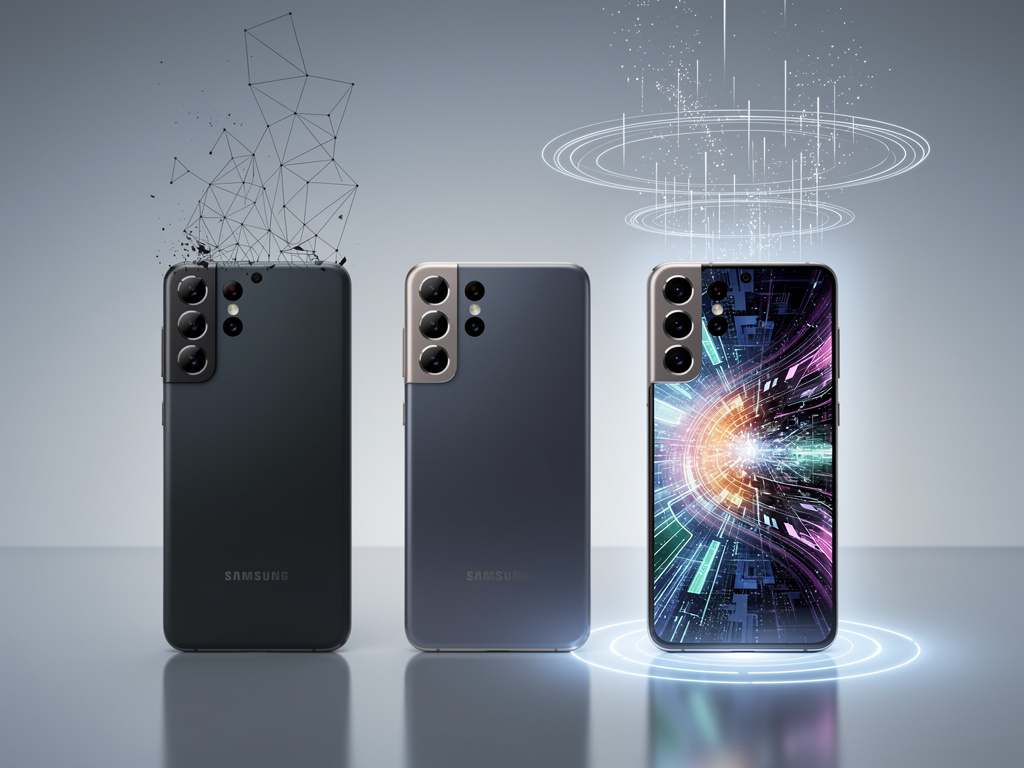
Samsung Electronics has quietly discontinued software support for most Galaxy S21 series devices, marking a significant turning point in the company’s approach to device longevity and customer relationships. According to TechRadar, the Galaxy S21 and S21 Plus have been removed from Samsung’s official security update schedule, while the Galaxy S21 Ultra continues to receive quarterly security patches through 2025. This divergence in support strategy reveals deeper tensions within Samsung’s product ecosystem as the company attempts to balance legacy device maintenance against ambitious commitments for newer models.
The Galaxy S21 series, launched in January 2021, represented a watershed moment for Samsung’s flagship lineup. The devices shipped with Android 11 and received three major Android updates, culminating in Android 14. Under Samsung’s previous policy framework, these phones qualified for four years of security updates, bringing them to their scheduled end-of-life in early 2025. However, the preferential treatment afforded to the Ultra model signals a shift in how Samsung categorizes and supports its premium tier devices, creating a two-class system even within the same product generation.
Industry analysts suggest this differentiated approach reflects Samsung’s evolving competitive positioning against Apple’s industry-leading support timelines. While the iPhone manufacturer routinely provides five to six years of iOS updates across its entire flagship range, Samsung has historically struggled to match this consistency. The decision to extend Ultra model support while retiring standard variants appears calculated to protect the company’s highest-margin products while managing the substantial engineering resources required for long-term software maintenance.
The Seven-Year Gambit and Its Implications
Samsung’s announcement in October 2023 that select devices would receive seven years of security updates fundamentally altered the smartphone support equation. This commitment, initially applied to the Galaxy S24 series and extending to certain mid-range models, represents the most aggressive longevity promise in Android history. However, the policy creates stark contrasts with devices launched just months earlier, including the Galaxy S21 family, which remain bound by older support frameworks.
The technical challenges underlying extended support windows are substantial. Each additional year of updates requires maintaining compatibility with evolving Android security protocols, addressing newly discovered vulnerabilities, and ensuring performance optimization across aging hardware. For Samsung, which ships dozens of distinct models annually across multiple price points, this engineering burden multiplies exponentially. The company’s decision to grandfather older devices out of extended support programs reflects pragmatic resource allocation rather than planned obsolescence.
Market Fragmentation and Consumer Impact
The end of Galaxy S21 support arrives at a critical juncture for the secondary smartphone market. According to industry data, millions of S21 devices remain in active use worldwide, with significant concentrations in emerging markets where device lifecycles typically extend beyond developed market norms. The termination of security updates for these phones raises important questions about digital security in regions where premium smartphones often serve users for five years or longer.
Consumer advocacy groups have expressed concern about the environmental implications of shortened device support cycles. Electronic waste represents one of the fastest-growing pollution categories globally, and smartphones contribute disproportionately to this problem. By ending support for devices barely four years old while simultaneously promising seven-year support for newer models, Samsung faces criticism for creating artificial upgrade pressure that contradicts stated sustainability commitments.
Competitive Dynamics and Industry Standards
Samsung’s support policy evolution occurs against intensifying competition in the premium smartphone segment. Google’s Pixel 8 series promises seven years of updates, matching Samsung’s newest commitment. Apple’s iOS 18 supports devices dating back to 2018’s iPhone XR, demonstrating six-plus years of active support. These extended timelines have fundamentally shifted consumer expectations, transforming software longevity from a niche concern into a primary purchase consideration.
The differential treatment of the Galaxy S21 Ultra reveals Samsung’s attempt to create clearer product hierarchy distinctions. By extending support for Ultra models while retiring standard variants, the company reinforces the value proposition of its highest-tier offerings. This strategy mirrors approaches in other consumer electronics categories, where premium models receive preferential treatment in warranty coverage, repair part availability, and software support duration.
Security Implications for Enterprise Deployments
The termination of S21 support carries particular significance for enterprise customers who deployed these devices at scale. Corporate IT departments typically maintain strict security compliance requirements that mandate current security patch levels. Organizations using Galaxy S21 or S21 Plus devices now face accelerated replacement cycles, potentially forcing premature hardware refresh programs that strain technology budgets.
Mobile device management platforms will need to flag unsupported S21 variants as compliance risks, triggering security policy violations in many enterprise environments. This creates downstream effects throughout corporate technology ecosystems, as companies must balance the financial cost of early device replacement against the security risks of continuing to deploy devices without current patches. For Samsung’s enterprise division, managing this transition while preserving customer relationships represents a delicate balancing act.
The Ultra Exception and Premium Positioning
Samsung’s decision to maintain quarterly security updates for the Galaxy S21 Ultra through 2025 establishes important precedent for future product support strategies. The Ultra variant, which launched at $1,199, commanded a $200 premium over the standard S21. That price differential now translates into an additional year of security support, creating tangible value differentiation beyond the hardware specifications that initially justified the higher cost.
This approach allows Samsung to test extended support frameworks on a limited device subset before potentially expanding the program. The Galaxy S21 Ultra’s relatively modest market share compared to standard S21 variants means the engineering resources required for continued support remain manageable. If successful, this model could inform future support tier structures across Samsung’s product portfolio, with Ultra and Plus variants receiving preferential treatment as standard practice.
Regional Variations and Market-Specific Considerations
Support policy implementation varies significantly across Samsung’s global markets, with regional subsidiaries sometimes extending update availability beyond official timelines. In markets where Samsung faces intense competition from Chinese manufacturers offering aggressive update policies, the company has occasionally provided extended support to maintain competitive parity. However, these regional variations create confusion among consumers and complicate resale value calculations in international secondary markets.
The Galaxy S21’s end-of-support status will impact device valuations differently across global markets. In regions where security updates factor heavily into used device pricing, S21 and S21 Plus models will likely experience accelerated depreciation. Conversely, markets where update availability plays a minimal role in purchase decisions may see limited impact on secondary market values, particularly for devices in excellent physical condition.
Looking Forward: The New Support Paradigm
Samsung’s handling of the Galaxy S21 support transition provides a preview of how the company will manage the growing gap between legacy devices and products covered by extended support commitments. As the seven-year update cohort ages, Samsung will need to maintain support infrastructure for devices spanning nearly a decade of hardware evolution, creating unprecedented technical and logistical challenges.
The industry is watching closely to see whether Samsung’s seven-year commitment proves sustainable or whether the company will need to scale back these promises as the resource requirements become clear. Early indications suggest Samsung is investing heavily in automated testing frameworks and modular software architectures designed to streamline the update process across diverse hardware platforms. These investments, if successful, could establish new industry standards for Android device longevity and fundamentally alter consumer expectations around smartphone replacement cycles.


 WebProNews is an iEntry Publication