
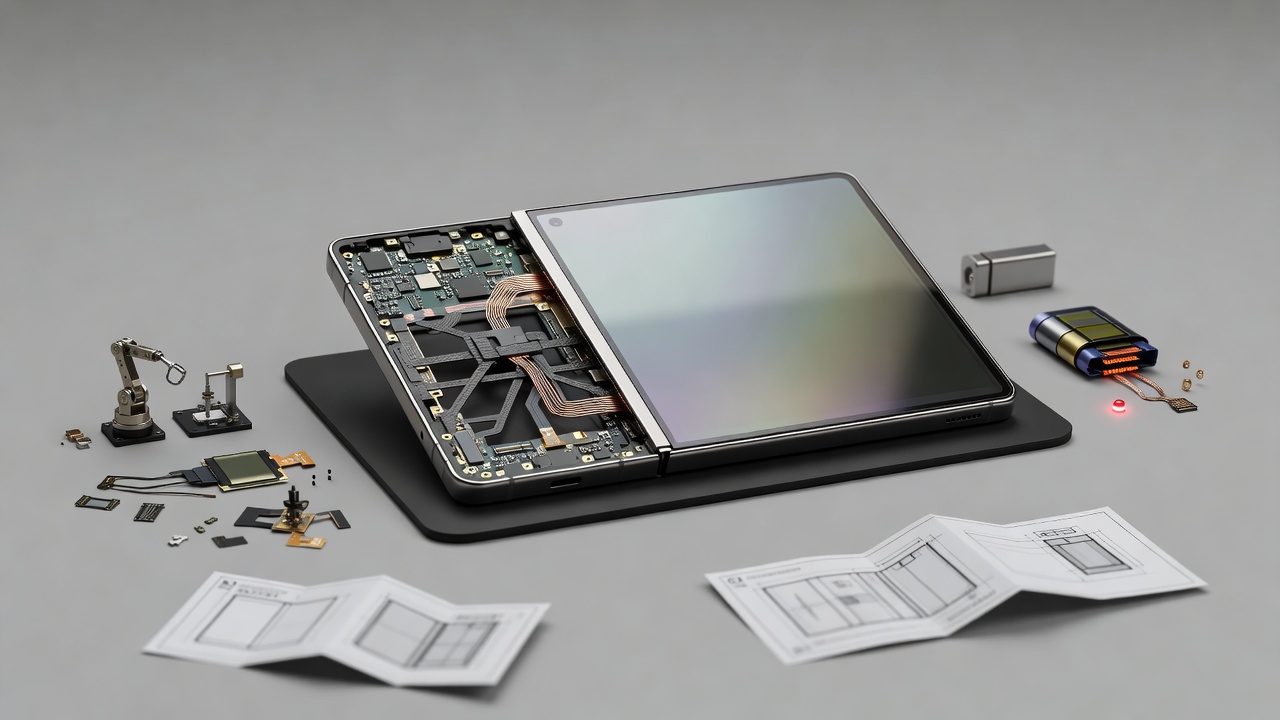
Samsung continues to push boundaries in mobile design with plans for a rollable smartphone, though the technology remains years away from reaching consumers. According to a detailed report from Android Police, the South Korean electronics giant has made measurable progress on the flexible display concept but faces significant manufacturing and durability obstacles that will delay any actual product launch until at least 2026 or later.
The idea of a rollable phone has circulated in technology circles for several years. Unlike foldable devices that bend along a single axis, rollable screens would extend from a compact housing to create a much larger viewing area on demand. Samsung has already demonstrated early prototypes that show a screen sliding out from the side of the device, similar to how some motorized desk accessories operate. These demonstrations have generated excitement among enthusiasts who see the format as a logical next step beyond current foldables like the Galaxy Z Fold and Z Flip series.
Development work on this technology traces back to Samsung Display’s research facilities where engineers have spent considerable time addressing the unique mechanical stresses that rolling creates. Traditional foldable screens endure repeated bending, but rollable displays must handle curvature around a small radius while maintaining image quality and touch responsiveness. The Android Police article highlights how Samsung has improved the underlying panel technology to reduce creasing and enhance longevity, though challenges persist in creating a mechanism that feels premium and reliable enough for daily use.
Current prototypes reportedly measure roughly 6.7 inches when fully retracted, expanding to approximately 8.5 inches or more when the screen rolls out. This size range would position the device between traditional smartphones and small tablets, offering users the convenience of carrying a compact phone that transforms into a productivity tool when needed. Video playback, document editing, and multitasking could benefit substantially from the additional screen real estate without requiring users to carry a separate tablet.
Manufacturing complexity represents one of the primary barriers to bringing a rollable phone to market. The sliding mechanism requires precise engineering to prevent dust and debris from entering the device, which could damage both the display and internal components. Samsung has reportedly explored various sealing methods and protective coatings, but achieving the necessary reliability across millions of units remains difficult. Production yields for these advanced displays currently fall well below the levels required for mass market availability, contributing to the extended timeline before consumers might see the technology in stores.
Battery life presents another significant consideration for rollable designs. Larger active screen areas demand more power, particularly when running graphics-intensive applications or streaming high-resolution video. Samsung engineers have experimented with higher-capacity batteries and more efficient power management systems to offset these demands. The Android Police report suggests that thermal management becomes increasingly complex as the device changes physical dimensions, requiring sophisticated cooling solutions that fit within the compact chassis.
Software adaptation will play a vital role in determining whether rollable phones achieve widespread acceptance. Android has gradually improved its support for foldable devices through features like task continuity and flexible window management, but rollable formats introduce additional variables. Developers will need to optimize applications for dynamic screen sizes that can change during active use. Samsung has collaborated with Google on these adaptations, incorporating intelligent UI elements that adjust automatically as the display expands or contracts.
Market positioning for a potential rollable Samsung device remains somewhat unclear. The company already offers foldables at premium price points, with the Galaxy Z Fold series targeting business professionals and power users. A rollable model would likely command even higher prices given the advanced technology involved, potentially limiting its appeal to a narrow segment of early adopters. Competition from Chinese manufacturers like Huawei and Xiaomi, who have also shown rollable concepts, could influence Samsung’s approach to pricing and feature sets.
Durability testing has consumed substantial resources within Samsung’s development cycle. Rollable displays must withstand thousands of extension and retraction cycles without degrading image quality or developing visible wear patterns. Environmental factors such as temperature extremes, humidity, and physical impacts add further complexity to the validation process. The company has implemented accelerated aging tests that simulate years of regular use in compressed timeframes, helping identify potential failure points before they reach consumers.
Display quality expectations continue to rise across the smartphone industry, with consumers demanding bright, colorful panels that perform well in various lighting conditions. Samsung’s rollable prototypes reportedly incorporate advanced OLED technology with high refresh rates and excellent contrast ratios. Maintaining these specifications while the screen moves mechanically requires innovative approaches to panel construction and protective layering that do not compromise visual performance.
Supply chain considerations add another layer of complexity to the rollable phone timeline. Specialized components for the rolling mechanism and reinforced display substrates are not yet produced at scale, meaning Samsung must either develop internal manufacturing capabilities or partner with suppliers willing to invest in new production lines. Either approach requires significant capital expenditure and carries inherent risks if the technology fails to gain traction in the market.
Consumer education will become essential if and when Samsung eventually releases a rollable smartphone. Many potential buyers may not immediately understand the benefits or proper usage patterns for a device that changes size during normal operation. Clear demonstration of practical applications, from expanded gaming experiences to more comfortable video calls, could help build demand. Samsung’s marketing teams have begun conceptualizing campaigns that emphasize versatility without overpromising on current technical limitations.
The competitive environment surrounding flexible display technology has intensified in recent years. While Samsung maintains a strong position in both component manufacturing and finished devices, other companies continue advancing their own approaches to rollable and expandable screens. This environment encourages continued investment but also creates pressure to deliver products that justify their premium positioning through meaningful improvements over existing foldable options.
Technical specifications for early rollable prototypes remain closely guarded, though industry observers expect flagship-level performance including top-tier processors, advanced camera systems, and comprehensive 5G connectivity. The challenge lies in integrating these components with the mechanical elements required for the rolling display while maintaining reasonable device thickness and weight. Early concepts have appeared somewhat bulky compared to conventional smartphones, though subsequent iterations have reportedly reduced overall dimensions.
Samsung’s broader innovation strategy encompasses multiple form factors beyond traditional smartphones and foldables. The company continues investing in wearable technology, automotive displays, and large-format flexible screens for commercial applications. Knowledge gained from these diverse projects often transfers to smartphone development, accelerating progress on challenging technical problems. Cross-pollination between different business units has proven valuable in addressing the complex engineering requirements of rollable devices.
Industry analysts project that flexible display shipments will grow substantially over the coming decade, driven by both consumer and enterprise adoption. Samsung aims to capture a significant share of this expanding market through its dual role as both a component supplier and device manufacturer. The company’s display division already provides panels to numerous smartphone brands, positioning it advantageously as rollable technology matures and moves toward commercialization.
Patent filings reveal Samsung’s extensive work on various aspects of rollable phone design, from hinge mechanisms to display protection systems. These intellectual property protections suggest a comprehensive approach to the technology that extends well beyond simple screen expansion. The company appears focused on creating an entire system of interrelated technologies that work together to deliver a satisfying user experience.
Despite the extended timeline before a commercial product might appear, Samsung’s continued investment in rollable technology demonstrates confidence in its eventual viability. The Android Police coverage indicates that while meaningful consumer availability remains distant, tangible progress continues in research laboratories and testing facilities. Each incremental improvement in durability, power efficiency, and manufacturing capability brings the concept closer to reality.
For consumers interested in the possibilities of rollable smartphones, the coming years will likely bring additional prototype demonstrations and technology showcases. These events serve both to gauge public reaction and to refine designs based on feedback. Samsung has established a pattern of gradual introduction for new form factors, first through concept devices and then through limited production models before scaling to full availability.
The path from laboratory prototype to retail product involves countless iterations and refinements. Samsung’s experience with foldable phones has provided valuable lessons about the importance of thorough testing and conservative timelines. By applying these insights to rollable development, the company hopes to avoid the early reliability issues that affected initial foldable releases and instead deliver a more polished experience when the technology finally reaches consumers.
As development continues, attention will focus on how rollable phones might integrate with other Samsung products and services. The company’s growing portfolio of connected devices creates opportunities for unique experiences that span multiple form factors. A rollable phone could serve as a central hub that expands to control smart home devices, stream content to larger displays, or facilitate collaborative work sessions with enhanced screen space.
Technical hurdles around the rolling mechanism itself continue to receive focused engineering attention. The cylindrical component around which the display rolls must maintain precise tolerances while supporting the flexible panel without creating stress points that could lead to premature failure. Material science advances have enabled stronger yet more flexible substrates, though balancing these properties with optical clarity and touch sensitivity requires ongoing refinement.
Software frameworks must evolve to handle the dynamic nature of rollable displays effectively. Unlike static screen sizes, these devices can transition between different aspect ratios and dimensions during active use. This capability opens new possibilities for application design but also creates challenges for developers who must account for multiple configurations. Samsung has released developer tools and guidelines to help create applications that adapt gracefully to changing screen dimensions.
Looking further ahead, the successful introduction of rollable smartphones could pave the way for even more ambitious form factors. Concepts ranging from fully rollable tablets to wearable displays that unroll from wristbands have appeared in various demonstrations. Each step forward in flexible display technology expands the possibilities for how we interact with digital information and entertainment.
Samsung’s patient approach to rollable phone development reflects the complexity of the underlying technology and the high standards consumers have come to expect from flagship mobile devices. While the wait may frustrate enthusiasts eager to try the new format, this methodical progress increases the likelihood that the eventual product will meet expectations for reliability, performance, and user experience. The Android Police analysis suggests that meaningful commercial availability remains several years away, but the foundation for this next evolution in smartphone design continues to strengthen through persistent engineering effort and innovation.


 WebProNews is an iEntry Publication