
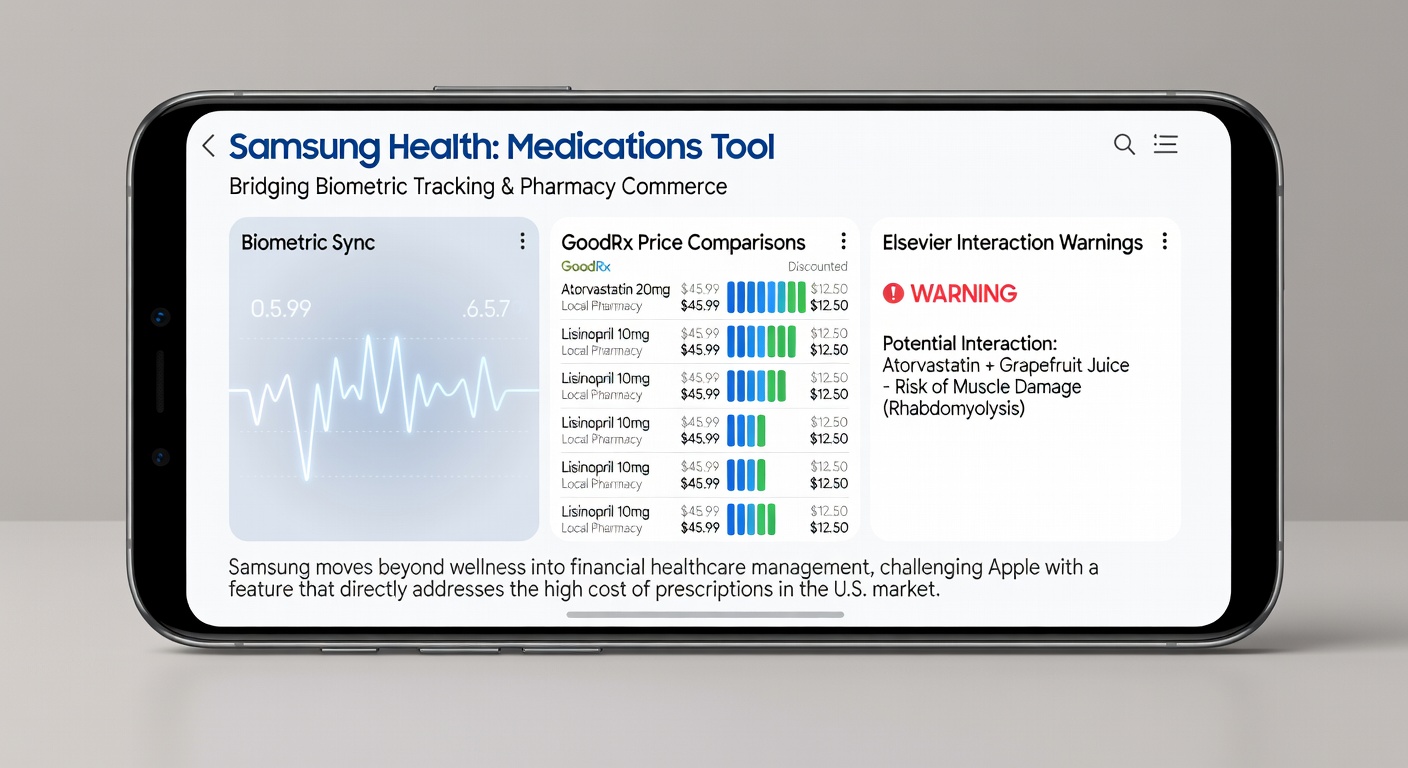
Samsung Electronics is fundamentally altering the value proposition of its mobile health utility, moving beyond mere biometric tracking into the complex, high-stakes arena of pharmaceutical commerce. In a strategic update to the Samsung Health application, the South Korean technology giant has introduced a comprehensive "Medications" feature that tracks prescription adherence and, more significantly for the U.S. market, integrates direct price comparison tools. This maneuver positions the Galaxy smartphone not just as a passive monitor of vital signs, but as an active participant in the user’s financial healthcare decisions.
The update, detailed by Digital Trends, represents a calculated shift toward service-oriented utility. While competitors like Apple have long offered medication logging, Samsung is differentiating its offering by addressing the economic friction of healthcare. By embedding pricing data directly into the user interface, the company is attempting to capture attention at the precise moment users manage their treatment regimens, effectively bridging the gap between clinical advice and consumer purchase.
The Economics of the GoodRx Partnership
The most commercially significant aspect of this rollout is the integration with GoodRx, a platform that aggregates prescription discounts. For industry observers, this partnership signals Samsung’s intent to monetize user engagement through affiliate structures or data value rather than solely through hardware sales. The U.S. healthcare market, characterized by opaque pricing and high out-of-pocket costs, presents a unique opportunity for hardware manufacturers to act as intermediaries.
According to the report from Digital Trends, the Medications tool allows users to verify whether their specific prescription is eligible for discounts at major pharmacy chains such as CVS and Walgreens. This functionality transforms the Samsung Health app from a retrospective logbook into a proactive shopping tool. By surfacing lower prices, Samsung increases the "stickiness" of its platform; users are less likely to migrate to a competitor if their current device actively lowers their monthly pharmacy spend.
Granular Tracking and Behavioral Nudges
Beyond the financial incentives, the operational mechanics of the feature reveal a focus on behavioral modification. The application allows users to input specific medications, including creams and ointments, and set targeted reminders. The software distinguishes between "gentle" notifications—standard pop-ups that can be easily dismissed—and "strong" reminders, which utilize a full-screen takeover accompanied by a persistent alert tone. This tiered approach addresses a common failure point in digital health: alert fatigue.
The interface is designed to accommodate the shape and color of the actual pill, a skeuomorphic design choice intended to reduce error rates among patients managing complex polypharmacy regimens. When a user creates an entry, the software prompts for dosage details and time schedules, creating a structured adherence log. This data does not merely sit on the device; it informs the broader health profile of the user, potentially allowing for future correlations between medication adherence and biometric changes, such as heart rate variability or sleep quality.
Algorithmic Safety Nets and Interaction Data
A critical component of the update is the integration of safety protocols regarding drug interactions. Samsung has collaborated with Elsevier, a global information analytics business specializing in scientific and medical content, to power this backend. The system is engineered to flag potential conflicts, not only between different prescription drugs but also between medications and lifestyle factors.
For instance, the application will warn a user taking Simvastatin about the risks associated with grapefruit juice consumption, or alert another user about the interactions between specific antibiotics and alcohol. This moves the platform into the territory of preventative care. By surfacing these warnings contextually—right when the user is logging the drug—Samsung mitigates liability while adding a layer of trust that pure fitness trackers lack. It turns the device into a safety check, reinforcing the user’s reliance on the Samsung infrastructure for daily wellbeing.
The Battle for the Wrist
While the smartphone serves as the primary dashboard, the Galaxy Watch plays a pivotal role in the data capture process. The integration extends to the wrist, allowing users to mark medications as "taken" directly from the watch face without retrieving their phone. This reduction in friction is essential for maintaining long-term user compliance. If the process is too cumbersome, data entry drops off, and the utility of the feature collapses.
This tight integration between the phone and the watch mirrors the strategy employed by Apple, yet Samsung’s open approach to third-party partnerships (like GoodRx) offers a distinct value proposition. While Apple tends to build proprietary walls, Samsung is willing to integrate established external services to rapidly flesh out its utility offering. This pragmatic approach allows them to deploy features faster, capitalizing on existing databases rather than building them from scratch.
Privacy Implications in a Commercialized Health Space
The convergence of health data and discount hunting inevitably raises questions regarding data privacy. When a user engages with the discount tool, there is a transactional exchange of information required to validate the coupon at the pharmacy point of sale. Industry insiders must scrutinize how this data flows between Samsung, GoodRx, and the dispensing pharmacy. While Digital Trends notes the feature is currently rolling out to U.S. users, the handling of this sensitive intersection between medical status and financial transaction will likely dictate the pace of global expansion.
Samsung has maintained that health data is encrypted on the device, but the nature of third-party integrations often requires specific data handshakes. The success of this feature depends heavily on maintaining an ironclad reputation for privacy, particularly as regulators in the EU and US tighten scrutiny on digital health platforms.
Strategic Positioning Against Apple Health
The timing of this release is not coincidental. As the mobile market saturates, manufacturers are looking to services and retention to drive revenue. Apple has established a dominant position in health monitoring, particularly with atrial fibrillation detection and mobility metrics. Samsung’s response is to attack the practical, everyday pain points of the user. While detecting a heart arrhythmia is a critical, albeit rare event for most, paying for prescriptions is a monthly recurrence.
By targeting the wallet, Samsung creates a recurring value loop. A user saving $20 a month on prescriptions via their Galaxy phone effectively subsidizes the cost of the device over its lifespan. This is a powerful narrative in the mid-range and premium market segments where Samsung competes fiercely. It shifts the conversation from hardware specifications—which have largely plateaued—to lifestyle utility and cost savings.
Future Implications for Digital Health
The Medications feature is likely a precursor to a more aggressive expansion into telemedicine and remote patient monitoring. If Samsung can successfully encourage users to log their medication adherence reliably, that data becomes highly valuable to insurers and healthcare providers. We can anticipate a future where this data, with user consent, could be shared directly with physicians to adjust dosages or verify compliance, closing the loop between the patient, the doctor, and the pharmacy.
This update serves as a foundation. The infrastructure built here—connecting drug identification, interaction checking, and pricing—can eventually support automatic refill ordering or telehealth consultations triggered by missed doses. Samsung is laying the rails for a comprehensive health service that extends far beyond counting steps.


 WebProNews is an iEntry Publication